Tag

Elephants

All articles tagged with #elephants

The Elephant-Mouse Myth: Not Fear, But Physics and Caution
science21 hours ago

The Elephant-Mouse Myth: Not Fear, But Physics and Caution

The enduring belief that elephants fear mice is a myth. Elephants aren’t terrified by small rodents; instead, their cautious behavior comes from poor eyesight and a need to avoid harming small animals, aided by the trunk’s control and an epiglottis that keeps intruders out. The myth traces to ancient Greek fables and has been popularized in media, but observations show elephants move with purpose and restraint, not fear, when encountering mice.

Myth-Busting: Elephants Don’t Fear Mice—They’re Just Cautious
science1 day ago

Myth-Busting: Elephants Don’t Fear Mice—They’re Just Cautious

Elephants aren’t afraid of mice. The popular fear stems from Ancient Greek fables and cartoons, but in reality elephants typically avoid small animals out of caution to avoid harming them, aided by poor eyesight and a trunk that acts with care. Their anatomy, including a protective epiglottis in the trunk, helps prevent small creatures from entering their airways, debunking the myth with biology rather than fear.

Elephant dung seeds ebony’s future for guitars
world1 month ago

Elephant dung seeds ebony’s future for guitars

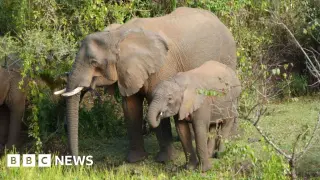
In the Congo Basin, African forest elephants disperse ebony seeds via their dung; a UCLA-led study found regions without elephants have 68% fewer ebony saplings, linking elephant decline to ebony’s survival. The Ebony Project—backed by Taylor Guitars and involving Indigenous Baka communities—has planted tens of thousands of ebony and fruit trees and aims to reach about a million ebony trees in 10 years, blending wildlife conservation with sustainable livelihoods to protect a wood long prized for guitar fretboards.

Gabonese Elephants Likely Self-Medicate with Farm Crops
science2 months ago

Gabonese Elephants Likely Self-Medicate with Farm Crops

Researchers in Gabon found elephants with gut parasites more likely to feed on banana leaves and papaya stems during crop raids, suggesting these plants help heal parasites and that such knowledge could be passed within groups. The finding points to potential coexistence strategies by providing alternative plants and was published in Ecological Solutions and Evidence in 2025.

California hunter dies after elephants crush him during Gabon safari
world2 months ago

California hunter dies after elephants crush him during Gabon safari

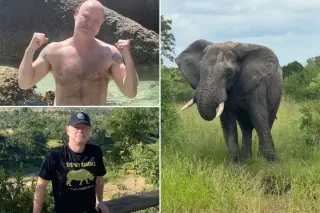
An American 75-year-old hunter, Ernie Dosio, died in Gabon after being crushed by a group of elephants during a hunting expedition; his guide was seriously injured. Dosio, a Modesto, California vineyard owner with a long history of trophy hunting, was killed in the Lope-Okanda rainforest. US officials are assisting with repatriation of his remains. The incident underscores the dangers associated with trophy hunting and safari adventures in Africa.

South African safari park owner killed by elephant he once feared
world2 months ago

South African safari park owner killed by elephant he once feared

Gary Freeman, 65, co-owner of Klaserie Private Nature Reserve in South Africa, was killed by a charging elephant while leading a walking safari. Freeman had previously said he’d rather be killed by an elephant than shoot one, and he brandished a revolver but did not fire. The attack occurred along the Klaserie River near Kruger National Park; he was taken to safety by his group but died from his injuries. Police have opened an inquest, and there is no evidence the firearm was used. Freeman was well-regarded as a guide and a longtime part of the reserve’s community.

Park Founder Who Said He'd Die by Elephant Is Fatally Trampled
world-news2 months ago

Park Founder Who Said He'd Die by Elephant Is Fatally Trampled

Gary Freeman, 65, a long-time safari operator who co-founded Klaserie Private Nature Reserve in Limpopo, South Africa, was fatally trampled on April 9 when an elephant charged a small tour group he was leading. Freeman reportedly said he would rather be killed by an elephant than shoot one; despite attempts to intervene, he died from his injuries. Police have opened an inquest into the incident, with experts assessing the elephant as a potential threat. The attack highlights the risks of wildlife tourism, though elephant assaults remain relatively rare compared with the animals’ broader global toll.

Genome reveals forest ancestry hidden in Africa’s savanna elephants, guiding conservation
science2 months ago

Genome reveals forest ancestry hidden in Africa’s savanna elephants, guiding conservation

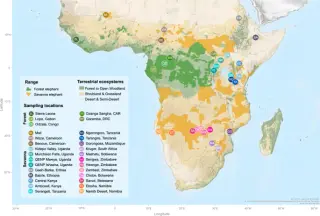
A continent-wide genomic analysis of 232 African elephants (savanna Loxodonta africana and forest L. cyclotis) shows a deep species split with forest elephants more genetically diverse and historically larger effective population sizes, while savanna elephants display more inbreeding and higher genetic load. The study also uncovers widespread forest-into-savanna introgression, including recent hybrids at the DRC–Uganda and Garamba zones, plus trace forest ancestry across savanna populations in west-central Africa. Despite high within-species connectivity, human-driven habitat fragmentation has produced isolated peripheral populations with elevated runs of homozygosity, underscoring the need to maintain habitat connectivity and protected-area networks to preserve genetic diversity and potential fitness. These findings highlight gene flow as a key evolutionary force and provide genomic guidance for conservation of Africa’s keystone elephants.

Spain bone may be first physical trace of Hannibal's war elephants
science4 months ago

Spain bone may be first physical trace of Hannibal's war elephants

An elephant bone found near Cordoba, Spain, dating to the Second Punic War era, could be the first concrete relic linked to Hannibal’s war elephants. The 10 cm fragment, recovered from an Iron Age site with other artifacts, suggests such beasts were transported by ship and used in Europe, though the bone likely belongs to an elephant that died before crossing the Alps. Species identification remains uncertain, but the find underscores how rare elephant remains are in European archaeology and may mark a notable clue in the Punic Wars narrative.

Ancient Elephant Bone in Spain Links Hannibal to Battle Tactics
science4 months ago

Ancient Elephant Bone in Spain Links Hannibal to Battle Tactics

A 2,200-year-old ankle bone found near Córdoba, Spain, along with Carthaginian coins and catapult ammunition, may be the first direct archaeological evidence of Hannibal’s use of war elephants in the Punic Wars, suggesting the animal died in battle and bridging legends with science; study published in The Journal of Archaeological Science: Reports.

Crocodile Attack After Elephant Encounter Kills Zambia Fisherman
world5 months ago

Crocodile Attack After Elephant Encounter Kills Zambia Fisherman

A 52-year-old Zambian fisherman, Dean Nyirenda, was killed by a crocodile after fleeing a herd of elephants near the Luangwa River in eastern Zambia; he struck the crocodile with a stick and, with help from two companions, dragged himself from the stream but died from heavy bleeding, highlighting ongoing human-wildlife conflicts in an area with a high crocodile presence; authorities are considering measures like protective fences near wildlife hotspots.

Kenyans Protest After Elephants Kill Four in a Week
world6 months ago

Kenyans Protest After Elephants Kill Four in a Week

In Kenya, protests erupted after roaming elephants killed four people in a week, driven by resource scarcity and increased elephant movement due to below-average rainfall. Authorities responded by shooting one elephant believed to have caused two deaths and pledged to enhance prevention and response measures, while continuing a compensation program for victims of wildlife conflicts.