Tag

Experimental Physics

All articles tagged with #experimental physics

Physicists Pivot to Novel Methods as WIMP Searches Stall
physics2 days ago

Physicists Pivot to Novel Methods as WIMP Searches Stall

After decades of null results for Weakly Interacting Massive Particles (WIMPs), physicists are shifting focus to 'ultralight' dark matter candidates, such as axions. New experimental approaches include nuclear atomic clocks, atom interferometers, magnetic levitation, and analyzing heat from celestial bodies like Jupiter and white dwarfs. While a recent WIMP signal from the Lux-Zeplin experiment remains controversial, the broader field is expanding its search strategies to detect particles that may behave like waves rather than discrete particles.

First Direct Test Validates Feynman’s Path Integral Postulates Using Single Photons
science2 months ago

First Direct Test Validates Feynman’s Path Integral Postulates Using Single Photons

Researchers at South China Normal University have experimentally confirmed the two foundational postulates of Richard Feynman’s path-integral formulation of quantum mechanics for the first time. By tracking single photons through an optical grid, the team validated that particles take all possible paths and that these paths contribute equally in magnitude but differ by phase. Published in Science Advances, the results achieve high fidelity, resolving a decades-old gap in direct experimental verification of this core quantum framework.

Direct Imaging of Quantum Vacuum Fluctuations Achieved in Cold Atom Experiments
science3 months ago

Direct Imaging of Quantum Vacuum Fluctuations Achieved in Cold Atom Experiments

Physicists have successfully imaged quantum vacuum fluctuations using a two-dimensional Bose-Einstein condensate of potassium-39. By amplifying pre-existing quantum jitter, researchers distinguished these fluctuations from thermal noise, confirming their vacuum origin. This achievement provides a controllable laboratory platform for studying quantum-field phenomena, including particle production and false-vacuum decay, aligning with theoretical predictions for relativistic sine-Gordon fields.

Caltech team measures 40-year-old quantum predictions using neutral atom arrays
science3 months ago

Caltech team measures 40-year-old quantum predictions using neutral atom arrays

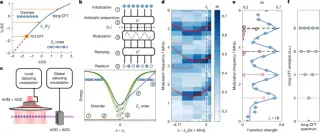
A collaboration led by Caltech has achieved the first direct experimental measurement of energy excitation spectra predicted by conformal field theories (CFTs) using a neutral atom quantum simulator. By trapping strontium atoms in optical tweezers and tuning them to quantum phase transitions, researchers observed universal energy ratios characteristic of Ising and tricritical Ising CFTs. The study, published in Nature, introduces a new modulation spectroscopy technique that allows scientists to probe these fundamental properties, confirming decades-old theoretical predictions with high precision.

Muon g-2 Discrepancy Resolved by Lattice QCD, but New Collider Data Sparks Fresh Confusion
science4 months ago

Muon g-2 Discrepancy Resolved by Lattice QCD, but New Collider Data Sparks Fresh Confusion

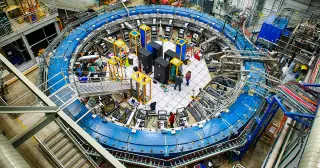
Physicists have resolved the 25-year muon g-2 anomaly using lattice quantum chromodynamics (QCD) simulations, which align with Fermilab’s experimental measurements. However, this resolution creates a new conflict with older data-driven calculations based on electron-positron collider experiments, particularly recent results from the VEPP-2000 collider in Siberia that diverge from previous measurements, leaving the origin of the discrepancy unresolved.

Lab Simulations Recreate Catastrophic Forces from Nuclear Fallout to Black Holes
science4 months ago

Lab Simulations Recreate Catastrophic Forces from Nuclear Fallout to Black Holes

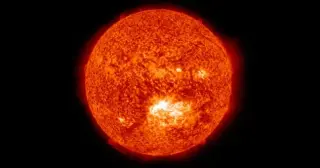
Researchers have successfully recreated extreme, potentially catastrophic phenomena in controlled laboratory settings to study their mechanics safely. Recent experiments include simulating smallpox pandemic spread, modeling solar plasma, and generating quark-gluon plasma at five trillion kelvins. These controlled recreations allow scientists to understand disaster dynamics, such as nuclear fallout dispersion and black hole event horizons, without risking real-world harm.

Scientists develop device harnessing Earth's rotation for electricity
science11 months ago

Scientists develop device harnessing Earth's rotation for electricity

Scientists in the US have developed a device that can generate tiny amounts of electricity by harnessing Earth's rotation and magnetic field, suggesting a potential, though currently impractical, new energy source if scaled up. The experiment involved a specially shaped ferrite shell that avoids the usual cancellation of voltage caused by electromagnetic forces, producing measurable microvolts as Earth spins. While promising, the technology is in early stages, and further independent testing is needed to verify and explore its scalability.

Uncovering the Decay of Tantalum-180m: Nature's Rarest Isotope
physics2 years ago

Uncovering the Decay of Tantalum-180m: Nature's Rarest Isotope

Physicists are conducting experiments to measure the radioactive decay of the excited state in Tantalum-180m, an isotope with an expected lifetime approximately 1 million times longer than the age of the universe. This unprecedented opportunity challenges existing theories and models of nuclear structure and decay, with initial data establishing the longest limits ever achieved in nuclear isomer studies. The experiment, conducted at the MAJORANA ultra-low background facility, has significantly enhanced existing limits by one to two orders of magnitude, allowing researchers to dismiss certain parameter ranges associated with potential dark matter particles.