Tag

Photons

All articles tagged with #photons

Sunlight-Powered Quantum Entanglement Demonstrated for the First Time
science6 days ago

Sunlight-Powered Quantum Entanglement Demonstrated for the First Time

A team used a Fresnel-lens concentrator to focus sunlight onto a crystal, generating polarization-based entangled photons without a laser. The photons achieved ~94% similarity to a perfectly entangled state and violated Bell’s inequality, marking a proof-of-principle step toward cheaper, energy-efficient quantum tech for satellites and remote stations—though a practical, deployable sun-powered entangler remains to be built and improved.

Why Sunlight Takes 170,000 Years to Reach Earth
space19 days ago

Why Sunlight Takes 170,000 Years to Reach Earth

Sunlight that reaches Earth today began its journey deep inside the Sun. In the dense core and radiative zone, photons propagate by a random walk, with a mean free path of about 0.09 cm and billions of absorptions/re-emissions that prevent a straight path. This diffusion takes roughly 170,000 years on average, and only when photons reach the photosphere do they escape into space, taking about eight minutes and twenty seconds to reach Earth. Separately, astronomers measured extragalactic background light and estimate that about 10 billion ancient photons from distant galaxies strike your skin each second outdoors, underscoring that much light comes from far beyond the Sun.

Quantum test confirms negative time is a real, measurable effect
science20 days ago

Quantum test confirms negative time is a real, measurable effect

Photons passing through a rubidium atomic cloud can appear to spend a negative amount of time inside the cloud when inferred from their arrival times. By performing ultra-weak measurements of the atoms, researchers found the dwell time measured in the atoms matches this negative value, showing negative time is a real, measurable quantum effect that fits standard physics and is not just an artifact.

Photon Truncation Won’t Create Infinite Light, Scientists Say
science1 month ago

Photon Truncation Won’t Create Infinite Light, Scientists Say

UiO physicists explore what happens when you “cut” a photon by removing a reflecting mirror. The resulting state is a complex quantum superposition where the photon number can, in theory, range from zero to infinitely many, but in practice the expected count is finite and depends on how quickly the mirror is removed—the faster the removal, the more photons can appear, yet infinite photons would require an impossibly instantaneous action. The work also highlights that vacuum energy can transform into real photons near the boundary, illustrating the strange, wave‑particle nature of light in quantum regimes.

Sunlight’s Hidden Odyssey: 170,000 Years to Escape the Sun
science1 month ago

Sunlight’s Hidden Odyssey: 170,000 Years to Escape the Sun

Sunlight takes about 8 minutes to reach Earth, but the energy moves outward from the Sun’s core via a random-walk diffusion process. A 1992 study showed the journey is much longer than straight-line travel, and a density‑varying model revealed the photon step length is under 0.1 cm for most of the Sun’s interior, pushing the diffusion time from tens of thousands of years to roughly 170,000 years before the photons reach the surface and head to Earth.

Fireflies Upend a Century of Brightness Measurements.
science1 month ago

Fireflies Upend a Century of Brightness Measurements.

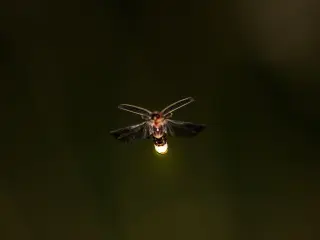
A new analysis recalibrates how bright a firefly’s flash really is, showing the long-accepted figure of 1013–1014 photons per flash is overestimated by 2–3 orders of magnitude. Using a simple lux meter and biochemistry checks, researchers found that old brightness estimates translated into modern units likely overstate output, suggesting other classic measurements may need revision and offering new insights into firefly vision and the biochemistry of their light production.

Quantum experiment reveals negative weak time for photons in atomic cloud
discoveries1 month ago

Quantum experiment reveals negative weak time for photons in atomic cloud

University of Toronto physicists measured a negative weak value for the time transmitted photons leave atoms excited in a rubidium cloud, using weak measurement and postselection to link a negative group delay with a measurable phase shift in a probe beam. The result clarifies how quantum interference and dwell-time concepts govern light–matter interactions, without implying backward time travel, and has spurred further work extending the weak-value framework.

The sun’s slow energy highway: millennia inside the Sun before eight minutes to Earth
science1 month ago

The sun’s slow energy highway: millennia inside the Sun before eight minutes to Earth

Eight minutes after leaving the Sun’s surface, sunlight reaches Earth, but the energy inside each photon spent 10,000–170,000 years zigzagging through the Sun’s dense core via countless absorption-and-reemission events; neutrinos escape in about two seconds, revealing the core’s workings, while the outer radiative and convective zones, and the photosphere, shape the final journey of energy to us.

Quantum Oddity: Photons Appear to Exit an Atomic Cloud Before Entering
science2 months ago

Quantum Oddity: Photons Appear to Exit an Atomic Cloud Before Entering

Physicists used weak measurements to probe how long photons spend in a rubidium atomic cloud as they travel straight through. They found a negative dwell time for those that pass, meaning the photons seem to arrive at the far side before they would have if they had spent time in the cloud, a result that matches the negative time inferred from arrival statistics. The effect is not an artifact of the measurement but a real, measurable quantum phenomenon explained by standard physics, highlighting that negative time in quantum interactions is possible and observable.

Quantum test confirms photons can exhibit negative time
science3 months ago

Quantum test confirms photons can exhibit negative time

Physicists report that photons passing through a cloud of atoms can appear to exit before entering, i.e., negative transit time. In a Physical Review Letters study, the researchers monitored the atoms’ excited state during the photon’s passage with a second readout beam and used weak measurements, requiring about 1 million trials across seven parameter sets to obtain a clear signal. The result, which aligns with standard quantum mechanics, shows transmitted photons can have negative time while scattered photons carry positive time, keeping the beam’s average time nonnegative. The next step is to test time effects for photons that don’t pass through the cloud.

Sunlight Sparks Laser-Free Quantum Ghost Imaging
science3 months ago

Sunlight Sparks Laser-Free Quantum Ghost Imaging

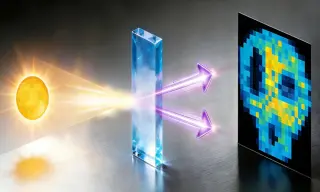
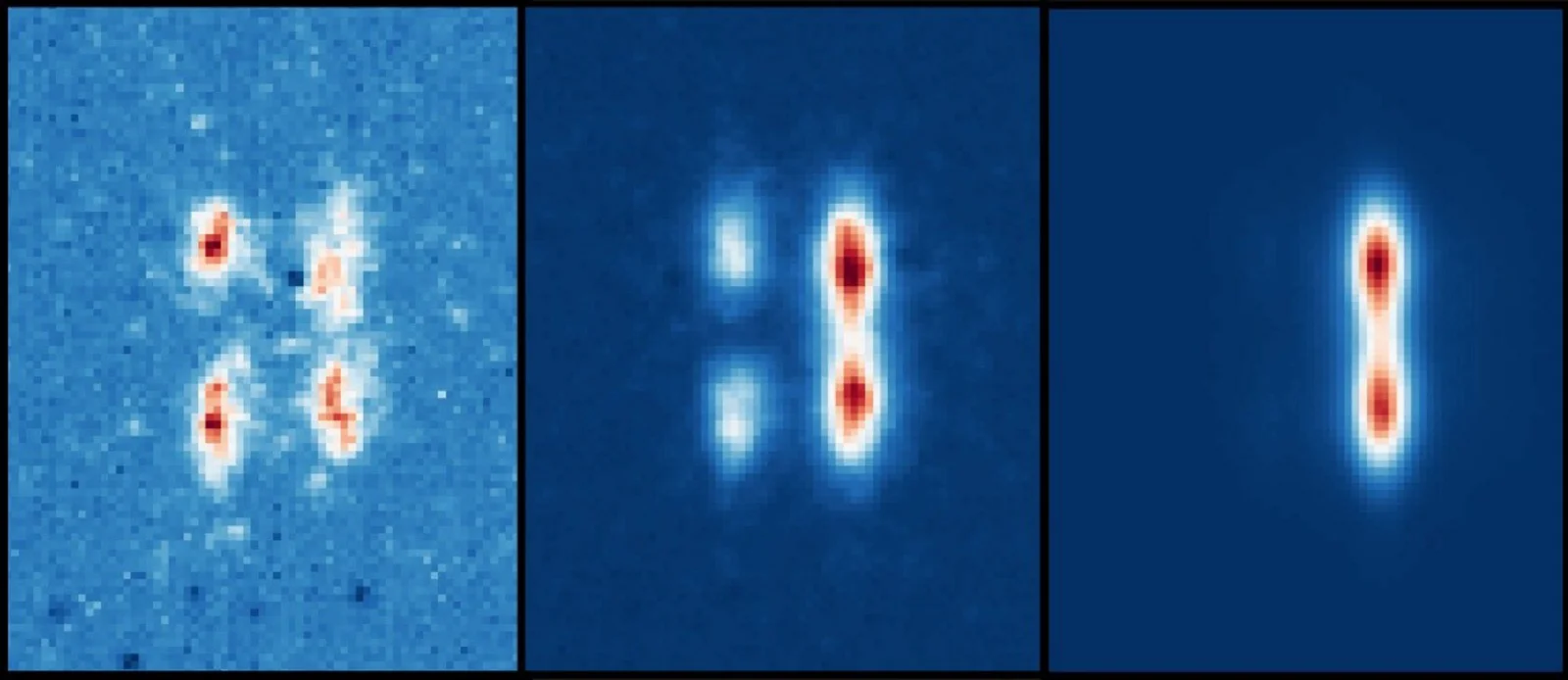
First demonstration of sunlight-pumped spontaneous parametric down-conversion (SPDC) paired with ghost imaging, producing quantum-correlated photons with a passive, sunlight-powered source. The setup achieved about 90.7% ghost-imaging visibility (near 95.5% with a 405 nm laser) and used a sun-tracking system and nonlinear crystal, suggesting potential for quantum imaging in remote or space environments while highlighting future gains from improved collection, crystal design, and reconstruction methods.

Scientists Advance Quantum Communication with Long-Distance Photonic Highway and Secure Protocols
science1 year ago

Scientists Advance Quantum Communication with Long-Distance Photonic Highway and Secure Protocols

Researchers at the University of Rochester and RIT have developed the Rochester Quantum Network (RoQNET), an 11-mile-long quantum communication system using photons transmitted over fiber-optic cables, which could enhance secure communications and enable new quantum technologies. The system leverages integrated photonic chips and aims to connect various research facilities, advancing scalable and cost-effective quantum networking.