Tag

Light

All articles tagged with #light

Hidden Handedness Emerges in Free-Space Light
science24 days ago

Hidden Handedness Emerges in Free-Space Light

Researchers show that light can naturally develop handedness (chirality) as it travels through empty space—even without mirrors or special materials—due to its internal topology when the beam is prepared in a balanced state. The emergent spin and twist of structured light could enable new ways to encode information, improve medical diagnostics and sensing, and boost data capacity in communications and future quantum networks.

Earth gravity bends light to boost remote sensing
science1 month ago

Earth gravity bends light to boost remote sensing

Australian physicist Enbang Li has built a compact, three‑foot device that uses gravity to bend light via spiraled fiber-optic coils, detecting tiny picosecond time delays to sense gravitational changes. The approach could enable high‑precision gravity sensing for mapping underground features, monitoring magma, and improving sensing on moving platforms like planes and submarines. While still in early lab stages, the work suggests photons can interact with Earth’s gravitational field in new ways and may prompt fresh thinking about light’s behavior, with findings published in Scientific Reports.

Photons Hit Quantized Hall Drift, Echoing Quantum Hall Effect
science2 months ago

Photons Hit Quantized Hall Drift, Echoing Quantum Hall Effect

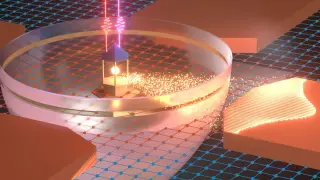
Researchers demonstrated a quantized transverse drift of light that mirrors the electronic quantum Hall effect, using a frequency-encoded photonic Chern insulator. The photon steps depend only on fundamental constants, potentially establishing an optical standard for ultra-precise measurements and strengthening quantum photonic technologies; the result, published in Physical Review X, could impact metrology and sensor development.

How Light Maintains Energy Over Cosmic Distances
science1 year ago

How Light Maintains Energy Over Cosmic Distances

Light travels through space at a constant speed and does not wear out or lose energy when it moves through the vacuum of space, unless it interacts with matter. Its ability to travel vast distances without losing energy is due to the emptiness of space and the nature of electromagnetic radiation, which is massless and unaffected by friction or resistance in a vacuum.

Discover the Hidden Clam Cathedrals Around You
science1 year ago

Discover the Hidden Clam Cathedrals Around You

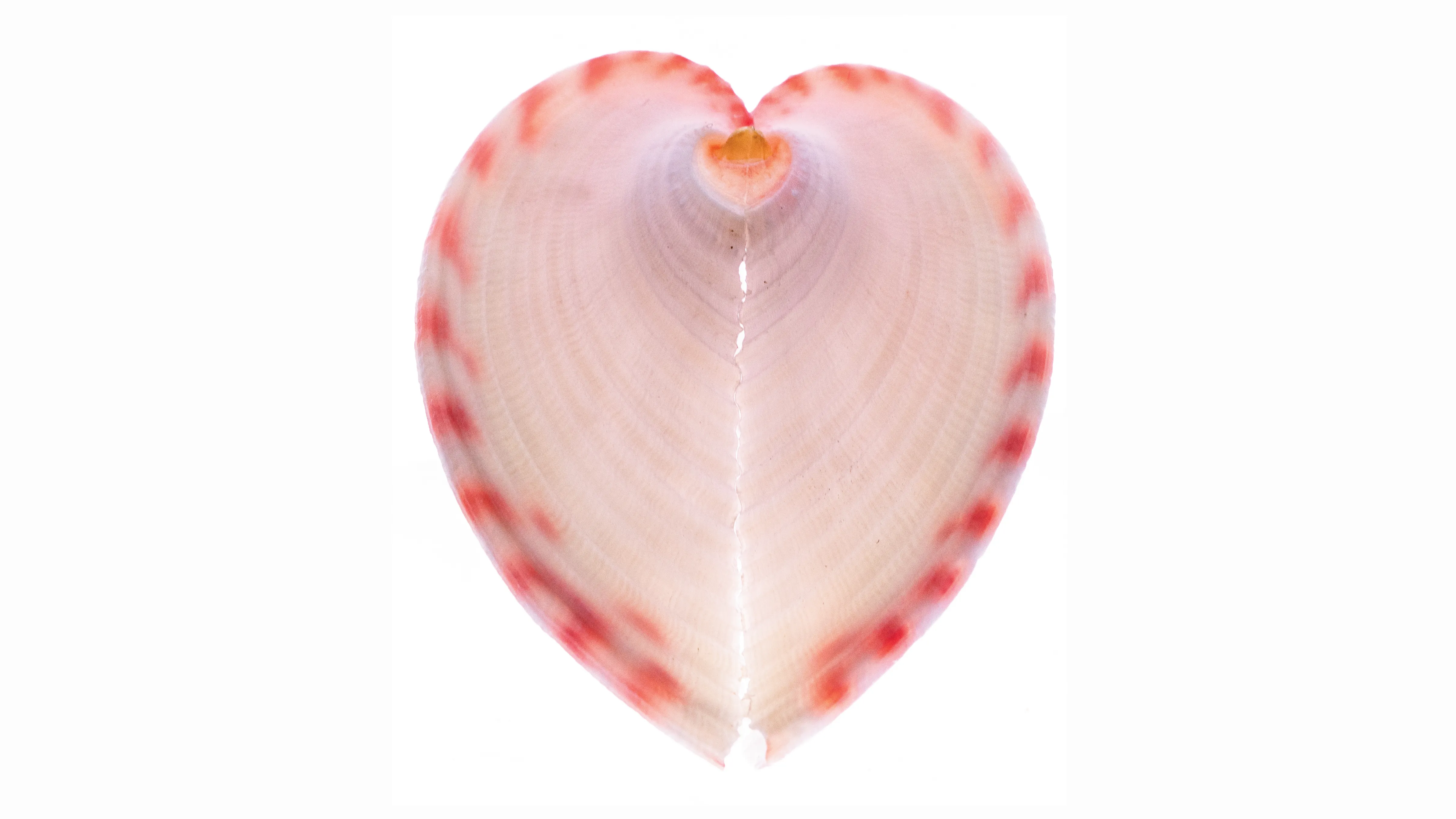
Biophysicist Dakota McCoy and her team have discovered that the heart cockle clam, Corculum cardissa, has shell structures that function like fiber optic cables, allowing beneficial sunlight to penetrate and sustain algae living inside. This natural phenomenon, reminiscent of stained glass windows, was detailed in a recent Nature Communications paper, highlighting the clam's unique adaptation long before human engineering achieved similar results.

science1 year ago

MIT's Photonic Processor Revolutionizes AI with Light-Speed Efficiency

MIT researchers have developed a new photonic neural network processor that uses light to perform calculations, potentially overcoming limitations of traditional electronic computing. This new system, which incorporates nonlinear optical function units (NOFUs), allows all neural network processing to occur on the chip, achieving high accuracy and ultra-low latency. The photonic chip, fabricated with standard semiconductor tools, could be manufactured at scale, offering a faster alternative to electronic processors for machine learning tasks.

Unraveling the Dual Nature of Light: Particle or Wave?
science1 year ago

Unraveling the Dual Nature of Light: Particle or Wave?

The nature of light as both a particle and a wave has puzzled scientists for centuries, with key experiments by Thomas Young and Albert Einstein providing evidence for its dual nature. Young's double-slit experiment demonstrated light's wave properties, while Einstein's explanation of the photoelectric effect revealed its particle characteristics. This wave-particle duality is fundamental to quantum mechanics and essential for the stability of atoms and the existence of life.

Lasers Found to Block Light, Creating Shadows
science1 year ago

Lasers Found to Block Light, Creating Shadows

Scientists have discovered that lasers can create shadows by using nonlinear materials, such as ruby, to block light. When two laser beams intersect in a specific way, the primary beam is obstructed by the secondary, casting a shadow. This finding challenges traditional notions of shadows and light interactions, and could have applications in optical switching and light transmission technologies. The research is set to be published in Optica.