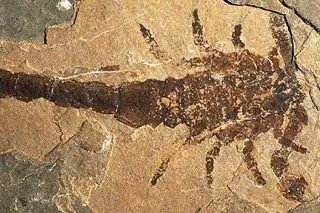
New analysis of UK fossils confirms Praearcturus gigas was a roughly 1-meter-long scorpion that lived about 415 million years ago, making it the largest known ancient scorpion and reshaping ideas about early land ecosystems and predator–prey dynamics.
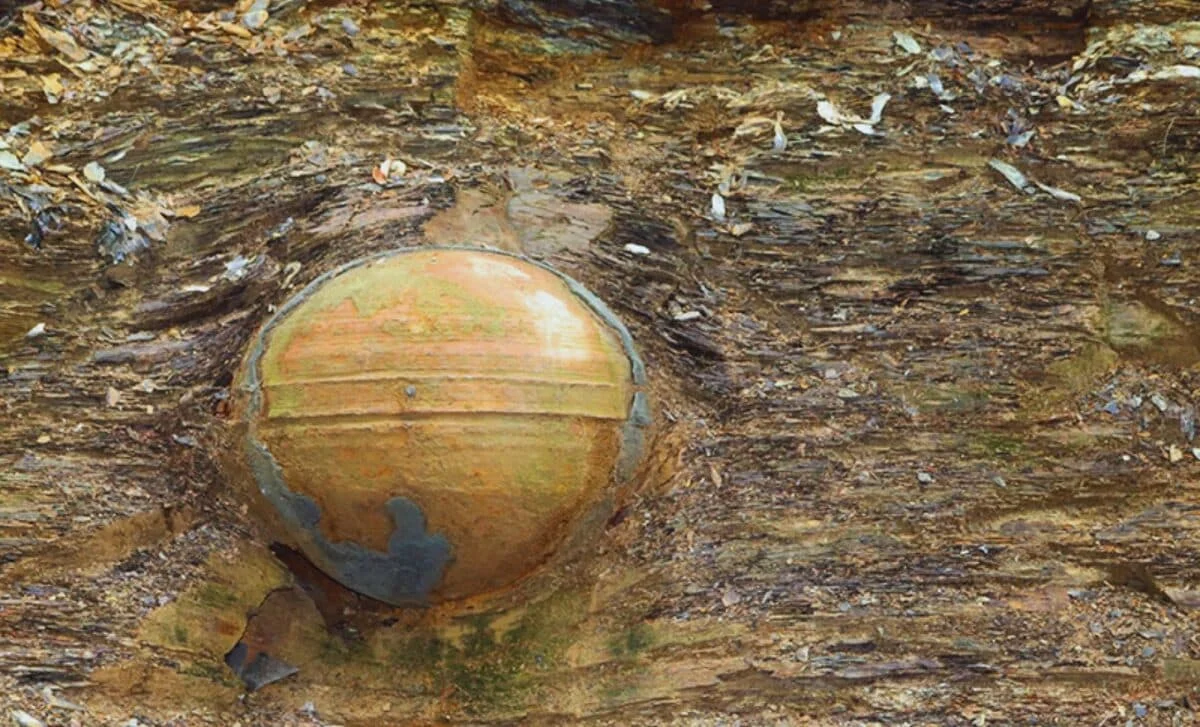
Columbus-area backyard rocks are spherical concretions—millions of years old, formed when minerals precipitated around organic material in Ohio’s Devonian seas about 360 million years ago; these concretions are found across Ohio in yards and parks (notably Shale Hollow Park) in sizes from centimeters to large, up to nine feet, with fossils inside being possible but rare, offering a window into ancient ocean chemistry.
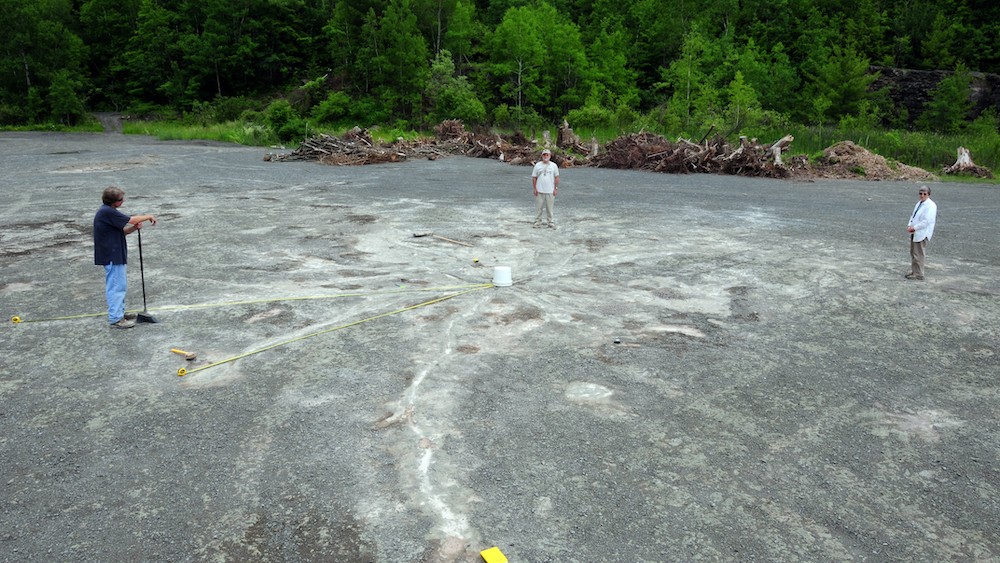
The Cairo Fossil Forest in New York, discovered in 2009 and announced in 2019, contains 385 million-year-old trees from the Devonian period, representing some of the oldest trees with leaves and woody trunks, and providing insights into early forest evolution and Earth's atmospheric changes.
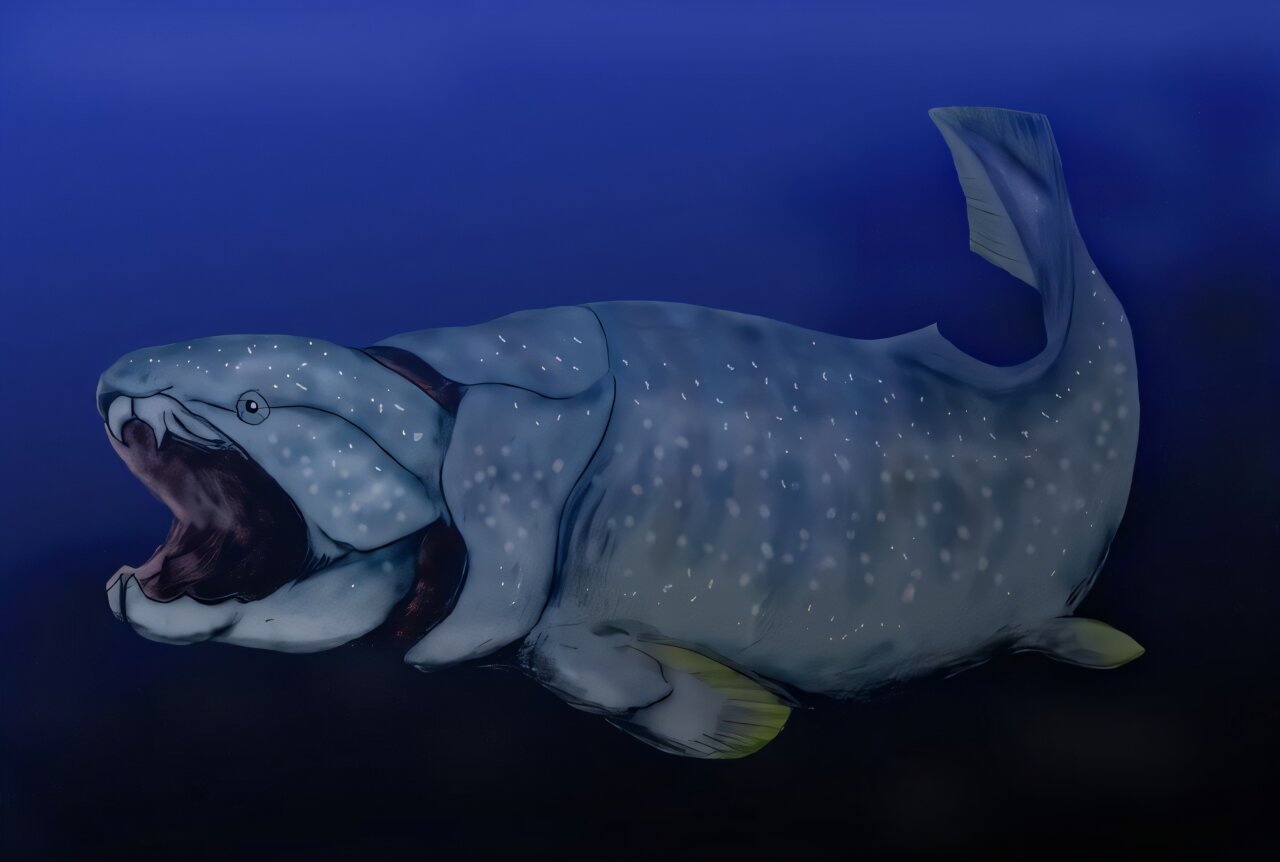
Recent research shows that rising oxygen levels in deep oceans during the Middle Devonian period facilitated the evolution and diversification of marine life, especially jawed vertebrates, influenced by terrestrial plant growth. This historical oxygenation event expanded habitats into deep waters and highlights the interconnectedness of land and sea ecosystems. The study also warns that modern human activities threaten this delicate oxygen balance, risking similar ecological disruptions today.
Rising deep-ocean oxygen levels, driven by the spread of woody plants, around 390 million years ago facilitated the migration and diversification of marine animals into deeper habitats, significantly influencing evolutionary patterns among early vertebrates, with implications for understanding both ancient and modern oceanic oxygen dynamics.
Fossilized fish tracks from the Lower Devonian period in Poland suggest the earliest known evidence of fish testing land mobility, predating the first fully terrestrial tetrapods by about 10 million years, indicating preadaptation for land movement in vertebrates.
The first seeds emerged during the Devonian period, around 372 million years ago, as plants transitioned from spores to seeds for reproduction. This evolution provided plants with advantages such as protective shells, food storage, and adaptability to diverse environments, allowing them to thrive and diversify. Seeds can remain dormant, enabling them to survive across generations and travel long distances, contributing to their evolutionary success.
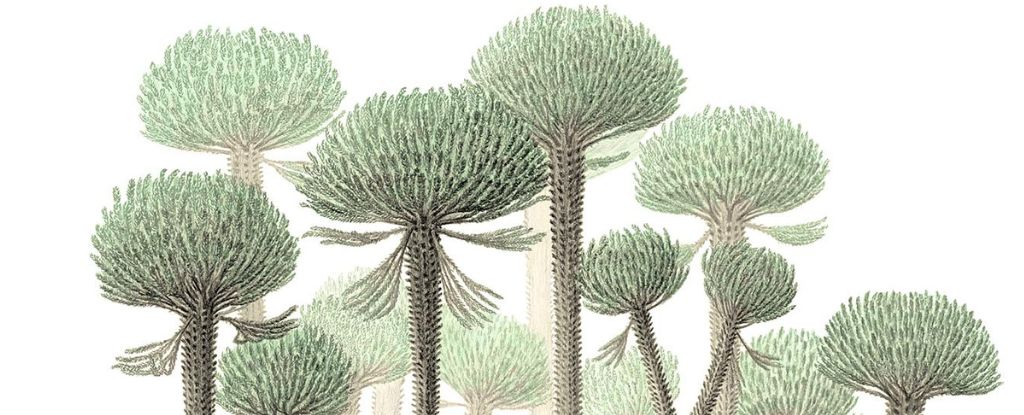
The oldest fossilized forest, dating back 390 million years, has been discovered in southwest England, featuring palm-like Calamophyton trees that were unlike any modern trees. The forest provides insight into life during the Devonian Period, when sea levels dropped to create massive continents. The trees, which lacked roots, leaves, and a vascular system, grew close together and shed hundreds of twigs, shaping the landscape and infusing the soil with organic matter. The discovery sheds light on the early interaction between water and land and the transformative impact of ancient plants on Earth's landscape.
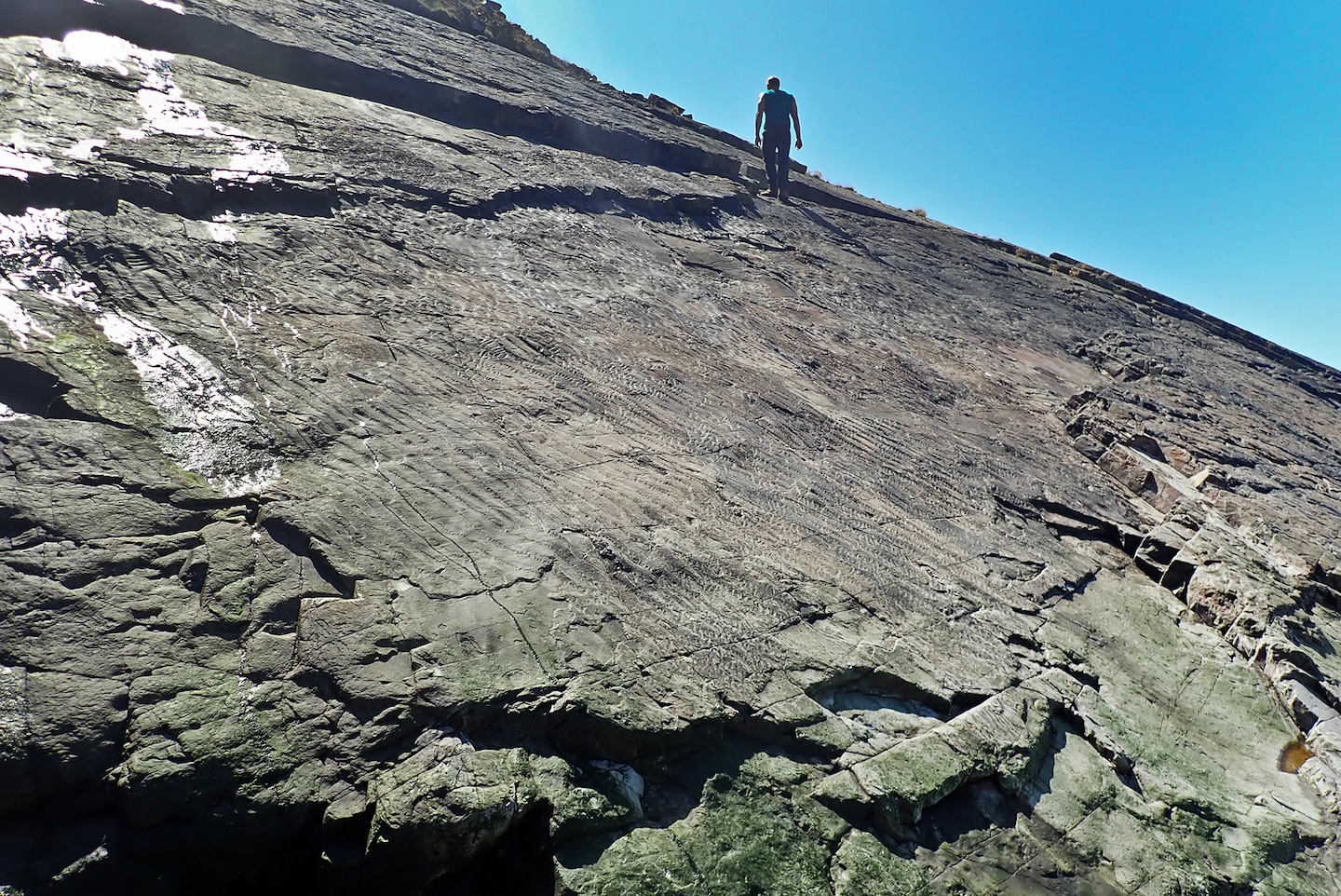
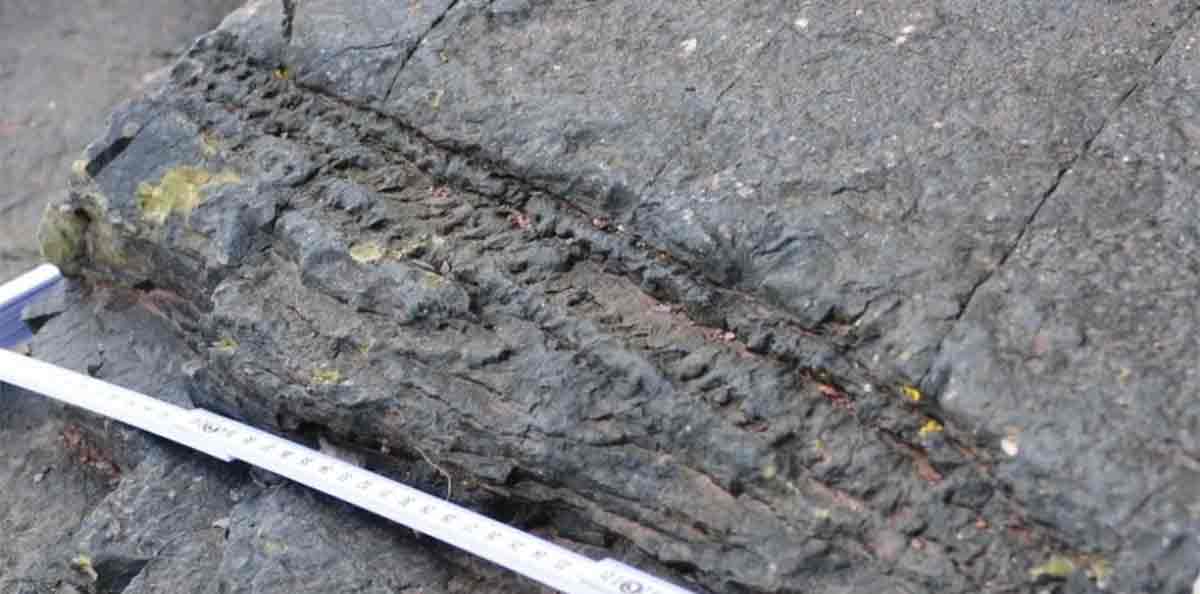
Scientists have uncovered fossilized remnants of the earliest known forest, dating back 390 million years to the Devonian Period, atop cliffs in England. The discovery sheds light on the development of the first forests, featuring peculiar trees called Calamophyton, which had thin, hollow trunks and no leaves. These ancient trees played a significant role in shaping the landscape and creating new animal habitats. The find underscores the importance of revisiting areas for new discoveries and highlights the need to continue exploring Earth's plant past.
Scientists from the Universities of Cambridge and Cardiff have unearthed the fossilized remains of a 390-million-year-old forest in South West England, featuring peculiar 13-foot thistle-like trees known as Calamophyton. This ancient forest, unlike any seen today, played a significant role in shaping the landscape during the pivotal Devonian Period, impacting the course of ancient rivers and marking a transformative period in Earth's history.
Remnants of the world’s oldest fossilized forest, dating back 390 million years, have been uncovered in Somerset, England, making it the oldest known forest in the world. The discovery sheds light on the early development of forests during the Devonian Period, revealing the presence of Calamophyton trees and cladoxylopsids. This finding challenges previous assumptions about the lack of significant plant fossils in the area and provides valuable insights into the ecological and geological history of early forests and their impact on landscapes and river systems.
Researchers have discovered the earliest fossil evidence of ancient forests in the British record, shedding new light on the early evolution of Earth’s land-based biosphere. The findings focus on the Middle Devonian Hangman Sandstone Formation in Southwest England, revealing an ancient forest landscape dominated by cladoxylopsid trees. These trees, with hollow trunks and twig-like structures, played a key role in shaping the earliest ‘modern’ riverbanks and significantly changed Earth’s landscapes and biosphere during the Devonian period, providing compelling evidence of tree-driven changes to physical environments.
Scientists have discovered the world's oldest fossilized forest in southwest England, dating back 390 million years, surpassing the previous record by 4 million years. The forest, from the Devonian Period, featured Calamophyton trees that resembled palm trees with thin, hollow trunks and twig-like structures. These trees played a crucial role in stabilizing riverbanks and coastlines, and provided a habitat for early invertebrates. The findings shed light on the rapid development of early forests and offer insights into the ecology of this ancient forest.
A rare 3D fossil of trees older than dinosaurs, dating back to the Devonian period, has been discovered in Canada. The fossil provides a unique glimpse into an ancient species, Sanfordiacaulis, which sprouted just 15 million years after the first tree-like flora appeared. The plant's bizarre bottle-brush anatomy and extended, radiating leaves give it an alien-like appearance. This discovery sheds light on the trial-and-error approach evolution takes and provides insight into the development of ancient forests.
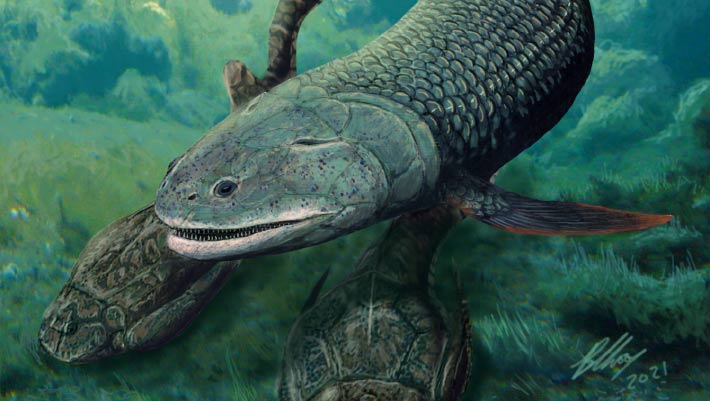
Paleontologists have discovered a new genus and species of Devonian tetrapodomorph fish, Harajicadectes zhumini, in central Australia, dating back 380 million years. The fish, up to 45-50 cm in length, is notable for its large skull openings believed to facilitate air-breathing, a feature seen in multiple tetrapodomorph lineages during the Middle-Late Devonian. This adaptation may have provided an advantage during a time of decreased atmospheric oxygen. The findings shed light on the evolution of air-breathing in early vertebrates and were published in the Journal of Vertebrate Paleontology.