Tag

Gastric Cancer

All articles tagged with #gastric cancer

New Data Links Daily Sugary Drinks to Higher Stomach Cancer Risk, but Experts Stress Low Absolute Risk
health6 hours ago

New Data Links Daily Sugary Drinks to Higher Stomach Cancer Risk, but Experts Stress Low Absolute Risk

A large US study finds that drinking more than one sugar-sweetened beverage daily is associated with a 2.5-fold higher incidence of gastric cancer, though absolute rates remain low. While observational data cannot prove causation, experts note that sugar may contribute to cancer risk through obesity, visceral fat, or direct cellular inflammation. Clinicians advise reducing sugary drink consumption for prevention but emphasize that sugar does not directly 'feed' existing tumors.


Processed Meat Linked to Higher Gastric and Esophageal Cancer Risk in Large Longitudinal Study
health1 month ago

Processed Meat Linked to Higher Gastric and Esophageal Cancer Risk in Large Longitudinal Study

A large, ~14-year study of 450,112 people finds that higher processed meat intake is associated with increased risk of gastric cancer (stomach cancer) and esophageal adenocarcinoma, with about a 9% higher risk for gastric cancer and a 13% higher risk for esophageal adenocarcinoma per 30 g/day of processed meat. Unprocessed red meat showed no significant link to these cancers, while a 20 g/day increase in white meat was linked to higher risk of stomach cancer in women (not in men). Potential mechanisms include cooking-related carcinogens and salt-related gastric damage from processed meat, but causation can’t be proven from this observational study. More research is needed to guide dietary guidelines." ,

Sugary Drinks Linked to 2.5x GI Cancer Risk, New U.S. Study Finds
health1 month ago

Sugary Drinks Linked to 2.5x GI Cancer Risk, New U.S. Study Finds

A large U.S. study of more than 112,000 health professionals found that daily consumption of sugar-sweetened beverages (including juices and sports drinks) was associated with about a 2.5-fold higher risk of developing stomach (gastric) cancer, compared with those who drank fewer than one such beverage per month; artificially sweetened drinks did not show the same link. Researchers point to possible fructose-related effects (obesity, insulin resistance, inflammation, hormonal changes, or gut microbiome alterations) and note this is the first study to demonstrate the association in a U.S. population.

Sugary drinks may raise stomach cancer risk, large cohort study finds
health1 month ago

Sugary drinks may raise stomach cancer risk, large cohort study finds

A large Harvard-affiliated cohort study found that consuming at least one sugar-sweetened beverage per day was linked to a 2.45-fold higher risk of gastric cancer compared with consuming less than one per month, with higher fructose intake tied to greater risk; the study is observational and cannot prove causation, and findings need replication across diverse populations.

Daily Sugary Drinks Linked to Higher Gastric Cancer Risk in US Study
health1 month ago

Daily Sugary Drinks Linked to Higher Gastric Cancer Risk in US Study

An analysis of two large US cohorts (Nurses' Health Study and Health Professionals Follow-Up Study) found that drinking at least one sugar-sweetened beverage per day was associated with a 2.45-fold higher risk of gastric cancer versus non-drinkers, with women facing roughly threefold and men about twofold increased risk. The study emphasizes correlation, not causation, and notes limitations such as incomplete data on Helicobacter pylori infection and health histories. Proposed mechanisms include weight gain, insulin resistance, inflammation, and microbiome changes; findings were published in Gastro Hep Advances.

Daily Sugar-Sweetened Beverages Linked to Higher Gastric Cancer Risk, U.S. Study Finds
health1 month ago

Daily Sugar-Sweetened Beverages Linked to Higher Gastric Cancer Risk, U.S. Study Finds

A study of more than 100,000 Americans finds that consuming at least one sugar-sweetened beverage per day is associated with more than a twofold increase in gastric cancer risk versus rarely consuming them. Sugar-sweetened beverages include regular soda, energy drinks and sugared juice; artificially sweetened beverages were not linked. The research, which notes limitations such as a predominantly White sample aged 30–75, underscores the need for further work to understand the biology behind the association. About 63% of U.S. adults report daily SSB intake.

From mouth to stomach: study finds oral bacteria tied to gastric cancer risk
health5 months ago

From mouth to stomach: study finds oral bacteria tied to gastric cancer risk

A cross-sectional study in Cell Reports Medicine links mouth bacteria to gastric cancer risk, finding 28 gut species shared with oral bacteria in saliva and stool and more common in gastric cancer patients. The results suggest mouth-to-gut transmission and potential saliva-based signals for early detection, but they cannot prove causation and require further research before clinical use.

Nordic Study Finds No Link Between Long-Term Heartburn Meds and Stomach Cancer
health8 months ago

Nordic Study Finds No Link Between Long-Term Heartburn Meds and Stomach Cancer

A 26-year Nordic registry-based study across Denmark, Finland, Iceland, Norway, and Sweden found no increased stomach cancer risk with long-term (over one year) use of proton pump inhibitors or H2 receptor antagonists after adjusting for age, sex, Helicobacter pylori infection treatment, ulcer history, smoking, alcohol-related diseases, obesity or diabetes, and other factors. While observational and unable to prove causation, the study mitigates biases of earlier research and suggests safety for patients reliant on these medications.

"Rising Cancer Rates in Young People Puzzle Medical Experts"
health2 years ago

"Rising Cancer Rates in Young People Puzzle Medical Experts"

Doctors are increasingly concerned about the rising incidence of cancer in young people, with cases like 27-year-old Meilin Keen's gastric cancer diagnosis highlighting the trend. The medical community is baffled by this development, as it challenges the traditional understanding of cancer as a disease of aging. Keen's experience with chemotherapy-induced brain fog also underscores the challenges young cancer patients face in continuing their daily lives.

"PANDA Trial: Neoadjuvant Atezolizumab Plus Chemotherapy for Gastric Adenocarcinoma"
medical-research2 years ago

"PANDA Trial: Neoadjuvant Atezolizumab Plus Chemotherapy for Gastric Adenocarcinoma"

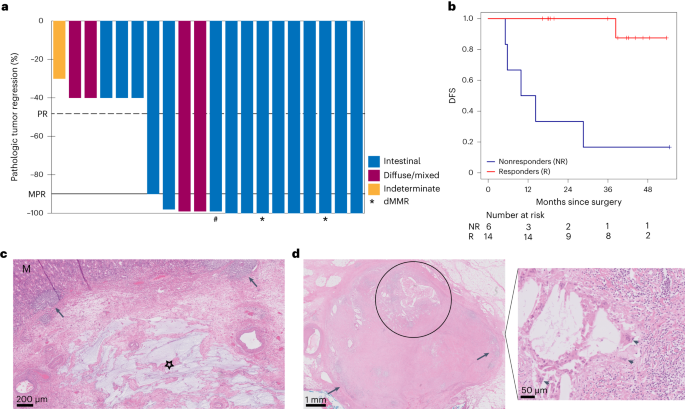
The phase 2 PANDA trial investigated the safety, efficacy, and immunologic correlates of atezolizumab plus chemotherapy in patients with resectable, nonmetastatic gastric and gastroesophageal junction adenocarcinoma. The study found that the combination treatment led to high pathologic response rates, with 70% of patients showing major pathologic responses and 45% achieving pathologic complete responses. Pathologic response was associated with significantly higher disease-free and overall survival rates. Additionally, circulating tumor DNA status was associated with response and disease-free survival, and biomarker analyses suggested that the functional status of CD8+ T cells may be a critical parameter in predicting response to the treatment.

The Deadly Duo: Unveiling the 45% Increase in Gastric Cancer Risk
health3 years ago

The Deadly Duo: Unveiling the 45% Increase in Gastric Cancer Risk

The risk of gastric cancer is significantly increased by the presence of both the stomach microbe H. pylori and rare variants in nine genes, according to a study by RIKEN researchers. The study suggests that targeted antibiotic treatments could reduce the risk in genetically susceptible individuals. The combination of H. pylori and certain gene variants can increase the lifetime probability of developing gastric cancer by over 45%. This finding offers hope for carriers of these gene variants, as they can be tested for H. pylori and receive antibiotic treatment to dramatically reduce their risk. The study also provides insights into how gastric cancer develops and may inform research on other cancers linked to these gene variants.