Tag

Quarks

All articles tagged with #quarks

LHCb Discovers Xi-cc-plus, a New Two-Charm Baryon
science20 days ago

LHCb Discovers Xi-cc-plus, a New Two-Charm Baryon

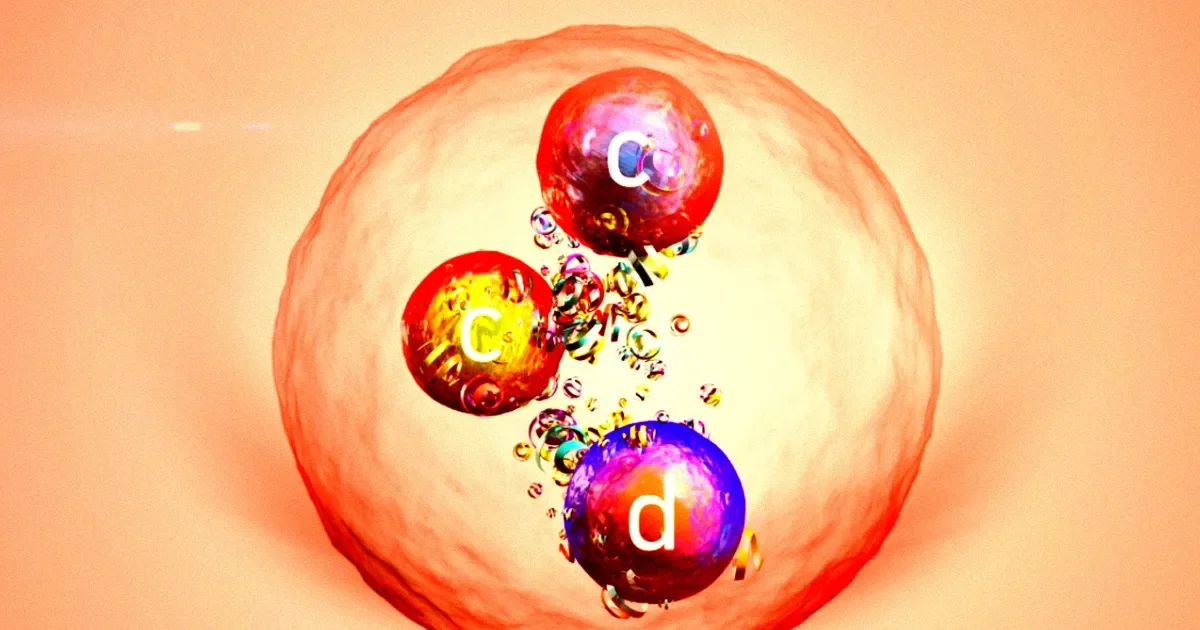
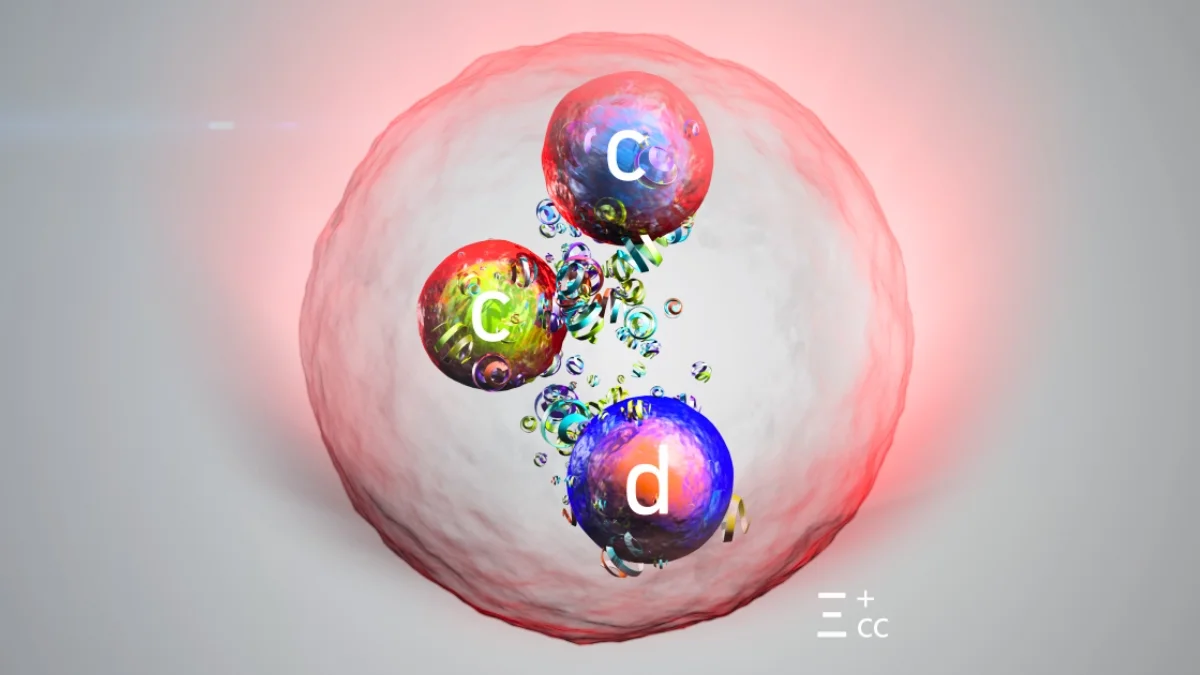
Scientists at CERN's LHCb have identified a new baryon, Xi-cc-plus, composed of two charm quarks and one down quark. Weighing about four times the mass of a proton, it offers a testbed for quantum chromodynamics and the strong force; discovered after 2023 detector upgrades, it is only the second observed baryon with two heavy quarks and has a lifetime up to six times shorter than a similar earlier baryon.

CERN Spots New Double-Charmed Baryon Xi-cc-plus After Upgrades
science24 days ago

CERN Spots New Double-Charmed Baryon Xi-cc-plus After Upgrades

CERN’s LHCb collaboration announced the discovery of a new baryon called Xi-cc-plus, containing two charm quarks and one down quark, making it the 80th identified particle and the first new one found after the LHCb upgrades completed in 2023. It is heavier than a proton and has a shorter lifetime—about six times shorter than a similar earlier particle—posing detection challenges but providing a test bed for quantum chromodynamics and guiding future collider plans like the Future Circular Collider.

LHC Finds Quark-Gluon Plasma Flows Like a Liquid in Early-Universe Conditions
science1 month ago

LHC Finds Quark-Gluon Plasma Flows Like a Liquid in Early-Universe Conditions

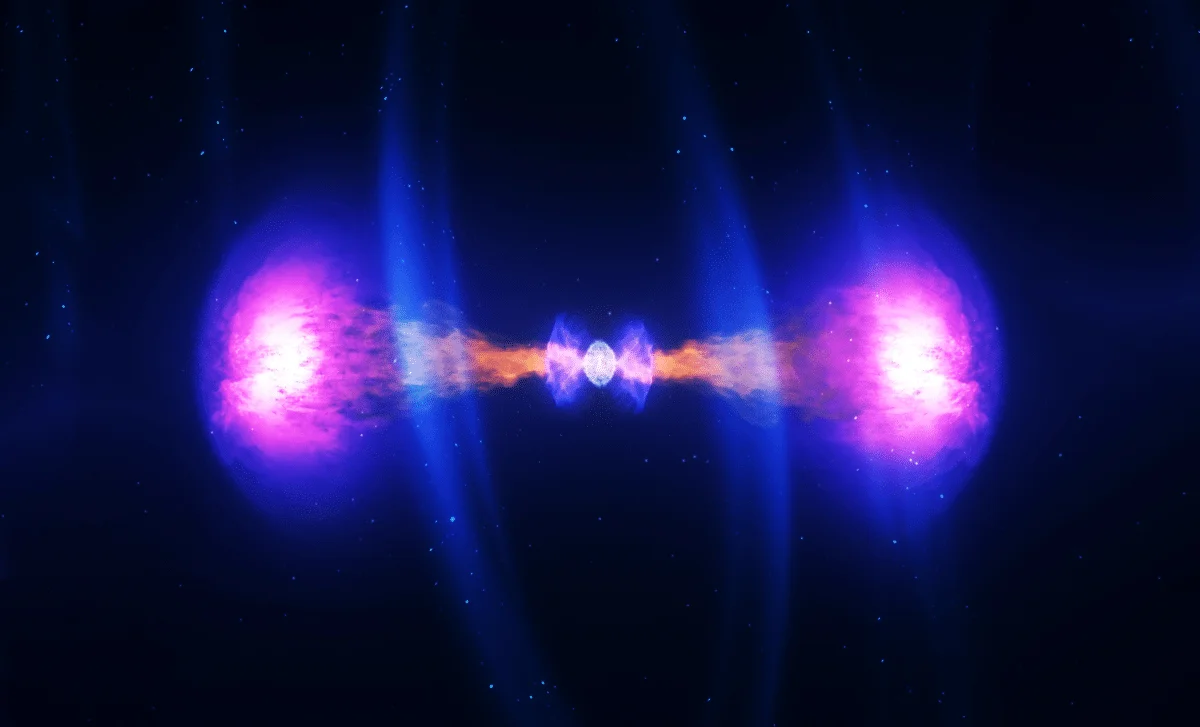
Physicists at the Large Hadron Collider recreated brief, Big-Bang–like conditions by colliding heavy nuclei, forming a droplet of quark-gluon plasma that behaves more like a liquid than a gas. By tagging quarks with Z bosons, researchers observed a tiny wake and a sub-percent dip in particle production, indicating energy transfer to the plasma and opening new avenues to study the primordial state of matter, as reported in Physics Letters B.

Primordial Soup Confirmed: Quark-Gluon Plasma Flows Like a Liquid
physics-and-chemistry2 months ago

Primordial Soup Confirmed: Quark-Gluon Plasma Flows Like a Liquid

Physicists analyzing LHC data from CERN used Z bosons as markers to track quarks moving through quark-gluon plasma, confirming that this primordial soup behaves like a liquid and creates wake patterns as it’s disturbed, a finding that supports long-standing theories about the early universe and provides new ways to study the properties of this exotic fluid.

LHC reveals primordial quark-gluon soup behaved like a liquid
science2 months ago

LHC reveals primordial quark-gluon soup behaved like a liquid

Using the Large Hadron Collider, researchers recreated quark‑gluon plasma and observed that the ultra‑hot primordial soup behaved as a nearly perfect liquid, producing wakes as fast‑moving quarks traversed it. By tagging events with a Z‑boson to isolate single-quark wakes, they found fluid‑like ripples that match hybrid model predictions, offering new insight into the universe’s first microseconds and the properties of the quark‑gluon plasma (Physics Letters B).

Quarks: The Next Frontier in Physics?
science1 year ago

Quarks: The Next Frontier in Physics?

Physicists are investigating discrepancies in quark mixing predictions within the Standard Model, which currently do not sum to 100%, suggesting potential new physics. Researchers, including Jordy de Vries, have developed a new framework to more accurately calculate quark mixing, particularly between up and down quarks, using precise measurements from nuclear beta decays. This work aims to refine theoretical models and reduce uncertainties, potentially revealing new physics beyond the Standard Model.

Scientists Unveil Quantum Entanglement Map in Protons
science1 year ago

Scientists Unveil Quantum Entanglement Map in Protons

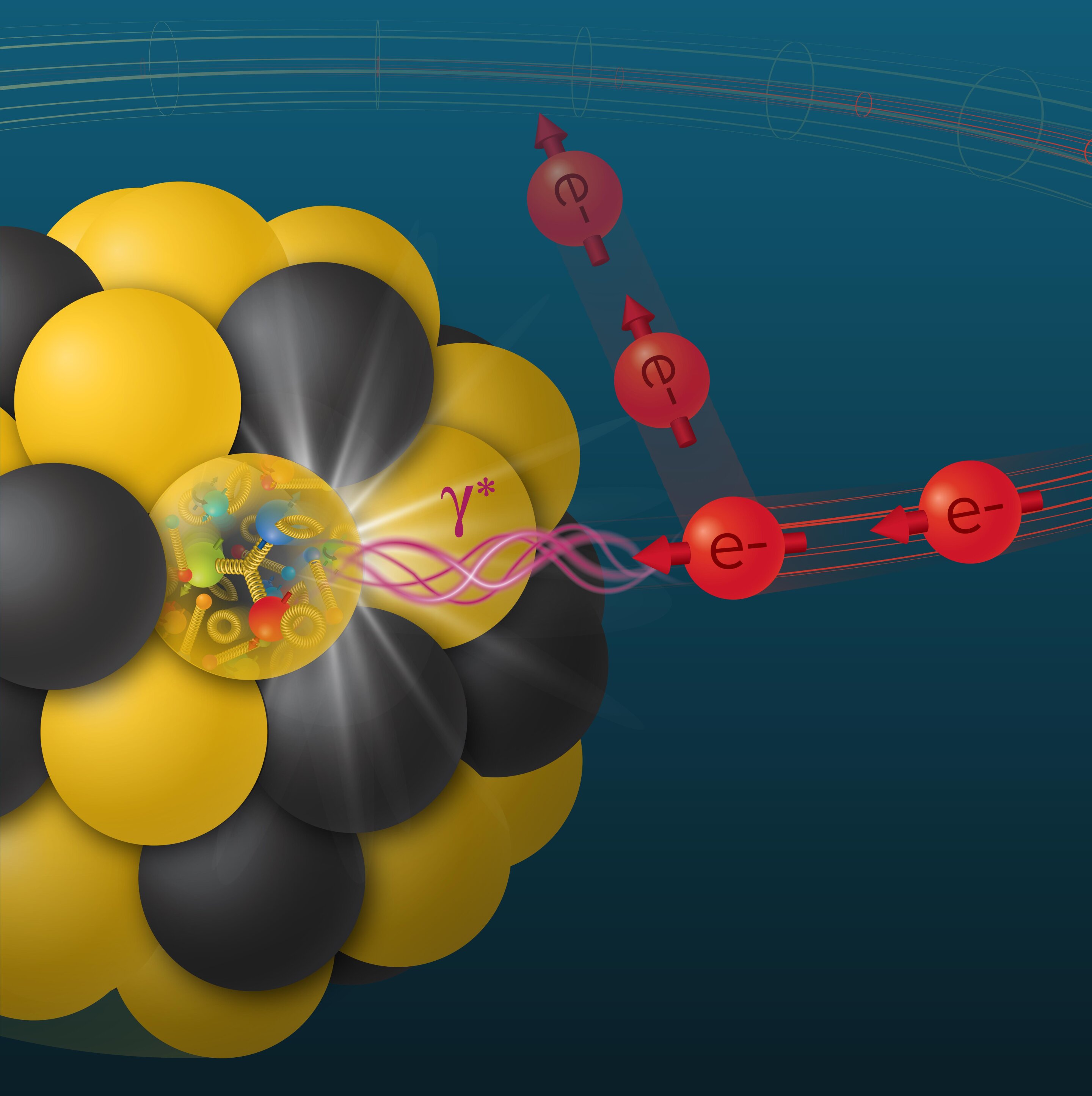
Scientists at Brookhaven National Laboratory have used quantum information science to map quantum entanglement among quarks and gluons inside protons, revealing a complex, dynamic system. This entanglement, occurring at incredibly short distances, affects the distribution of particles resulting from proton-electron collisions. The research, published in Reports on Progress in Physics, provides new insights into proton structure and lays the groundwork for future experiments at the Electron-Ion Collider, which will explore how nuclear environments impact entanglement.

Unveiling the Energy Origins of Mass
science1 year ago

Unveiling the Energy Origins of Mass

While the Higgs field is often credited with giving mass to particles, it actually contributes very little to the mass of the universe. Most of a person's mass comes from the energy of quarks moving at high speeds within protons and neutrons, as described by Einstein's equation E=mc². This energy, rather than the mass of the quarks themselves, accounts for the majority of mass, illustrating that matter is fundamentally made of energy.

Unveiling Neutron's Secret Layers of Matter
science1 year ago

Unveiling Neutron's Secret Layers of Matter

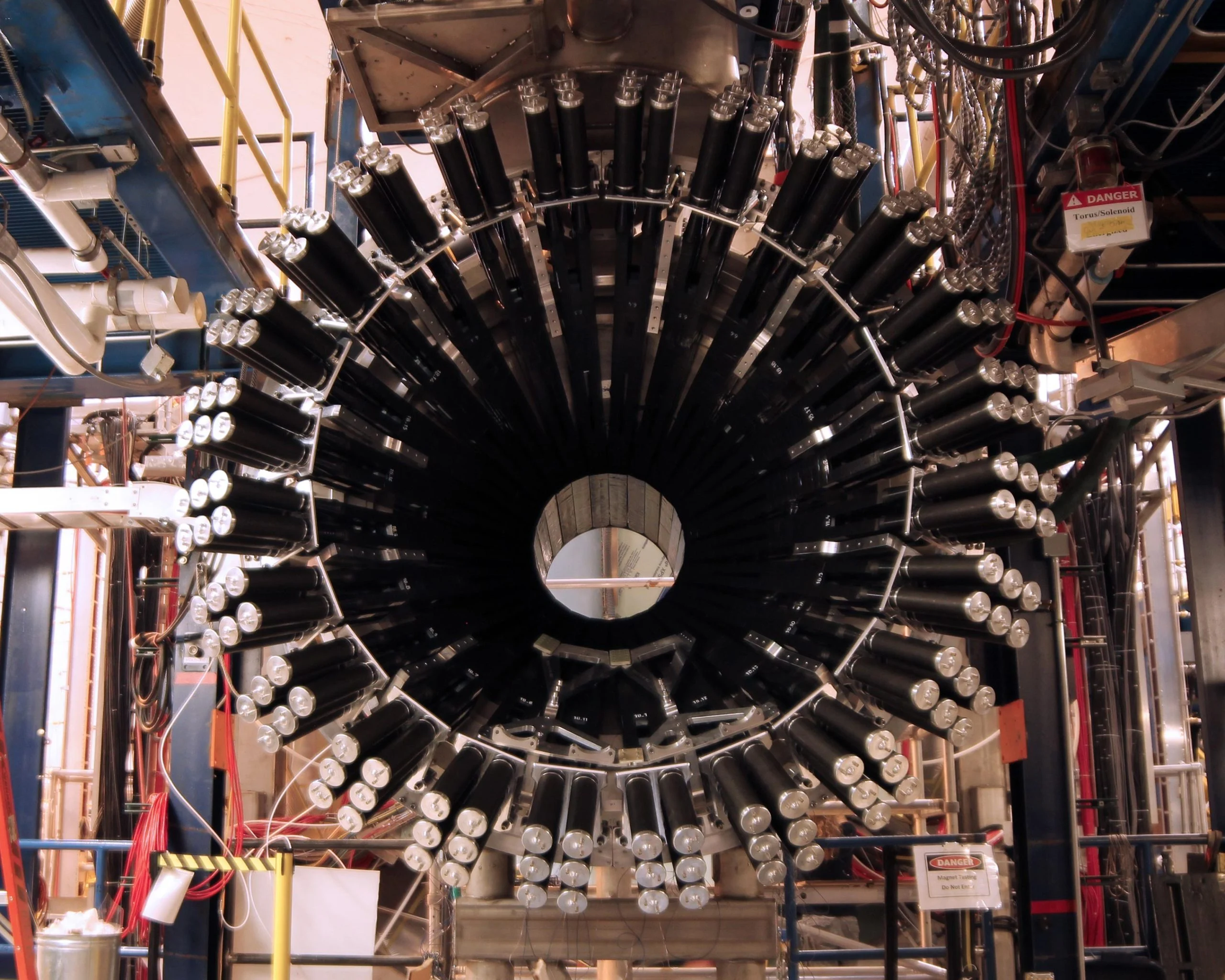
Scientists at the Thomas Jefferson National Accelerator Facility have made a breakthrough in understanding the internal structure of neutrons, revealing how quarks and gluons contribute to nucleon spin. This was achieved using a new Central Neutron Detector, developed over a decade, which allowed the first direct detection of neutrons in deeply virtual Compton scattering (DVCS) reactions. The findings, published in Physical Review Letters, advance nuclear physics by providing insights into the spin structure of nucleons and addressing the 'nucleon spin crisis.'

New Predictions for Meson Measurements Unveiled by Scientists
science1 year ago

New Predictions for Meson Measurements Unveiled by Scientists

Scientists at Brookhaven National Laboratory have used supercomputers to predict the distribution of electric charges in mesons, particles made of a quark and an antiquark. These predictions, validated through a method called factorization, align with low-energy measurements and will guide future high-energy experiments at the upcoming Electron-Ion Collider (EIC). The research aims to deepen understanding of how quarks and gluons generate the mass and structure of hadrons, which are fundamental to visible matter.

"Honoring a Landmark Physics Breakthrough"
science1 year ago

"Honoring a Landmark Physics Breakthrough"

Physicist David Politzer reflects on his groundbreaking 1973 discovery of asymptotic freedom, which revealed how the strong force binds quarks inside atomic nuclei. This discovery, for which he won the 2004 Nobel Prize in Physics, revolutionized particle physics by providing a working framework for quantum chromodynamics (QCD). Politzer discusses his journey, the challenges faced, and the broader implications of his work, which enabled precise calculations and experiments in the field.

"Unleashing the Strongest Magnetic Force in the Universe: A Breakthrough in Nuclear Matter Imprinting"
science2 years ago

"Unleashing the Strongest Magnetic Force in the Universe: A Breakthrough in Nuclear Matter Imprinting"

Scientists at the US Department of Energy's Brookhaven National Laboratory have created the strongest magnetic field ever observed on Earth by inducing off-centre collisions of heavy atomic nuclei in a particle accelerator. This breakthrough allows for the study of the electrical conductivity of quark-gluon plasma, providing new insights into the fundamental building blocks of matter. The magnetic field generated in these collisions is so powerful that it surpasses even that of neutron stars, making it possibly the strongest in the universe. This discovery opens up new avenues for understanding the deep inner workings of atoms and the universe as a whole.

"Unleashing the Strongest Magnetic Force in Nuclear Matter"
science2 years ago

"Unleashing the Strongest Magnetic Force in Nuclear Matter"

Scientists at the US Department of Energy's Brookhaven National Laboratory have created the strongest magnetic field ever observed on Earth by inducing off-centre collisions of heavy atomic nuclei in a particle accelerator. This breakthrough allows for the study of the electrical conductivity of quark-gluon plasma, shedding light on the fundamental building blocks of matter and the universe. The magnetic field generated in these collisions is so powerful that it surpasses even that of neutron stars, making it a significant discovery in the field of particle physics.

"The Impact of the Strong Force on Gravitational Waves"
physics2 years ago

"The Impact of the Strong Force on Gravitational Waves"

Physicists have shown that the behavior of quarks and gluons as the universe cools should leave a distinct signature on the stochastic gravitational wave background, potentially impacting models of the universe post-Big Bang. This finding could help distinguish early universe waves from those originating from other sources, such as astrophysical phenomena. The study suggests that the quantum chromodynamics crossover, which occurred about 10-5 seconds after the Big Bang, could affect the low-frequency gravitational wave signal, providing a way to search for this signature in pulsar timing array data.

"Unprecedented Achievement: Scientists Generate Universe's Strongest Magnetic Force"
science2 years ago

"Unprecedented Achievement: Scientists Generate Universe's Strongest Magnetic Force"

Scientists at the US Department of Energy's Brookhaven National Laboratory have created the strongest magnetic field ever observed on Earth by inducing off-centre collisions of heavy atomic nuclei in a particle accelerator. This breakthrough allows for the study of the electrical conductivity of quark-gluon plasma, shedding light on the fundamental building blocks of matter and the universe. The magnetic field generated is even stronger than that of a neutron star, providing new insights into the inner workings of atoms and the behavior of fundamental particles like quarks and gluons.