Tag

Navigation

All articles tagged with #navigation

Relativity at GPS scale: why satellites are clocked slow on the ground
science1 day ago

Relativity at GPS scale: why satellites are clocked slow on the ground

GPS satellites carry atomic clocks that are deliberately set to run slow on the ground so that relativistic effects in orbit bring them to the correct rate; special relativity would slow moving clocks by about 7 microseconds per day, while general relativity would speed them up by about 45 microseconds per day, for a net gain of roughly 38 microseconds per day that would cause ~10 km of positional error daily if uncorrected. The main correction is a ground-based frequency offset (about 10.22999999543 MHz instead of 10.23 MHz) so the clock is right in orbit, with smaller orbital variations corrected by the receiver.

The Price of GPS: How Our Sense of Place Is Eroded by Tech
science11 days ago

The Price of GPS: How Our Sense of Place Is Eroded by Tech

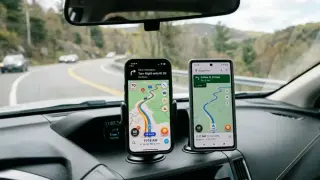
The piece argues that widespread GPS use over the past decade and a half has shifted most people from a hippocampus-driven cognitive map to a caudate-driven, autopilot navigation style. Those who still rely on memory maintain a relational, map-like understanding of their environment and a continuous sense of being oriented in space, while others gain efficiency at the cost of declining spatial memory. Reversing this would require deliberately navigating without GPS in selected contexts to exercise the cognitive map and reclaim a felt sense of location.

Starlink drops GPS-style PNT feature, but researchers aren’t done with space-based navigation
technology15 days ago

Starlink drops GPS-style PNT feature, but researchers aren’t done with space-based navigation

Starlink has shut down its GPS-like positioning, navigation, and timing (PNT) capability as of May 20, 2026, ending a peripheral feature that could offer location data even where GPS is jammed. SpaceX did not give a reason, fueling speculation about liability or a paid-service path ahead of an IPO. Independent researchers have already shown how Starlink signals can be exploited to determine location—with tens of seconds to meters-level accuracy—and have extended similar techniques to include OneWeb and other LEO constellations, suggesting robust GPS alternatives may emerge even after Starlink’s own PNT access is closed.

GPS III: A Major Leap for Global Positioning
technology28 days ago

GPS III: A Major Leap for Global Positioning

The GPS III rollout is progressing with SpaceX's launch of the 10th GPS III satellite, forming the first complete block of third‑generation satellites. Over the next decade, up to 22 GPS III satellites will replace aging units, bringing higher transmit power, a new 1176 MHz Safety of Life signal, and military spot beams to improve resistance to jamming. New interoperable signals L1C and L2C will enhance compatibility with Galileo, BeiDou, IRNSS, and QZSS, while M‑code will bolster security for military users. Looking ahead, GPS IIIF satellites will add optical reflectors, laser data links, and the Digital Rubidium Atomic Frequency Standard. For most users, improvements will be subtle, mainly faster signal locks and more accurate positioning, with upgrades largely invisible in everyday use.

Apple Maps unlocks personalized 'Suggested Places' in iOS 26.5
technology1 month ago

Apple Maps unlocks personalized 'Suggested Places' in iOS 26.5

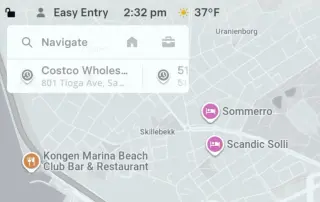
iOS 26.5 adds a two-item, personalized Suggested Places row in Apple Maps' search field, based on trending spots and your past searches; this builds on iOS 26's Visited Places, Preferred routes, and Apple Intelligence, which together make Maps smarter and more convenient, though ads are expected this summer and the author would like more than two suggestions (perhaps a horizontally scrolling list) once available.

Field Observations Hint Tarantulas Use Learning and Memory in Hunting
science1 month ago

Field Observations Hint Tarantulas Use Learning and Memory in Hunting

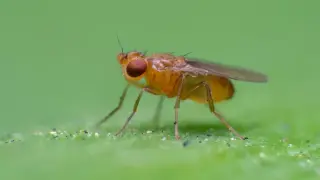
Field observations of nine hunting cases in arboreal and fossorial tarantulas across the Americas suggest these spiders can learn and remember, adapting their hunting by using spatial information. Arboreal species moved up to two meters to better-lit hunting spots, fossorial tarantulas climbed to the canopy—even in the dry season—and several spiders, including a blind cave-dwelling species, returned quickly and directly to their burrows after disturbance. While the findings point to learning and memory, it remains unclear whether external landmarks or internal cues guide navigation, and researchers call for further field work and controlled experiments to confirm the cognitive interpretation.

Storm-Struck Antarctic Mission Uncovers Uncharted Island in the Weddell Sea
science1 month ago

Storm-Struck Antarctic Mission Uncovers Uncharted Island in the Weddell Sea

During a storm-evading leg of its mission, Germany’s RV Polarstern sighted what looked like a dirty iceberg that proved to be a rocky island rising from ice in the northwestern Weddell Sea, measuring about 130 by 50 meters. The feature, hidden under ice for decades in a region labeled an ‘unexplored danger zone,’ was confirmed using multibeam sonar and a drone, and its true position differs from existing charts by roughly one nautical mile. It currently has no official name, but will be submitted for international approval and added to nautical charts, underscoring the value of direct bathymetric surveys in polar regions.

Perseverance gets onboard GPS-like localization for autonomous Mars driving
space-exploration3 months ago

Perseverance gets onboard GPS-like localization for autonomous Mars driving

NASA’s Perseverance now uses an onboard system called Mars Global Localization to pin down its exact position on Mars by matching panoramic images to orbital terrain maps, achieving accuracy of about 25 centimeters. This allows the rover to navigate more autonomously and travel farther without Earth-based guidance, building on AI-driven planning and reducing reliance on ground control.

Cross-species brain science: uniting data to reveal general principles
science3 months ago

Cross-species brain science: uniting data to reveal general principles

The author argues that neuroscience, despite vast cross-species data, remains fragmented into species-specific frameworks, hindering the discovery of general brain principles. She calls for making cross-species dialogue a core organizational principle, using differences between species (such as how hippocampal theta appears across rodents and humans) to constrain and refine theory rather than treat them as anomalies. The piece also urges frameworks that link signals across scales, reforms in training and conferences, and funding and publication practices that reward cross-species theory testing rather than single-model optimization.

Bats on a Remote Island Reveal Real-World Brain Compass
science4 months ago

Bats on a Remote Island Reveal Real-World Brain Compass

Researchers tracked brain activity of Egyptian fruit bats on a remote island to understand how head-direction cells form an internal compass. Using implanted microwires and wireless recording, the team found that, as the bats learned the island, their head-direction cells stabilized to precise directions anchored to landmarks, supporting a global compass model tied to the environment rather than magnetic or celestial cues. The work highlights the value of wild, real-world studies for navigation research and suggests humans may share a similar directional system.