Tag

Auroras

All articles tagged with #auroras

Midwest and beyond could see northern lights as solar storm approaches this weekend
space24 days ago

Midwest and beyond could see northern lights as solar storm approaches this weekend

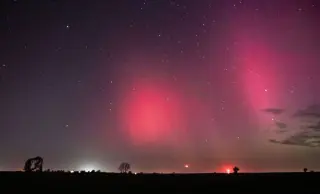
NOAA’s Space Weather Prediction Center warns of a G2 geomagnetic storm on March 19 (UTC) as multiple coronal mass ejections head toward Earth. The activity could push the auroral oval far south, with potential sightings in mid-latitudes including Illinois and New York, depending on CME timing and local conditions. Impacts could begin as early as 11 p.m. ET on March 18, with strongest activity 2–8 a.m. ET on March 19 and possibly lingering into March 20, and a wider window increases the chance for aurora displays given clear skies and favorable magnetic orientation.

Nine U.S. States Could See the Northern Lights Tonight
stargazing28 days ago

Nine U.S. States Could See the Northern Lights Tonight

Space.com reports that a fast solar wind is expected to sweep past Earth tonight (March 13), potentially triggering a minor geomagnetic storm and making the northern lights visible across nine U.S. states (Alaska, North Dakota, Minnesota, Montana, South Dakota, Wisconsin, Idaho, Washington, and Maine) if skies are clear. Best viewing is tonight into Saturday, with auroras possibly reaching farther south if conditions strengthen, per NOAA's Space Weather Prediction Center.

JWST reveals Io’s cold footprint in Jupiter’s auroras
astronomy1 month ago

JWST reveals Io’s cold footprint in Jupiter’s auroras

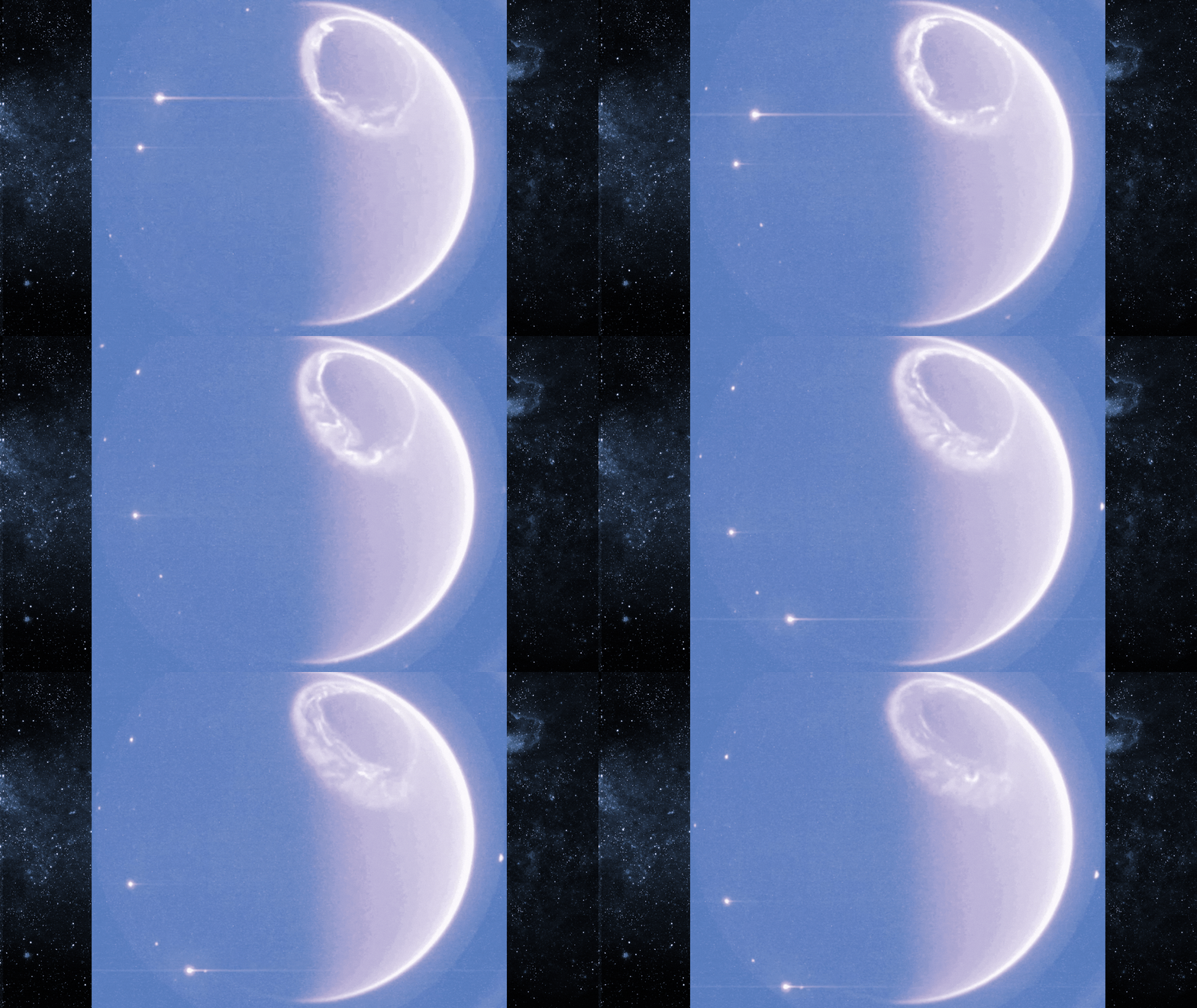
NASA’s James Webb Space Telescope captured a surprising cold spot and unusually high ion density beneath Io’s auroral footprint on Jupiter, showing real-time interactions between the planet’s magnetic field and its Galilean moons. The cold patch (~265°C) and dense plasma arise from Io’s volcanic plumes feeding a surrounding plasma torus, altering the aurora as ions crash into Jupiter’s atmosphere. Scientists will pursue follow-up observations to determine how often these footprints occur, with the findings published in Geophysical Research Letters.

Webb Maps Uranus in 3D, Unveiling Its Tilted Magnetosphere
science1 month ago

Webb Maps Uranus in 3D, Unveiling Its Tilted Magnetosphere

NASA’s James Webb Space Telescope captured Uranus’ upper atmosphere for nearly a full rotation, delivering the most detailed 3D view of its ionosphere and how energy moves through the atmosphere, where auroras form under the planet’s unusually tilted magnetic field, and it reinforces ideas about ongoing atmospheric cooling—while highlighting the uncertain outlook for a future Uranus mission.

JWST maps Uranus’s auroras and tilted magnetosphere in unprecedented detail
space1 month ago

JWST maps Uranus’s auroras and tilted magnetosphere in unprecedented detail

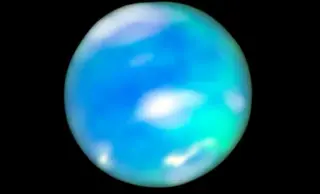
JWST mapped Uranus's upper atmosphere during a ~15-hour rotation, revealing two bright auroral belts around the planet's magnetic poles and a mid-latitude depletion region, along with a three-dimensional view of ion temperature and density up to about 5,000 km above the cloud tops. The data show Uranus’s highly tilted magnetosphere drives distinctive auroral patterns and that the atmosphere has cooled since the 1990s, offering clues about ice giants and exoplanet atmospheres.

Orbiting camera spots vivid auroras over Iceland and Canada during a minor geomagnetic storm
stargazing1 month ago

Orbiting camera spots vivid auroras over Iceland and Canada during a minor geomagnetic storm

A NASA/NOAA VIIRS satellite captured grayscale aurora displays over the Denmark Strait toward Iceland and across eastern Canada during a minor G1 geomagnetic storm on Feb. 16, 2026. The article explains auroras form when solar particles are channeled by Earth's magnetic field and collide with atmospheric gases, producing greens at mid-altitudes with possible magentas and reds at higher/lower altitudes; ground observers would have seen shimmering curtains under the right conditions.

space1 month ago

Webb Telescope Maps Uranus’ Ionosphere in 3D

The European Space Agency reports that the James Webb Space Telescope used the Near-Infrared Spectrograph (NIRSpec) to study Uranus’ upper atmosphere, focusing on its ionosphere up to about 5,000 km above the clouds and creating a full-rotation 3D map to probe the planet’s magnetic field and auroras. The measurements show the hottest regions at roughly 3,000–4,000 km altitude with ion densities around 1,000 km, offering new insights into Uranus’ enigmatic magnetosphere and ice-giant atmospheres more broadly.

Webb’s 17-hour stare at Uranus uncovers baffling auroras
space-and-spaceflight1 month ago

Webb’s 17-hour stare at Uranus uncovers baffling auroras

The James Webb Space Telescope spent 17 hours peering at Uranus to map its upper atmosphere in three dimensions, revealing two bright auroral bands near the planet’s unusual magnetic poles and a depletion of ions between them. The observations show how Uranus’s tilted, offset magnetosphere shapes energy flow and auroral activity, with the upper atmosphere still cooling since the 1986 Voyager flyby, providing new insights into the dynamics of ice-giant atmospheres.

JWST maps Uranus's upper atmosphere in 3D, revealing auroras and magnetic quirks
space1 month ago

JWST maps Uranus's upper atmosphere in 3D, revealing auroras and magnetic quirks

Using JWST's NIRSpec, an international team mapped Uranus's upper atmosphere in 3D for the first time, detailing how temperature and ion density vary up to 5,000 km above the clouds. The study finds peak temperatures around 3,000–4,000 km and ion-density maxima near 1,000 km, with two bright auroral bands and a magnetic-field driven depletion region. The average upper-atmosphere temperature is about 426 K (roughly 150 C), and the atmosphere continues to cool since the 1990s, offering new insight into the energy balance of ice giants.

NASA probes black auroras from Alaska with twin rocket missions
space1 month ago

NASA probes black auroras from Alaska with twin rocket missions

NASA launched two suborbital sounding rockets from Alaska’s Poker Flat Research Range to study the electrical environment of auroras. The BADASS mission investigated black auroras by sending instruments up to about 360 km, while the GNEISS mission used a pair of rockets to map the currents in the aurora, effectively creating a 3D view of the plasma. The data aim to improve understanding of geomagnetic activity that can affect satellites and astronauts.

Earth-Directed Sunspot 4366 Prompts Possible Auroras
space2 months ago

Earth-Directed Sunspot 4366 Prompts Possible Auroras

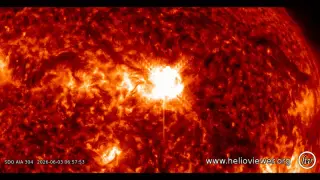
Sunspot region 4366 has unleashed dozens of solar flares in 24 hours, including multiple M-class and X-class eruptions—the strongest since 2024—making it the most active sunspot in years. NOAA's SWPC says a coronal mass ejection is headed toward Earth but is likely to miss or only graze it, potentially sparking auroras at unusually low latitudes later this week.

Solar storm lights up auroras from Europe to Southern California, 23-year radiation record broken
space2 months ago

Solar storm lights up auroras from Europe to Southern California, 23-year radiation record broken

A powerful solar radiation storm triggered by an X-class solar flare and a CME struck Earth, producing widespread auroras across Europe and parts of North America, with sightings as far south as Southern California. The storm peaked at G4 (severe) on the geomagnetic scale per NOAA’s SWPC. While dramatic, it wasn’t the strongest in two decades (the 2024 Mother’s Day event held that distinction), but it did set a 23-year record for solar-radiation storms.

Earth Faces a 20-Year-High Solar Storm: What This Powerful Space Weather Means
astronomy2 months ago

Earth Faces a 20-Year-High Solar Storm: What This Powerful Space Weather Means

Earth has been hit by the strongest solar radiation storm in more than two decades, driven by activity from the Sun. The resulting geomagnetic disturbance could affect radio communications, satellite operations, and power/stability of certain technologies, while also lighting up spectacular auroras at lower latitudes. Space weather agencies are monitoring the event and the potential cascading effects over the coming hours to days, offering updates and guidance for affected systems.