Tag

Magnetosphere

All articles tagged with #magnetosphere

Mars shows Earthlike solar-wind bending in its atmosphere
space11 hours ago

Mars shows Earthlike solar-wind bending in its atmosphere

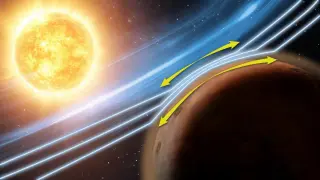
NASA’s MAVEN data, gathered after it went quiet in 2025, reveal the Zwan-Wolf effect—an Earth-style solar-wind deflection—occurring in Mars’ upper atmosphere during a December 2023 solar storm. The finding suggests Mars’ atmosphere can host temporary magnetic structures that funnel charged particles, implying the effect may operate continuously there but is usually too weak to detect; the results were published in Nature Communications. NASA also notes MAVEN’s ongoing recovery efforts after a period of contact loss.

Smile mission goes aloft to map Earth’s magnetosphere in X-rays
space5 days ago

Smile mission goes aloft to map Earth’s magnetosphere in X-rays

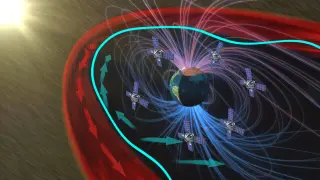
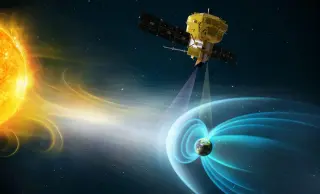
A European-Chinese satellite named Smile launched on a Vega-C rocket to image Earth’s magnetosphere in X‑rays for the first time, offering an outside view of how the solar wind interacts with the magnetic shield. The mission, a rare ESA–Chinese Academy of Sciences partnership, aims to test global magnetosphere models and improve space-weather forecasts, with first images due about three months after launch and a planned three‑year mission.

ESA-China SMILE Mission to X-ray Earth’s Magnetosphere During Solar Storms
space7 days ago

ESA-China SMILE Mission to X-ray Earth’s Magnetosphere During Solar Storms

A joint ESA-Chinese mission named SMILE will launch to study how solar storms interact with Earth's magnetosphere by capturing X-ray emissions—the first such observations—from a highly elliptical orbit that will reach up to 121,000 km above Earth. Equipped with an X-ray imager, UV imager, ion analyzer and magnetometer, SMILE aims to improve space-weather understanding for satellites, astronauts and power grids over an initial three-year mission.

Earth's Hidden Magnetic Cavity Shields Moon From Cosmic Rays
science2 months ago

Earth's Hidden Magnetic Cavity Shields Moon From Cosmic Rays

A Science Advances study using Chang’e-4 data and NASA’s LRO observations finds that Earth’s magnetosphere forms an extended “cavity” that provides extra shielding for the Moon, reducing lunar surface radiation by about 20% during certain orbital phases—specifically in a pre-noon geometry—even when the Moon is outside the magnetosphere. The effect, mainly affecting low-energy ions that contribute to skin dose, was observed across 31 lunar cycles and could inform radiation protection for future missions, such as Artemis.

Webb Maps Uranus in 3D, Unveiling Its Tilted Magnetosphere
science2 months ago

Webb Maps Uranus in 3D, Unveiling Its Tilted Magnetosphere

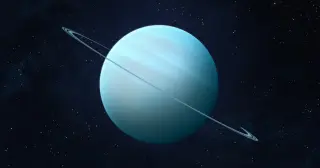
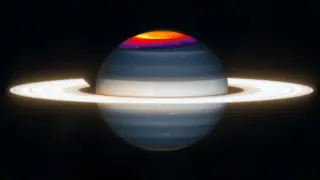
NASA’s James Webb Space Telescope captured Uranus’ upper atmosphere for nearly a full rotation, delivering the most detailed 3D view of its ionosphere and how energy moves through the atmosphere, where auroras form under the planet’s unusually tilted magnetic field, and it reinforces ideas about ongoing atmospheric cooling—while highlighting the uncertain outlook for a future Uranus mission.

NASA's ESCAPADE Deploys Twin Probes to Decode Mars Space Weather
space2 months ago

NASA's ESCAPADE Deploys Twin Probes to Decode Mars Space Weather

NASA’s ESCAPADE mission launched in 2025 with two orbiters to study how the solar wind and Mars’ magnetosphere interact, revealing real-time atmospheric escape from the Red Planet and providing stereo measurements. The twins will fly in tandem near Mars after looping through a distant Earth magnetotail en route to a Sept. 2027 Mars arrival, also doing discovery science in Earth’s magnetotail. Findings will help protect future astronauts and inform Mars communications and ionospheric understanding as humanity prepares to explore the Red Planet.

JWST maps Uranus’s auroras and tilted magnetosphere in unprecedented detail
space3 months ago

JWST maps Uranus’s auroras and tilted magnetosphere in unprecedented detail

JWST mapped Uranus's upper atmosphere during a ~15-hour rotation, revealing two bright auroral belts around the planet's magnetic poles and a mid-latitude depletion region, along with a three-dimensional view of ion temperature and density up to about 5,000 km above the cloud tops. The data show Uranus’s highly tilted magnetosphere drives distinctive auroral patterns and that the atmosphere has cooled since the 1990s, offering clues about ice giants and exoplanet atmospheres.

space3 months ago

Webb Telescope Maps Uranus’ Ionosphere in 3D

The European Space Agency reports that the James Webb Space Telescope used the Near-Infrared Spectrograph (NIRSpec) to study Uranus’ upper atmosphere, focusing on its ionosphere up to about 5,000 km above the clouds and creating a full-rotation 3D map to probe the planet’s magnetic field and auroras. The measurements show the hottest regions at roughly 3,000–4,000 km altitude with ion densities around 1,000 km, offering new insights into Uranus’ enigmatic magnetosphere and ice-giant atmospheres more broadly.

Webb’s 17-hour stare at Uranus uncovers baffling auroras
space-and-spaceflight3 months ago

Webb’s 17-hour stare at Uranus uncovers baffling auroras

The James Webb Space Telescope spent 17 hours peering at Uranus to map its upper atmosphere in three dimensions, revealing two bright auroral bands near the planet’s unusual magnetic poles and a depletion of ions between them. The observations show how Uranus’s tilted, offset magnetosphere shapes energy flow and auroral activity, with the upper atmosphere still cooling since the 1986 Voyager flyby, providing new insights into the dynamics of ice-giant atmospheres.

Earth’s Atmosphere Reaches the Moon via Solar Wind, Study Finds
science4 months ago

Earth’s Atmosphere Reaches the Moon via Solar Wind, Study Finds

A new study, supported by Apollo samples, argues that particles from Earth’s atmosphere have been carried into space by the solar wind and embedded in the Moon’s soil for billions of years. Contrary to earlier ideas that Earth’s magnetic field blocked such transfer, the modern magnetosphere may aid it by expanding Earth’s atmospheric reach and by channeling material to the Moon through the magnetotail when the Moon is in certain orbital phases. This ongoing Earth–Moon material exchange could supply volatile elements like oxygen, hydrogen, and nitrogen for future lunar exploration and provides a chemical record of Earth’s ancient atmosphere, with the findings published in Nature Communications Earth & Environment.

Earth's air drifts to the Moon for billions of years, new study suggests
science4 months ago

Earth's air drifts to the Moon for billions of years, new study suggests

New simulations and Apollo lunar samples indicate Earth’s atmospheric particles (oxygen, nitrogen and other volatiles) have been transported to the Moon by the solar wind interacting with Earth’s magnetic field for billions of years, embedding in lunar soil. This challenges the idea that the Moon’s volatiles come mainly from the Sun or from its formation, suggesting a long‑running Earth–Moon chemical exchange with implications for understanding Earth’s ancient atmosphere and for future lunar resource use.