Tag

Isle Of Skye

All articles tagged with #isle of skye

Milky Way Meets Lyrids: Breathtaking Skye Meteor Shower Photo
space18 days ago

Milky Way Meets Lyrids: Breathtaking Skye Meteor Shower Photo

Astrophotographer Josh Dury captured a composite image of Lyrid meteors streaking across the Milky Way above Scotland's Isle of Skye, using a star tracker, a Sony A7S III and a wide-angle lens to stack about 30 seconds of exposures into a single shot that also shows the Milky Way’s core, the Three Brothers of Skye waterfalls, and bright stars like Vega, Deneb and Altair; he described the moment as magical and blended terrestrial and cosmic details in post-processing.
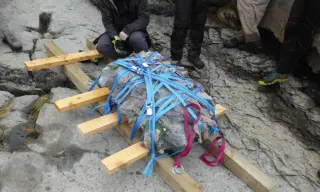
Dog-Sized Middle Jurassic Dinosaur Unearthed in Scotland, Hinting at Early Plant-Eater Diversity
science22 days ago

Dog-Sized Middle Jurassic Dinosaur Unearthed in Scotland, Hinting at Early Plant-Eater Diversity

Paleontologists unearthed Scotland’s most complete dinosaur skeleton to date—a dog-sized herbivorous ornithischian from the Middle Jurassic (~166 million years ago) on the Isle of Skye. The discovery, involving a subadult around eight years old, offers new clues about early plant-eating dinosaurs and could reshape understanding of Jurassic ecosystems, though researchers are still determining whether it represents a new species due to the fragmentary remains.

Dog-sized Middle Jurassic dinosaur hints at earlier herbivore diversification in Scotland
animals23 days ago

Dog-sized Middle Jurassic dinosaur hints at earlier herbivore diversification in Scotland

A 166-million-year-old, dog-sized, plant-eating dinosaur from the Middle Jurassic was unearthed on Scotland’s Isle of Skye. Although the skeleton was long spotted, difficult access and protected coastline kept it from extraction until now. The fragmentary remains suggest an early ornithischian (possibly an early ornithopod or ceratodan) and show it was at least eight years old when it died, based on growth rings. This could push back the appearance of iguanodontians and shed light on small herbivores in Jurassic ecosystems; researchers aim to find more fossils in the Kilmaluag Formation to better understand dinosaur evolution in this period.

"Decades of Dinosaur Discoveries: Unearthing Skye's Fossil Treasures"
paleontology2 years ago

"Decades of Dinosaur Discoveries: Unearthing Skye's Fossil Treasures"

The Isle of Skye has been a treasure trove of dinosaur fossils for the past 40 years, with discoveries including footprints, bones, and winged reptile fossils. The first fossil was found in 1982 by a young student, and subsequent finds have shed light on the dinosaurs of the Middle Jurassic period, a time of massive diversification in dinosaurs. The fossils, dating back 162-175 million years, have put Skye on the map as an important site for understanding life during this period.

"Scotland's Isle of Skye Reveals New Jurassic Flying Dinosaur Species"
paleontology2 years ago

"Scotland's Isle of Skye Reveals New Jurassic Flying Dinosaur Species"

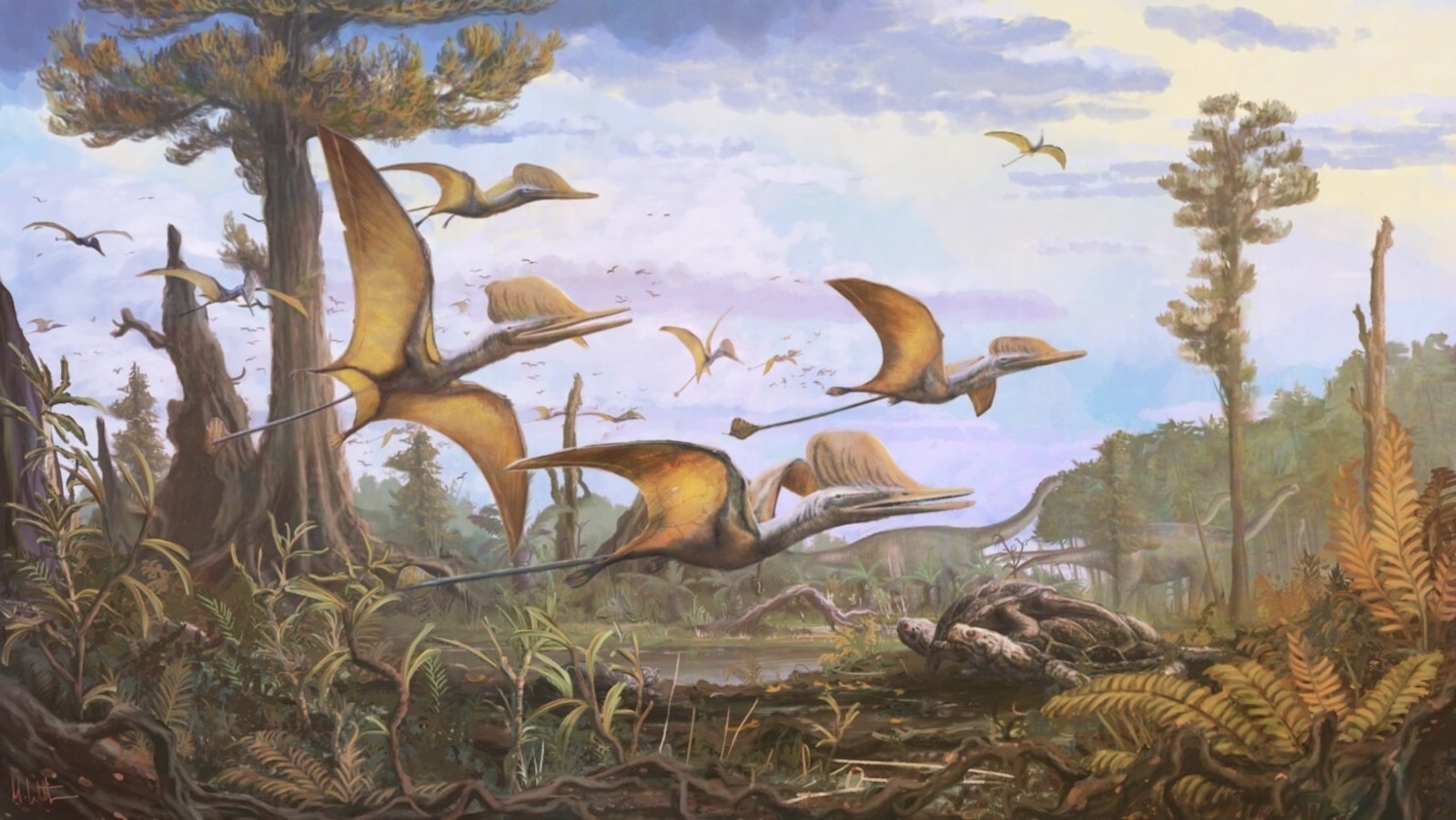
Scientists have discovered the remains of a winged dinosaur, Ceoptera evansae, on the Isle of Skye in Scotland, dating back 166 to 168 million years to the Middle Jurassic period. The incomplete fossil was first found in 2006 and has since been digitally prepared, shedding light on the evolution and diversity of pterosaurs. This discovery challenges previous understanding of the species' timeline and suggests that advanced flying reptiles appeared earlier and had a wider distribution than previously thought, providing valuable insights into the evolution of pterosaurs.

"Discovery of New Pterosaur Species Soars Above Isle of Skye"
paleontology-natural-history2 years ago

"Discovery of New Pterosaur Species Soars Above Isle of Skye"

A unique species of flying reptile, or pterosaur, called Ceoptera, has been discovered on the Isle of Skye, dating back 168-166 million years. Its wings, shoulders, legs, and backbone were found, but the skull was missing. This finding is significant as fossils from this era, known as the Middle Jurassic, are extremely rare. The discovery suggests that pterosaurs were common animals in Scotland during this time, ruling the skies before the existence of birds. The research, published in the Journal of Vertebrate Paleontology, sheds light on the evolutionary history of these ancient flying reptiles.