Tag

Kamooalewa

All articles tagged with #kamooalewa

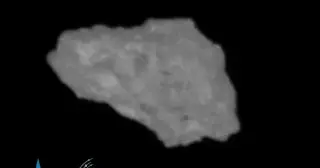
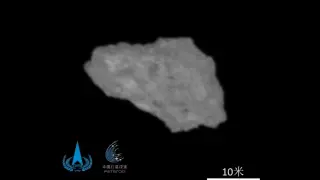
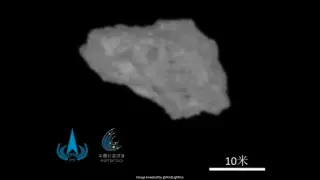
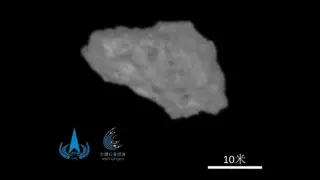
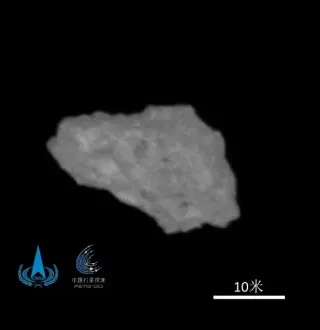
Tianwen-2 captures first close-up of Earth's co-orbital Kamoʻoalewa, renewing origin debates
science14 hours ago

Tianwen-2 captures first close-up of Earth's co-orbital Kamoʻoalewa, renewing origin debates

China’s Tianwen-2 reached the tiny co-orbital Kamoʻoalewa, taking its first close-range image from ~20 km on July 2 after a 400‑day, ~1 billion km chase, and will map its shape and composition ahead of a 2027 sample return. The milestone arrives as new dynamical models and spectroscopy from Webb/LBT challenge the leading lunar-fragment origin theory, with alternatives including a main-belt/ Flora-family source or other asteroid analogs, leaving the true origin unresolved.
China’s Tianwen-2 Closes in on Earth’s Tiny Quasi-Moon for First Asteroid Sample
science2 days ago

China’s Tianwen-2 Closes in on Earth’s Tiny Quasi-Moon for First Asteroid Sample

China’s Tianwen-2 spacecraft has approach within about 12.5 miles of the near-Earth quasi-moon Kamo'oalewa after a 400-day, 620-million-mile journey, enabling the first close photos and potentially a sample collection using an anchor-and-attach method, signaling a major milestone for China's space program.

China’s Tianwen-2 Approaches Earth’s Quasi-Moon for Possible Asteroid Sample
space2 days ago

China’s Tianwen-2 Approaches Earth’s Quasi-Moon for Possible Asteroid Sample

China’s Tianwen-2 spacecraft is within about 12.5 miles of Kamo'oalewa, one of Earth's quasi-moons, to capture the first clear photo and potentially collect surface samples over a year-long co-orbital mission using anchor-and-attach or touch-and-go methods; success would make China the third nation to sample an asteroid, though the tiny, rapidly rotating target poses significant challenges.

Tianwen-2 Reaches Earth's Quasi-Moon, Sends First Images of Kamo'oalewa
science3 days ago

Tianwen-2 Reaches Earth's Quasi-Moon, Sends First Images of Kamo'oalewa

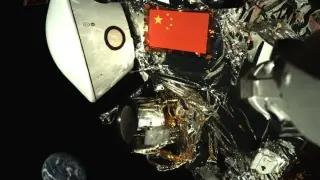
China’s Tianwen-2 probe has rendezvoused with the near-Earth quasi-satellite Kamo’oalewa, returning the first images from roughly 20 km away after a 400-day, 1-billion-km journey. The mission now aims to land briefly on the 41-meter asteroid to collect samples for return to Earth in 2027, a feat that would join Hayabusa, Hayabusa2, and OSIRIS-REx in asteroid-sample history. New analyses also question Kamo’oalewa’s lunar-origin hypothesis, suggesting it may be LL chondrite material that drifted from the Flora family.

China's Tianwen-2 captures first close-up of Earth's quasi-moon, but sampling may be trickier than hoped
space-exploration6 days ago

China's Tianwen-2 captures first close-up of Earth's quasi-moon, but sampling may be trickier than hoped

China's Tianwen-2 spacecraft has delivered the first close-up image of Earth's quasi-moon Kamo'oalewa (2016 HO3) after a roughly 400-day journey, suggesting a small, rubble-pile asteroid around 40–100 meters in size and signaling that planned sample collection could be more difficult than expected. If successful, any samples would be returned to Earth in 2027, making China the third country to achieve asteroid sample return; the mission will later pivot to a second target, 311P/PanSTARRS, in 2035.

Tianwen-2 captures first close view of Earth's tiny quasi-moon Kamoʻoalewa
space7 days ago

Tianwen-2 captures first close view of Earth's tiny quasi-moon Kamoʻoalewa

China’s Tianwen-2 mission has captured the first close-up images of Kamoʻoalewa (2016 HO3), Earth’s smallest known quasi-satellite, during a recent approach. The tiny asteroid (roughly 40–100 meters across) is being studied to understand its origin and orbital evolution, with plans to collect samples for return to Earth later this year despite the challenges of its irregular, rapidly spinning surface.

Two asteroid rendezvous highlight a weekend of space feats by Japan and China
space9 days ago

Two asteroid rendezvous highlight a weekend of space feats by Japan and China

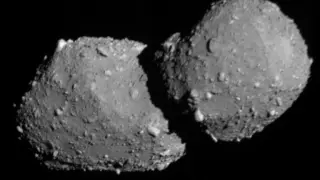
Two asteroid milestones dominated the weekend as Japan's Hayabusa2 performed a close flyby of the peanut-shaped asteroid Torifune during its extended mission, and China's Tianwen-2 arrived within about 20 km of the tiny near-Earth asteroid Kamo'oalewa to begin detailed study with a planned sample return in late 2027, while the mission also contemplates future targets such as 311P/PanSTARRS and a possible 2031 encounter with 1998 KY26 if all goes nominal.

Tiny quasi-moon Kamoʻoalewa may be lunar rock as China’s Tianwen-2 closes in for a sample
space13 days ago

Tiny quasi-moon Kamoʻoalewa may be lunar rock as China’s Tianwen-2 closes in for a sample

Kamoʻoalewa, a small near-Earth object that travels with Earth like a quasi-moon, may be a fragment of the Moon blown into space by an ancient impact. China’s Tianwen-2 has reached the object and will attempt to collect a few hundred grams of material using multiple sampling methods before returning a capsule to Inner Mongolia in 2027. A lunar origin would be confirmed if the rock’s minerals and isotopes match Moon rock; if not, the evidence would favor an asteroid origin. The mission will map and study Kamoʻoalewa through 2027, potentially providing a decisive answer about whether Earth has been shadowed by a piece of its own satellite.

China Aims for First Asteroid Sample Return from Earth's Quasi-Moon
space-and-spaceflight15 days ago

China Aims for First Asteroid Sample Return from Earth's Quasi-Moon

China’s Tianwen-2 spacecraft aims to rendezvous with near-Earth asteroid Kamo'oalewa, collect a small sample (20–100 mg) and return it to Earth by April 2027, potentially making it China’s first asteroid sample return; Kamo'oalewa is a quasi-satellite that may be Moon-origin rock, offering clues to the Moon’s early history, with the mission also planning a flyby of main-belt asteroid 311P/PANSTARRS in 2035.

China’s Tianwen-2 aims for first-ever sampling of Earth’s quasi-moon Kamo'oalewa
space-exploration27 days ago

China’s Tianwen-2 aims for first-ever sampling of Earth’s quasi-moon Kamo'oalewa

China’s CNSA Tianwen-2 spacecraft has reached the near-Earth quasi-moon Kamo'oalewa and is set to attempt sampling on July 4, 2026, potentially via a touch‑and‑go grab or direct drilling, collecting about 100 grams of surface material. After mapping the rock from ~300 m to 20 km altitude, the samples would return to Earth in late 2027, with a planned 2035 follow‑up to study 311P/PanSTARRS. The mission could reveal Kamo'oalewa’s origin—perhaps lunar debris or a main-belt fragment—while showcasing China’s space capabilities and informing future asteroid resource exploration.

Kamoʻoalewa: Earth’s quasi-satellite may be an ordinary space rock
space29 days ago

Kamoʻoalewa: Earth’s quasi-satellite may be an ordinary space rock

A peer‑reviewed study argues Kamoʻoalewa is likely an ordinary LL chondrite asteroid weathered in sunlight, not lunar debris; the researchers show that powder from LL chondrites can mimic the Moon’s reddened spectrum, pointing to a Flora‑family origin via orbital resonances. The debate may be settled when China’s Tianwen‑2, currently circling the asteroid to collect a sample, returns material to Earth in 2027 for definitive isotopic and mineral tests.

The New Space Race: Bringing Home Untouched Mars, Phobos, and Asteroid Samples
space1 month ago

The New Space Race: Bringing Home Untouched Mars, Phobos, and Asteroid Samples

NASA’s Mars Sample Return architecture has effectively been unwound in favor of a Mars Future Missions technology line, shifting the race for pristine samples to China and Japan with campaigns targeting Mars, the Martian moon Phobos, and the near-Earth asteroid Kamo'oalewa. Perseverance has collected roughly 30 sealed samples but there is currently no funded retrieval mission in the U.S. pipeline. Looking ahead, China’s Tianwen-2 aims for Kamo'oalewa with a 2026–27 rendezvous and a 2027 return, Japan’s MMX targets Phobos samples for around 2031, and China’s Tianwen-3 aims to return Martian material around 2030–31; if Tianwen-3 succeeds, China would deliver the first Martian samples, though the Jezero collection remains scientifically richer and presently unfunded for retrieval under U.S. policy.