Tag

Quasi Moon

All articles tagged with #quasi moon

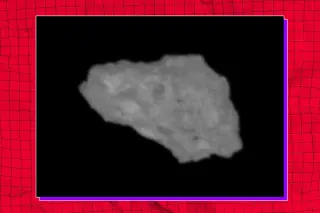
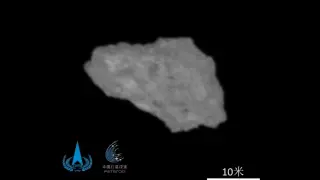
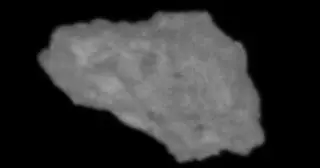
China's Tianwen-2 captures first close-up of Earth's quasi-moon, but sampling may be trickier than hoped
space-exploration2 days ago

China's Tianwen-2 captures first close-up of Earth's quasi-moon, but sampling may be trickier than hoped

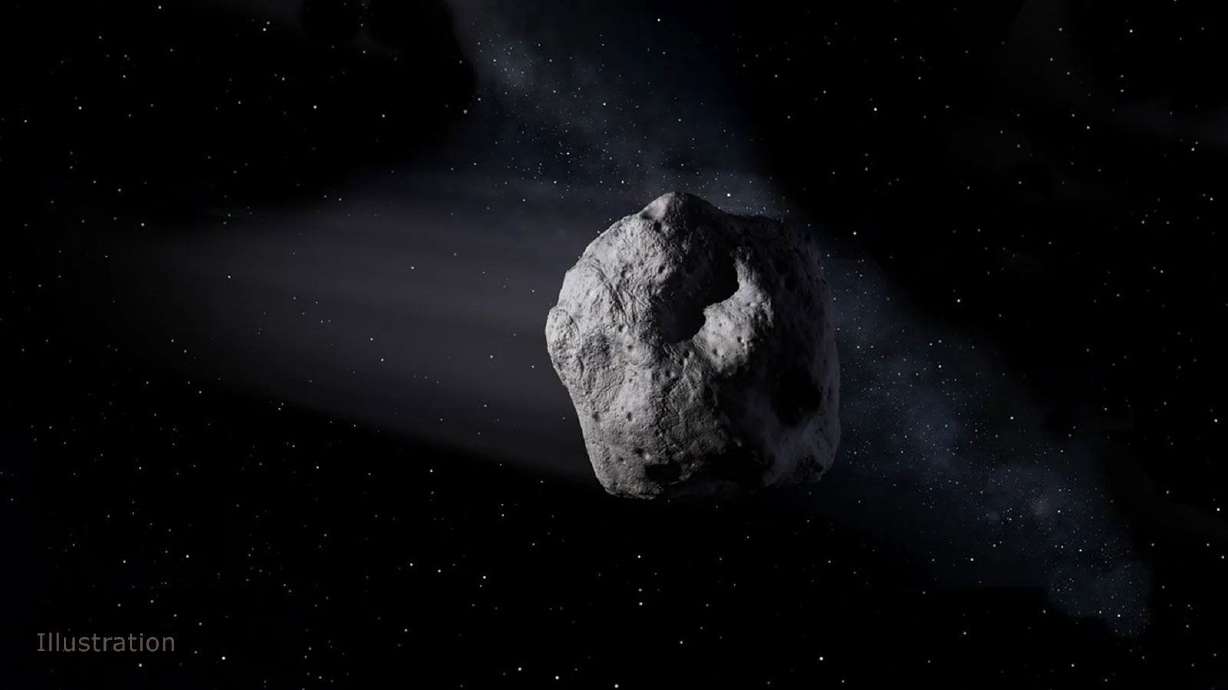
China's Tianwen-2 spacecraft has delivered the first close-up image of Earth's quasi-moon Kamo'oalewa (2016 HO3) after a roughly 400-day journey, suggesting a small, rubble-pile asteroid around 40–100 meters in size and signaling that planned sample collection could be more difficult than expected. If successful, any samples would be returned to Earth in 2027, making China the third country to achieve asteroid sample return; the mission will later pivot to a second target, 311P/PanSTARRS, in 2035.

Tiny quasi-moon Kamoʻoalewa may be lunar rock as China’s Tianwen-2 closes in for a sample
space9 days ago

Tiny quasi-moon Kamoʻoalewa may be lunar rock as China’s Tianwen-2 closes in for a sample

Kamoʻoalewa, a small near-Earth object that travels with Earth like a quasi-moon, may be a fragment of the Moon blown into space by an ancient impact. China’s Tianwen-2 has reached the object and will attempt to collect a few hundred grams of material using multiple sampling methods before returning a capsule to Inner Mongolia in 2027. A lunar origin would be confirmed if the rock’s minerals and isotopes match Moon rock; if not, the evidence would favor an asteroid origin. The mission will map and study Kamoʻoalewa through 2027, potentially providing a decisive answer about whether Earth has been shadowed by a piece of its own satellite.

China’s Tianwen-2 aims for first-ever sampling of Earth’s quasi-moon Kamo'oalewa
space-exploration23 days ago

China’s Tianwen-2 aims for first-ever sampling of Earth’s quasi-moon Kamo'oalewa

China’s CNSA Tianwen-2 spacecraft has reached the near-Earth quasi-moon Kamo'oalewa and is set to attempt sampling on July 4, 2026, potentially via a touch‑and‑go grab or direct drilling, collecting about 100 grams of surface material. After mapping the rock from ~300 m to 20 km altitude, the samples would return to Earth in late 2027, with a planned 2035 follow‑up to study 311P/PanSTARRS. The mission could reveal Kamo'oalewa’s origin—perhaps lunar debris or a main-belt fragment—while showcasing China’s space capabilities and informing future asteroid resource exploration.

Astronomers Reveal Earth’s Potential Quasi-Moons and Asteroid 2025 PN7
science8 months ago

Astronomers Reveal Earth’s Potential Quasi-Moons and Asteroid 2025 PN7

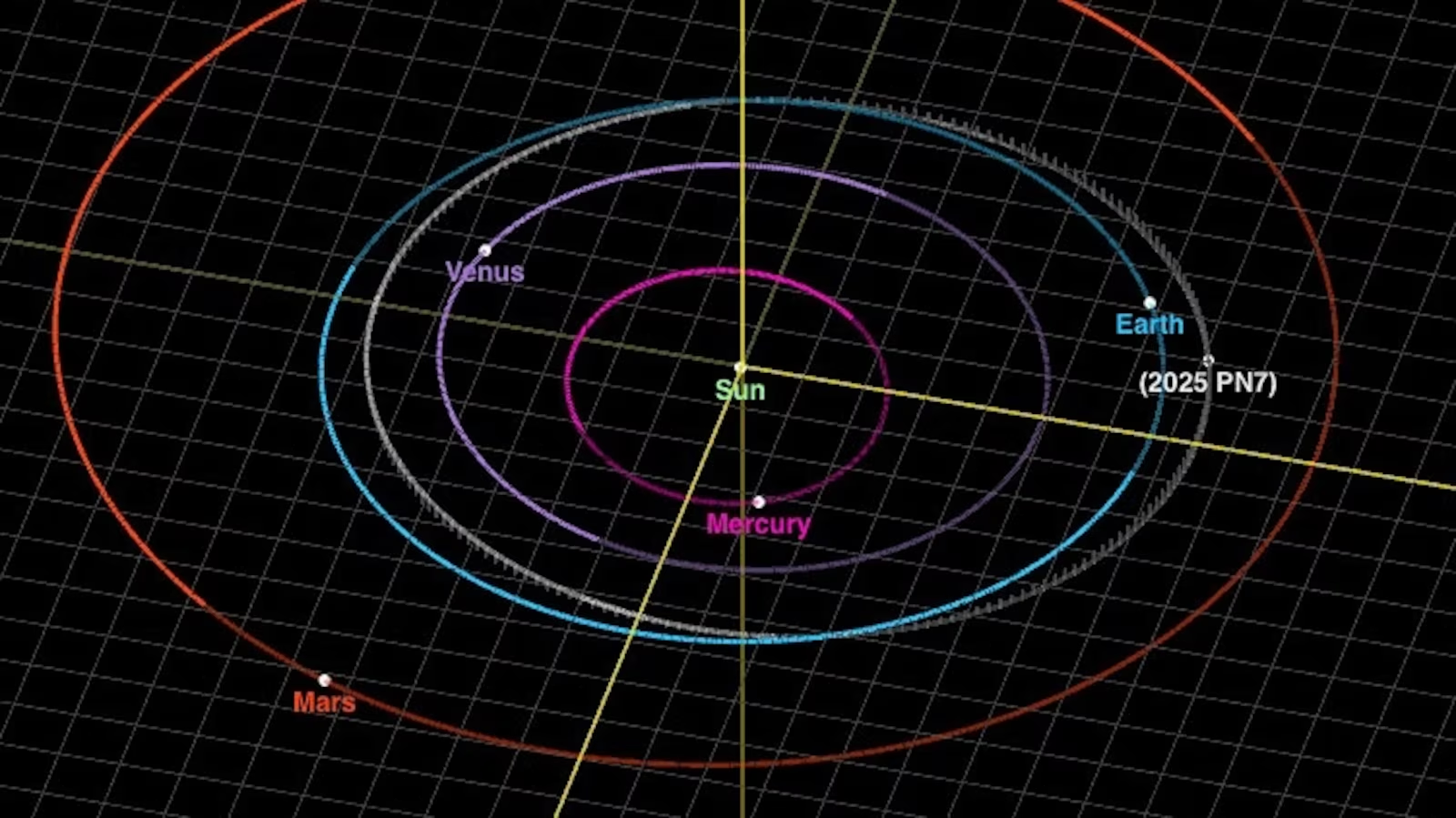
Astronomers have discovered a small quasi-moon near Earth, named 2025 PN7, which has likely been in Earth's vicinity for about 60 years. This tiny asteroid, estimated to be around 98 feet across, follows an orbit that brings it close to Earth periodically, but it remains challenging to observe due to its size and faintness. The discovery highlights the potential for more such objects and the importance of studying them to understand our solar system better.

NASA Confirms Earth Has a Temporary Second Moon
science8 months ago

NASA Confirms Earth Has a Temporary Second Moon

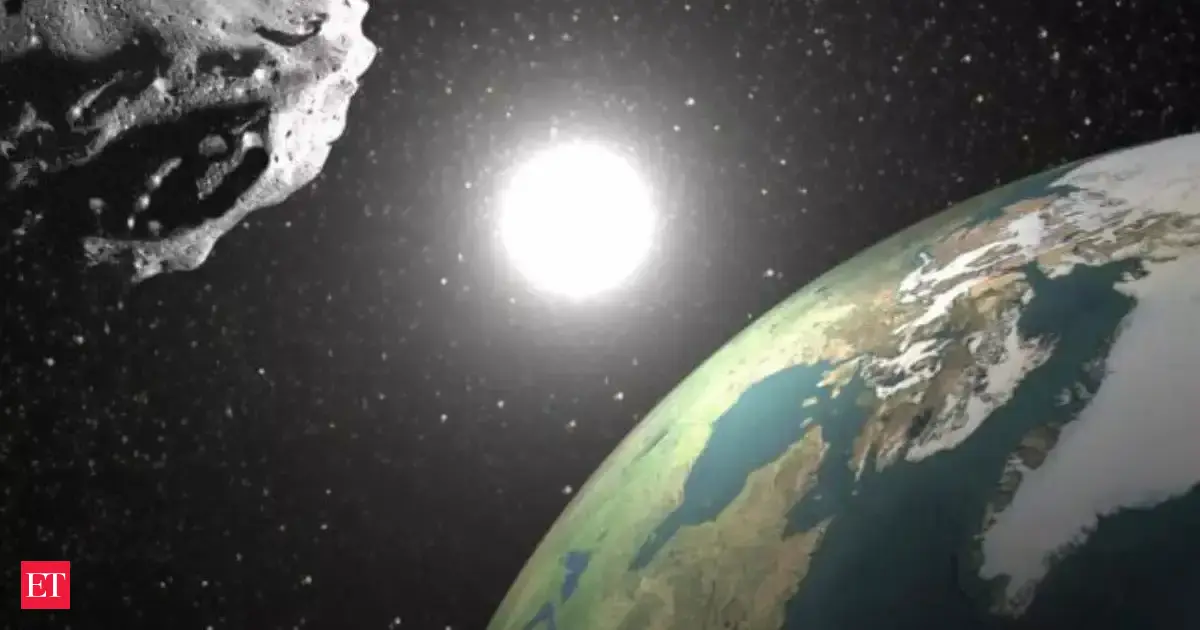
NASA has confirmed the existence of a small asteroid, 2025 PN7, which acts as a 'quasi-moon' by traveling almost in sync with Earth. Discovered by the University of Hawaii, it has been orbiting Earth for about 60 years at a distance of over 4 million kilometers, without affecting tides or gravity, and is expected to remain with us until 2083.

Earth's New Quasi-Moon: A Decades-Old Cosmic Companion
space9 months ago

Earth's New Quasi-Moon: A Decades-Old Cosmic Companion

Astronomers have discovered a tiny asteroid, 2025 PN7, that has been orbiting the Sun in a path similar to Earth's for decades, acting as a quasi-moon for about another 60 years. It is the smallest and least stable of Earth's quasi-moons, and while it occasionally appears to orbit Earth from our perspective, it actually orbits the Sun. Discovered in 2025 but present since at least 1957, it poses no threat and could be useful for future space exploration tests.