Tag

Kras

All articles tagged with #kras

KRAS-targeting PCAIs halt pancreatic cancer cell migration in lab study
science9 days ago

KRAS-targeting PCAIs halt pancreatic cancer cell migration in lab study

Researchers at Florida A&M University tested polyisoprenylated cysteinyl amide inhibitors (PCAIs) against pancreatic cancer cells to disrupt mutant KRAS signaling. The leading compound NSL-YHJ-2-27 blocked more than 90% of cell migration at low concentrations, altered gene and protein markers related to movement, disrupted actin filaments, and dismantled 3D mini-tumor models; however, these findings are limited to lab studies and require animal testing and safety assessment before any human trials.

Georgia hospitals launch trials of a promising pancreatic cancer drug
health-news1 month ago

Georgia hospitals launch trials of a promising pancreatic cancer drug

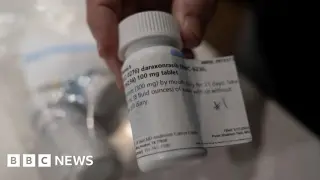
Researchers at Emory University’s Winship Cancer Institute and Piedmont Atlanta Hospital are testing daraxonrasib, an experimental pancreatic cancer drug, after FDA early-access approval; early results show tumor shrinkage with fewer side effects than standard chemotherapy, offering hope for patients facing one of the deadliest cancers.

business1 month ago

JNJ to Acquire Firefly Bio to Expand KRAS-Targeted Degrader Antibody Platform

Johnson & Johnson will acquire Firefly Bio for $1 billion in cash to bolster its oncology pipeline with Firefly's Firelink degrader antibody conjugate (DAC) platform, designed to target KRAS-driven solid tumors by delivering selective protein degraders to cancer cells while sparing healthy tissue, with closing expected later this year pending regulatory approvals.

KRAS-Targeting Drug daraxonrasib Delivers Major Survival Gain in Pancreatic Cancer
health1 month ago

KRAS-Targeting Drug daraxonrasib Delivers Major Survival Gain in Pancreatic Cancer

A phase trial found daraxonrasib, a pan-RAS inhibitor that targets KRAS, nearly doubles survival for patients with advanced pancreatic cancer (median ~15 months vs historically under 8). The FDA granted Breakthrough Therapy and Orphan Drug designations and expanded-access use ahead of potential full approval later in 2026. While not a cure, the drug offers meaningful survival benefit with manageable side effects, and researchers are exploring combination therapies and immunotherapy approaches.

First-in-class KRAS therapy boosts survival in metastatic pancreatic cancer
health1 month ago

First-in-class KRAS therapy boosts survival in metastatic pancreatic cancer

A new oral drug, daraxonrasib, targets the KRAS-driven mechanism in pancreatic cancer by engaging cyclophilin A to shut down KRAS signaling. In a Phase 3 trial of 500 patients with metastatic pancreatic cancer who had prior treatment, daraxonrasib nearly doubled median survival from 6.7 to 13.2 months and reduced the risk of death by about 60% versus standard chemotherapy. The most common side effects were a skin rash, stomatitis, diarrhea, nausea and vomiting, though discontinuation due to adverse effects was lower and quality of life improved. Regulatory review by the FDA and other global authorities is the immediate next step, with expedited review likely; if approved, the drug could reach clinics within months and herald a shift toward targeted, personalized therapy and potential combination approaches to prevent resistance.

Breakthrough in Pancreatic Cancer Tests the Value of Federal Science Funding
health1 month ago

Breakthrough in Pancreatic Cancer Tests the Value of Federal Science Funding

A new drug called daraxonrasib nearly doubles survival for pancreatic cancer patients after initial chemotherapy, marking a significant KRAS-targeted therapy advance and offering hope that this previously “undruggable” cancer can be managed longer. But the piece stresses that decades of federally funded basic science underpinned the discovery and development, and warns that Trump-era efforts to cut or politicize science funding threaten future breakthroughs by weakening the research ecosystem—even as Congress and the courts push back against some funding cuts.

Kras-targeting pill doubles survival in metastatic pancreatic cancer, experts say
health1 month ago

Kras-targeting pill doubles survival in metastatic pancreatic cancer, experts say

A daily pill called daraxonrasib doubled median survival in a 500-patient trial of metastatic pancreatic cancer, from about 6.5–6.7 months with chemotherapy to 13.2 months, and it had fewer side effects. The drug inhibits Kras, a common cancer driver, and experts call the results landscape-changing and potentially game-changing, though access to the drug remains a key challenge.

Stemming Pancreatic Cancer Before It Starts with KRAS Inhibitors
science1 month ago

Stemming Pancreatic Cancer Before It Starts with KRAS Inhibitors

In a preclinical mouse study published in Science, researchers used KRAS inhibitors to eliminate precancerous pancreatic lesions (PanINs) before tumors formed, slowing cancer progression and nearly doubling or tripling survival compared with treating after cancer appeared. The work endorses the concept of cancer interception and sets the stage for clinical trials in high‑risk individuals, though PanINs are too small to detect with imaging and patient selection will be crucial for human application.

KRAS-targeting Pill Shows Promise Against Pancreatic Cancer
health1 month ago

KRAS-targeting Pill Shows Promise Against Pancreatic Cancer

A new oral drug, daraxonrasib, targets the KRAS gene in pancreatic ductal adenocarcinoma, showing in early Phase 1/2 data a median overall survival around 13 months and tumor shrinkage in some patients, nearly doubling survival compared with standard chemotherapy; however, about 30% experience severe side effects, and questions about access and cost remain as full Phase 3 results near disclosure at ASCO.

KRAS-targeting pancreatic cancer drug daraxonrasib could redefine treatment
health2 months ago

KRAS-targeting pancreatic cancer drug daraxonrasib could redefine treatment

A new pancreatic cancer drug, daraxonrasib, paired with chemotherapy, nearly doubles survival in advanced disease. In Phase 3, overall survival was 13.2 months with the combo vs 6.7 months with chemo alone, and earlier data showed progression-free survival around 8 months at the highest dose. The FDA has fast-tracked the drug and allowed expanded access, with potential use beyond KRAS-mutant tumors and possible earlier-line therapy consideration.

Triple-Drug KRAS Attack Erases Pancreatic Tumors in Mice
science3 months ago

Triple-Drug KRAS Attack Erases Pancreatic Tumors in Mice

CNIO researchers report a triple-drug regimen that blocks the KRAS signaling pathway at three points—using daraxonrasib, afatinib, and SD36—to induce durable tumor regression and prevent resistance in three mouse models of pancreatic ductal adenocarcinoma (PDAC) with minimal toxicity. While promising, they caution that the approach is not yet ready for clinical trials and would require further development to adapt for human use, per the PNAS study.

KRAS-ERK switch could revive chemotherapy response in pancreatic cancer
health4 months ago

KRAS-ERK switch could revive chemotherapy response in pancreatic cancer

Researchers identify a KRAS/ERK/JUNB signaling axis that suppresses the differentiation regulator GATA6, pushing pancreatic tumors from a classical, chemo‑sensitive state to a basal, chemo‑resistant one; inhibiting this pathway raises GATA6 levels, reverting cells to a more treatable state and enhancing the effectiveness of standard chemotherapy when paired with targeted therapies.

Medico’s Mouse‑Only “Cure” Sparks Hype and Scrutiny Over Pancreatic Cancer Trial
science5 months ago

Medico’s Mouse‑Only “Cure” Sparks Hype and Scrutiny Over Pancreatic Cancer Trial

Spanish biochemist Mariano Barbacid announced a “cure” for pancreatic cancer based on a triple‑drug therapy that regression‑tested 45 mice; the work, published in PNAS after Nature declined to publish, has not been tested in humans or metastases. The flashy public rollout and patent push by Barbacid’s Vega Oncotargets drew patient inquiries and criticism from CNIO colleagues for overclaiming and conflicts of interest. Independent experts urge cautious optimism, noting the (promising but early) preclinical results and emphasizing that mouse outcomes rarely translate to human cures, with human trials years away and more work needed on safety and efficacy.