Tag

La Brea Tar Pits

All articles tagged with #la brea tar pits

Ancient Saber-Toothed Cats Were Health-Compromised by Inbreeding, Study Says
science7 days ago

Ancient Saber-Toothed Cats Were Health-Compromised by Inbreeding, Study Says

A study of more than 3,700 vertebrae from around 849 Smilodon fatalis individuals found widespread congenital defects—over 200 vertebral malformations, nearly 50 fused vertebrae, and signs of spinal nerve tumors—indicating severe inbreeding and genetic problems in the species before their extinction about 12,000 years ago. While DNA cannot be analyzed from these fossils, the findings from the La Brea Tar Pits suggest inbreeding may have contributed to the decline, highlighting risks faced by modern small populations facing habitat loss and climate change.

Sabertooth Smilodon Fatalis Suffered Inbreeding-Linked Spine Issues Before Extinction
science9 days ago

Sabertooth Smilodon Fatalis Suffered Inbreeding-Linked Spine Issues Before Extinction

A 2026 Frontiers in Veterinary Science study of about 3,700 Smilodon fatalis vertebrae from the La Brea Tar Pits reveals widespread congenital vertebral malformations, fused vertebrae, and signs of spinal nerve tumors, suggesting inbreeding and health problems that may have contributed to the saber-toothed cat's decline and extinction, though no DNA evidence is preserved to confirm genetics.

Ice-Age Spadefoot Toad Discovered at La Brea Tar Pits
science18 days ago

Ice-Age Spadefoot Toad Discovered at La Brea Tar Pits

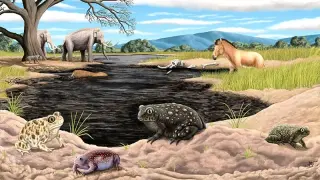
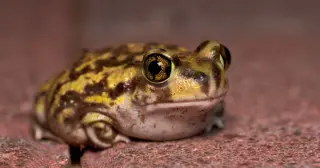
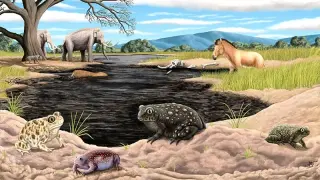
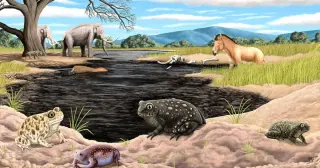
Researchers at the La Brea Tar Pits and Museum have identified Spea labreae, a newly named extinct ice-age spadefoot toad, one of only two ice-age amphibians found in the U.S. The holotype is an incomplete sacro-urostyle bone, and the discovery came from re-examining decades-old amphibian collections and comparing them with specimens at other museums. Published in the Journal of Vertebrate Paleontology, the find sheds light on late Pleistocene climate and local environmental changes around Los Angeles.

La Brea Tar Pits Uncover Spea labreae, a New Ice-Age Amphibian
science19 days ago

La Brea Tar Pits Uncover Spea labreae, a New Ice-Age Amphibian

Scientists at the La Brea Tar Pits in Los Angeles have identified Spea labreae, the first extinct ice-age amphibian found there, from two 1929 fossils of the spadefoot toad. The tiny 1 cm sacro-urostyle fragments indicate a previously unknown species that lived sometime in the last 60,000 years, highlighting how the tar’s preservation can reveal small fossils long overlooked. The discovery doubles North America’s known extinct ice-age amphibians and, alongside a living relative, the Mexican burrowing toad, hints at a past LA habitat more rainforest-like and informs conservation paleobiology.

New Ice Age Spea labreae Toad Found at La Brea—A Clue to Ancient LA Climate
science19 days ago

New Ice Age Spea labreae Toad Found at La Brea—A Clue to Ancient LA Climate

Scientists have named Spea labreae, a new extinct spadefoot toad from La Brea fossil bones dating to the Ice Age, making it one of North America’s few extinct amphibians from that era. Described in the Journal of Vertebrate Paleontology, the find—based on bones excavated in 1929—helps illuminate Los Angeles’s Ice Age climate, since amphibians are highly sensitive to water availability and temperature. The discovery, which also includes the first record of the Mexican burrowing toad in LA, may reflect climate shifts or human arrival, and the specimen will be incorporated into the La Brea Tar Pits’ evolving museum exhibits after renovations.

La Brea Tar Pits Uncover Extinct Ice-Age Toad Spea labreae
science19 days ago

La Brea Tar Pits Uncover Extinct Ice-Age Toad Spea labreae

Scientists at Los Angeles’ La Brea Tar Pits report the first extinct ice-age amphibian found in the area: the spadefoot toad Spea labreae. Two tiny sacro-urostyle fragments from 1929 were re-examined in 2023, revealing distinct features that identify a previously unknown species. The fossils likely date to within the last 60,000 years, making Spea labreae only the second extinct ice-age amphibian known from North America; the collection also included the living Mexican burrowing toad, offering climate context for past and present amphibians.

Ancient Humans' Megafires Turned California into Uninhabitable Wasteland for Millennia
science3 years ago

Ancient Humans' Megafires Turned California into Uninhabitable Wasteland for Millennia

Scientists studying charcoal traces and fossils from the La Brea tar pits in Los Angeles have found evidence suggesting that ancient humans from the ice age period may have caused massive fires that rendered the land uninhabitable for 1,000 years. The fires, which occurred around 13,500 years ago, coincided with the extinction of various animal species in the area. The high levels of charcoal deposits indicate that the fires were likely caused by humans, although it remains unclear whether they were intentional or accidental.