Tag

Large Magellanic Cloud

All articles tagged with #large magellanic cloud

SMC in Gravitational Trouble: New Study Shows It’s Being Torn Apart by Its Big Neighbor
space28 days ago

SMC in Gravitational Trouble: New Study Shows It’s Being Torn Apart by Its Big Neighbor

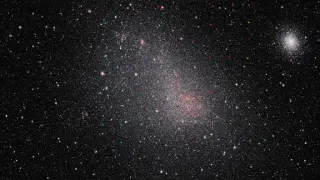
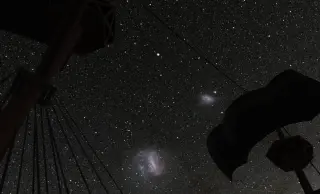
A decade of VISTA survey data reveals the Small Magellanic Cloud is being stretched and dragged apart by the gravitational pull of the Large Magellanic Cloud, with most SMC stars moving outward at about 38,000 mph (61,000 km/h). The findings argue the SMC isn’t a stable rotating disk but is undergoing tidal disruption due to repeated LMC encounters, potentially tearing the dwarf galaxy in two long before the Milky Way–SMC–LMC collision in ~2.4 billion years. The study, published in Astronomy & Astrophysics, highlights the dynamic nature of Milky Way satellites and will be further explored with the One Thousand and One Magellanic Fields survey.

LMC’s tidal grip tears apart its smaller neighbor, new study finds
space1 month ago

LMC’s tidal grip tears apart its smaller neighbor, new study finds

ESO’s VISTA survey reveals the Large Magellanic Cloud is actively tearing stars from the Small Magellanic Cloud, stretching it along a SE–NW axis and showing that the SMC’s motions are dominated by long‑standing tidal forces from the LMC rather than simple rotation; the two dwarfs are being torn apart and are on a broad path to merge with the Milky Way in the distant future.

Moon-Mass Primordial Black Hole Hinted by Stellar Microlensing Event
space1 month ago

Moon-Mass Primordial Black Hole Hinted by Stellar Microlensing Event

Astronomers analyzing a 2019 microlensing flare of a star in the Large Magellanic Cloud say the signal is best explained by a moon-mass primordial black hole—Phoebe—likely in the Milky Way's dark matter halo about 60,000 light-years away. While a rogue exoplanet could cause similar lensing, the PBH explanation is favored and, if confirmed, would illuminate dark matter and early-universe physics and spur high-cadence microlensing surveys with the Roman and Vera Rubin observatories. Some related analyses (e.g., Andromeda PBH candidates) have contested the PBH interpretation, so confirmation will require more sensitive observations.

Giant Star WOH G64 Flashes Signs of Impending Explosion
science2 months ago

Giant Star WOH G64 Flashes Signs of Impending Explosion

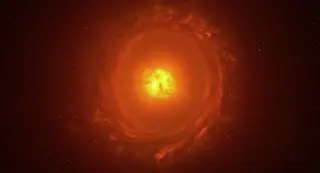
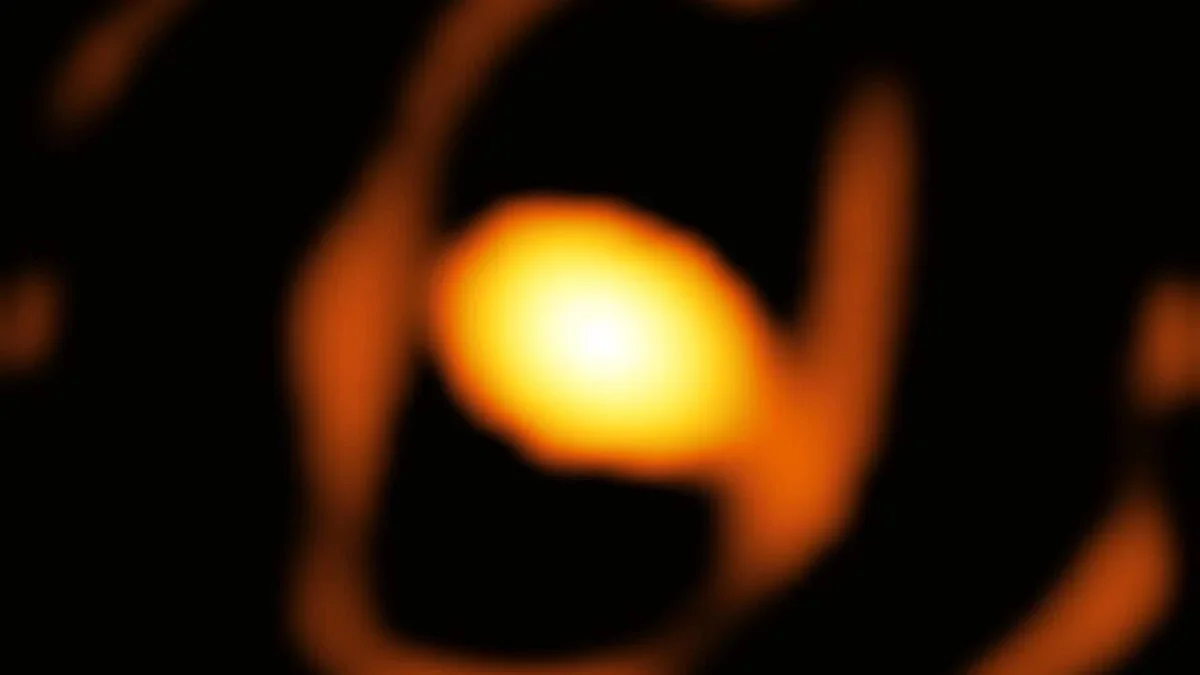
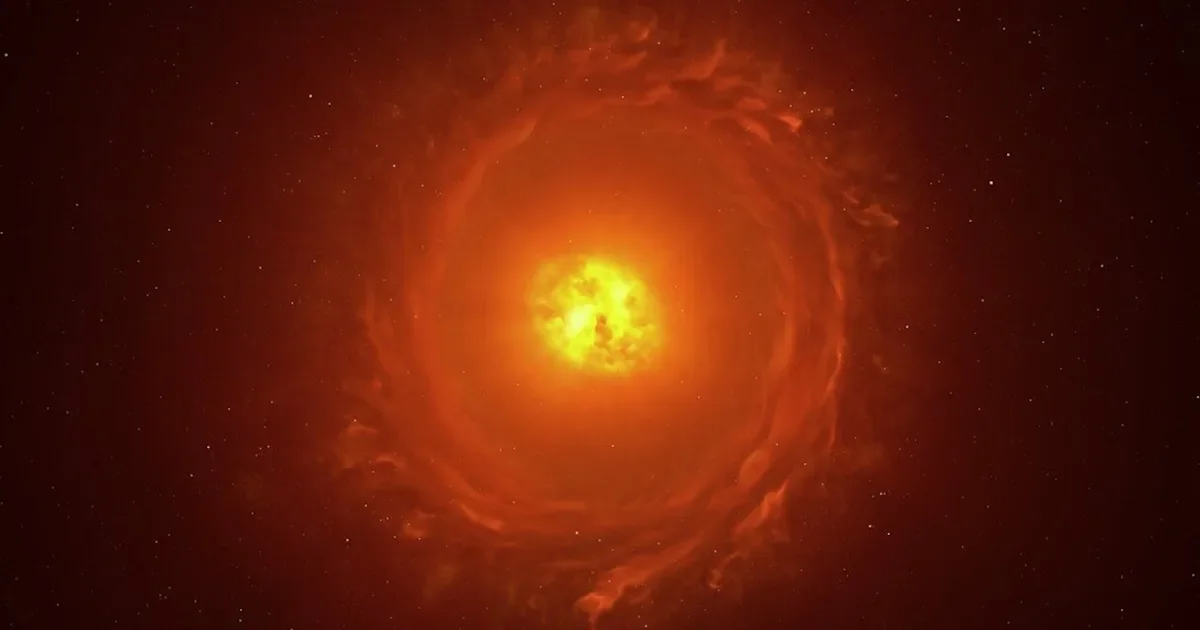
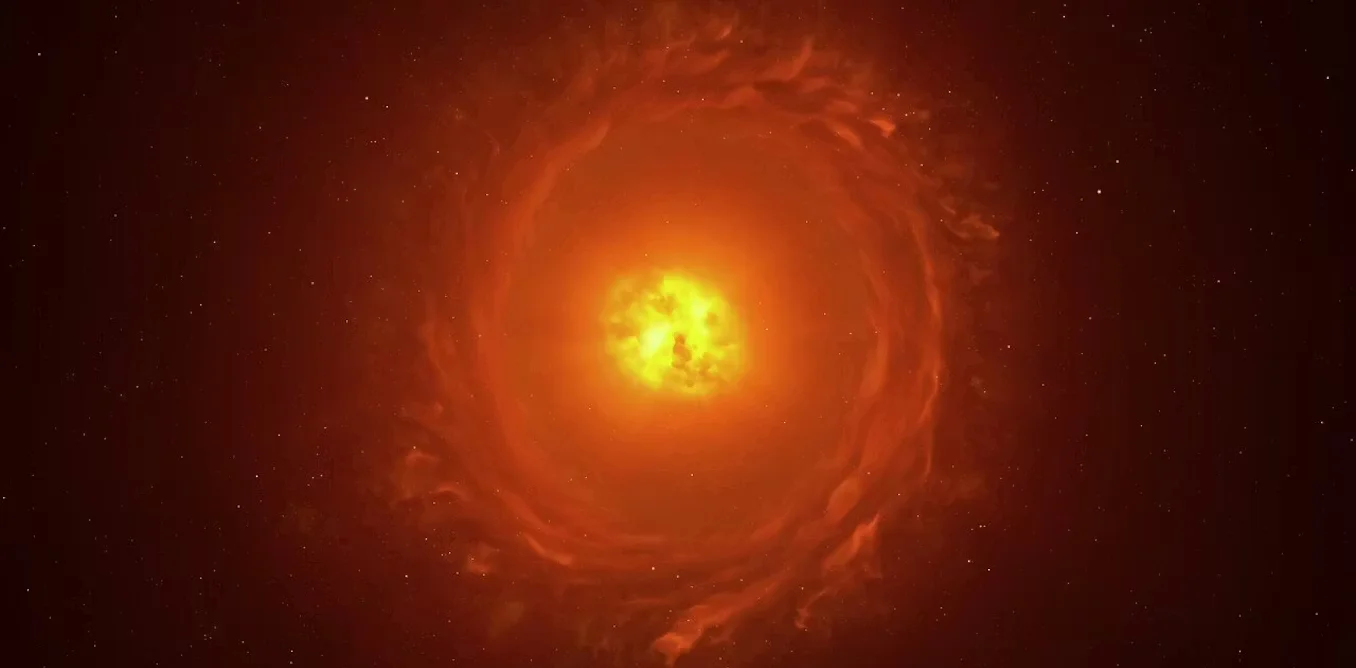
Astronomers studying WOH G64, among the universe's largest stars in the Large Magellanic Cloud, report dramatic, rapid changes over decades: its surface temperature has climbed more than 1,000°C and its color shifted from red to yellow, with unusual dimming episodes in 2011 and 2025. Such behavior is unprecedented for a star of this size and may mark the final stages of its life, offering a rare, real-time glimpse into how massive stars end their lives and seed the cosmos with heavy elements.

Undergrad Team Finds Pristine Ancient Star Migrating from the Large Magellanic Cloud
astronomy2 months ago

Undergrad Team Finds Pristine Ancient Star Migrating from the Large Magellanic Cloud

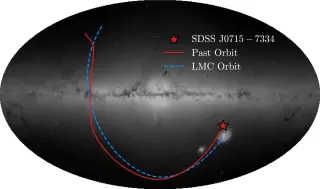
A University of Chicago undergraduate team using Sloan Digital Sky Survey data identified SDSSJ0715-7334 as an ultra-pristine, extremely metal-poor star (0.005% of the Sun’s metals) that likely formed in the Large Magellanic Cloud before migrating into the Milky Way; Gaia data confirms its past orbit and its carbon is undetectable, offering a rare glimpse into the conditions of the early universe.

Giant Star Turns Yellow, Hinting at a Possible Supernova
science4 months ago

Giant Star Turns Yellow, Hinting at a Possible Supernova

Astronomers monitoring the red supergiant WOH G64 in the Large Magellanic Cloud report a rapid evolution into a yellow hypergiant, with a temperature rise of about 1,000 C and significant shrinking. This rare color and size change may signal an impending supernova, though researchers offer two possible explanations—binary interaction with a companion or a prior eruptive episode—and the star’s exact fate remains uncertain.

Gigantic Star WOH G64 Poised for Cosmic Catastrophe
science4 months ago

Gigantic Star WOH G64 Poised for Cosmic Catastrophe

Astronomers say WOH G64, a red supergiant in the Large Magellanic Cloud about 165,000 light-years away and roughly 30 solar masses with a radius over 1,500 suns, is likely transitioning toward a yellow hypergiant after shedding outer layers; this may lead to a spectacular end in a supernova or direct collapse into a black hole, with the fate expected to unfold over hundreds to thousands of years in cosmic time.

Astronomers watch a 1,540-solar-radius star flip from red to yellow, hinting at a possible supernova
astronomy4 months ago

Astronomers watch a 1,540-solar-radius star flip from red to yellow, hinting at a possible supernova

Astronomers tracking the star WOH G64 in the Large Magellanic Cloud have observed it change from a red supergiant into a rare yellow hypergiant, a dramatic and unusually slow transformation that could mark the star’s evolution toward a core-collapse supernova or direct black-hole formation. The object, about 28 solar masses and roughly 1,540 times the Sun’s size, may be part of a binary system, with interactions potentially influencing its path to death. While this hints at a possible explosive finale, the final fate remains uncertain and would likely occur on timescales of hundreds to thousands of years rather than within our lifetime; the findings were reported in Nature.

Cosmic giant on the brink: a star may be primed for a supernova
science4 months ago

Cosmic giant on the brink: a star may be primed for a supernova

New research finds that WOH G64, one of the universe’s largest stars in the Large Magellanic Cloud, shifted from a red supergiant to a yellow hypergiant around 2014, likely shedding mass as its core contracts and heats. If confirmed, this rapid evolution could herald an imminent supernova, offering a rare chance to observe a star dying in real time.

Giant Red Star Defies Death, Hints at Hidden Companion
space5 months ago

Giant Red Star Defies Death, Hints at Hidden Companion

New SALT spectroscopy of the star WOH G64 in the Large Magellanic Cloud shows it is still a red supergiant, not dying to become a yellow hypergiant as previously thought. Titanium oxide in its atmosphere contradicts earlier interpretations based on dimming and dust, and a possible close companion could be distorting the star’s atmosphere and cocoon, reshaping ideas about its evolution.

Astronomers spot a red supergiant's rapid changes hinting at a secret stellar companion
science5 months ago

Astronomers spot a red supergiant's rapid changes hinting at a secret stellar companion

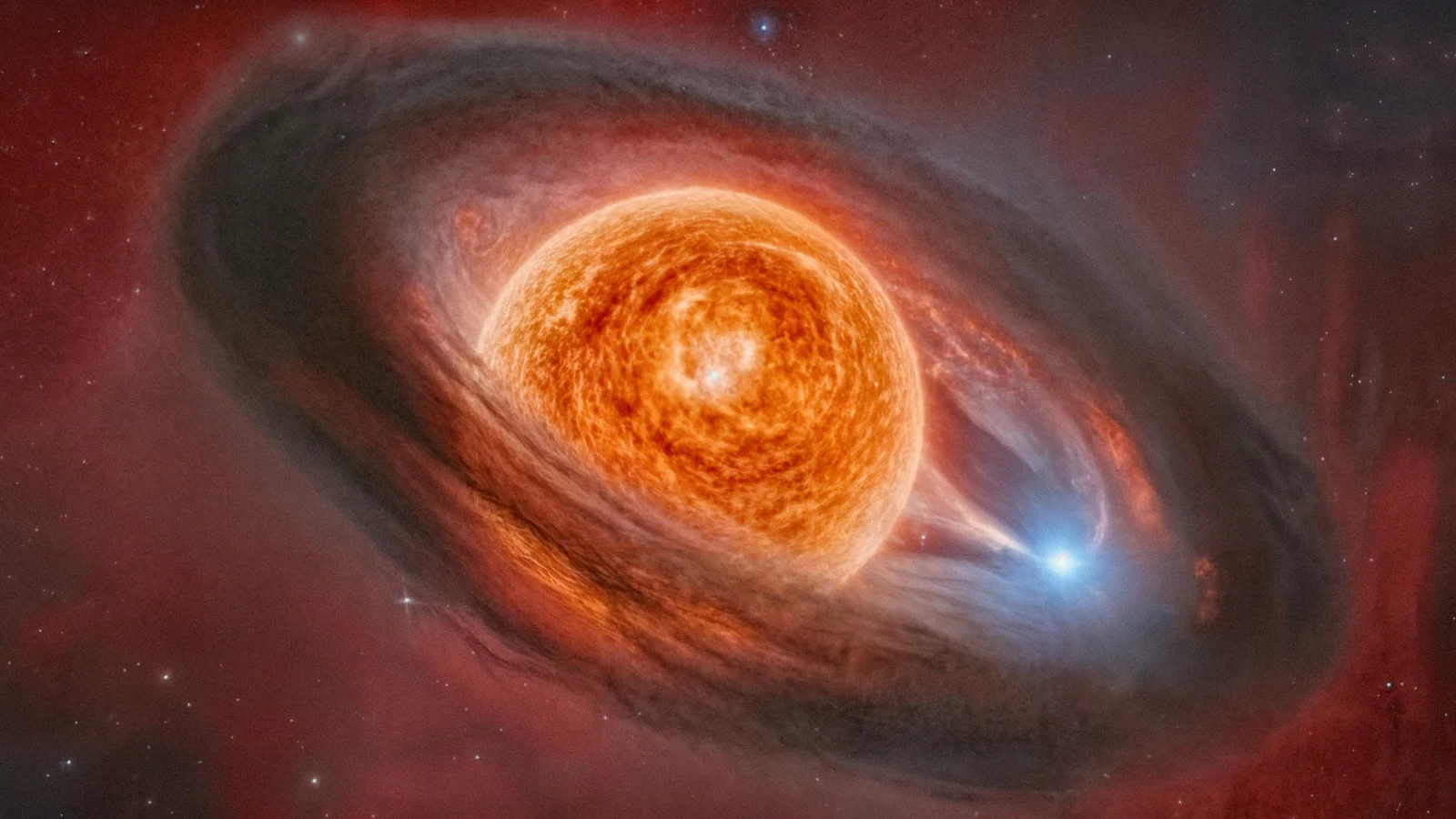
Astronomers monitoring WOH G64, a red supergiant in the Large Magellanic Cloud, report real-time changes: the star has dimmed and appears warmer, while its surroundings show more dust and ionized gas. New SALT observations hint at a hotter, smaller companion heating gas near the star and influencing its wind, suggesting binary interaction. If this relationship persists, the star’s visible characteristics could continue to shift, offering a rare live view of the final stages in a massive star’s life.

Hidden Twin Reshapes the Fate of a LMC Red Supergiant
astronomy5 months ago

Hidden Twin Reshapes the Fate of a LMC Red Supergiant

Astronomers reinterpreted the puzzling behavior of the red supergiant WOH G64 in the Large Magellanic Cloud, finding it is not rapidly dying but part of a binary system with a hotter, smaller companion that interacts with the red star’s extended atmosphere. New optical spectra from SALT show strong titanium oxide bands indicating a cool atmosphere, contradicting claims it was turning into a yellow hypergiant. The strange emissions and the recent dust cloud are explained by material being pulled from the red giant and forming structures around the companion, not by an imminent collapse. The result is a dramatic reminder that binary interactions can mimic signs of stellar death while the star’s evolution continues, with a future supernova still possible but not imminent.

Hubble spots newborn stars in the Large Magellanic Cloud
space5 months ago

Hubble spots newborn stars in the Large Magellanic Cloud

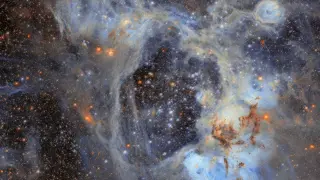
Space.com reports a new Hubble image of the N159 star-forming complex in the Large Magellanic Cloud, taken in a neighboring field to a recently released view. The image reveals thick hydrogen gas forming ridges and filaments, with bright red emission indicating regions where hot, young stars energize the surrounding gas. Studying this Milky Way–like environment, roughly 160,000 light-years away, helps astronomers understand how stellar radiation and winds shape clouds, drive feedback, and influence where new stars form.