Tag

Lunar Laser Ranging

All articles tagged with #lunar laser ranging

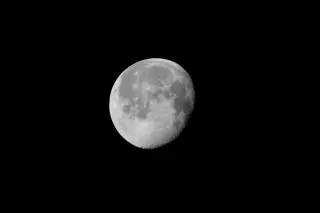
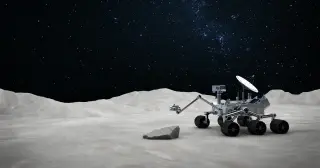
Decades after a silent Moon rover, a laser reflector finally answers Earth
space2 days ago

Decades after a silent Moon rover, a laser reflector finally answers Earth

A Soviet Lunokhod 1 rover carried a passive laser retroreflector that went silent in 1971; nearly forty years later NASA’s Lunar Reconnaissance Orbiter pinpointed Lunokhod 1’s location, enabling the APOLLO laser-ranging program to re-measure the Earth–Moon distance. The 2010 return was far stronger than typical retroreflector signals (about 2,000 photons, four to five times Lunokhod 2), due to favorable orientation and less degradation. Since then Lunokhod 1 has become a valuable, ongoing part of lunar ranging, supporting tests of general relativity and precise Earth–Moon distance measurements.

Ancient Moon Mirrors Still Test Gravity With Millimeter Precision
space4 days ago

Ancient Moon Mirrors Still Test Gravity With Millimeter Precision

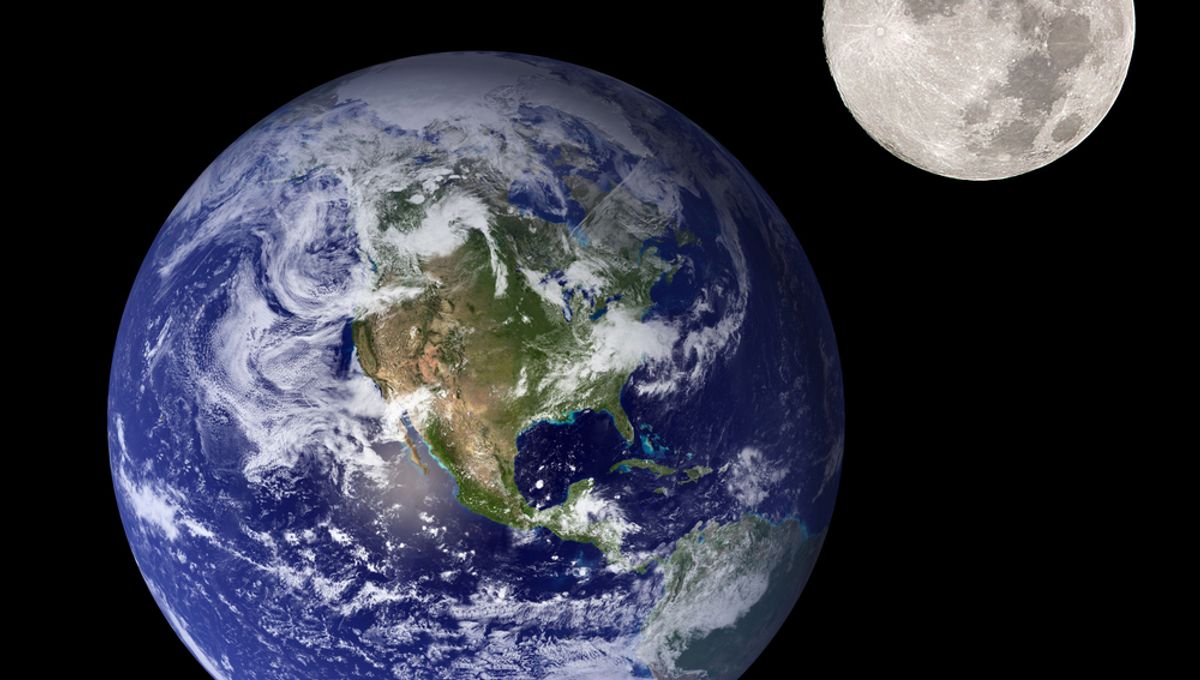
Apollo-era lunar retroreflectors remain functional, allowing Earth-based lasers to measure the Earth–Moon distance to millimeter precision. The Moon is slowly drifting away at about 3.8 cm/year due to tidal friction, enabling stringent tests of general relativity, with next-generation reflectors and DLLR aiming to improve measurements further.

Moon's gradual drift will erase future total solar eclipses
science-space9 days ago

Moon's gradual drift will erase future total solar eclipses

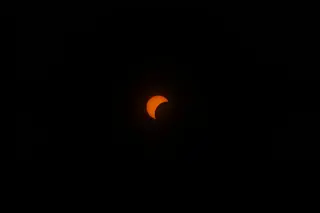
The Moon is receding from Earth at about 3.8 cm per year due to tidal interactions, a rate precisely measured by lunar laser ranging using Apollo and Lunokhod reflectors. As the Moon moves farther away, its apparent size will eventually be too small to fully cover the Sun, ending total solar eclipses within roughly 500–800 million years. Until then, upcoming total eclipses seen from Earth occur within this narrow, finite window, making the current era temporarily unique in cosmic terms.

Why the Moon Is Slowly Moving Away From Earth
science8 months ago

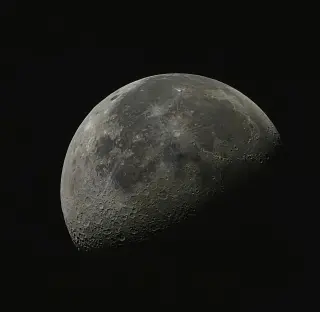
Why the Moon Is Slowly Moving Away From Earth

The Moon is gradually moving away from Earth at about 3.8 centimeters per year, a process measured by laser reflectors placed during the Apollo missions. This recession will lead to the end of total solar eclipses in roughly 600 million years, but the Moon will never fully drift away due to the Sun's eventual expansion into a red giant, which will engulf Earth and the Moon together.

Einstein's Relativity Theory Prevails: Gravitational Interactions Confirmed
physics2 years ago

Einstein's Relativity Theory Prevails: Gravitational Interactions Confirmed

Researchers have confirmed with unprecedented accuracy that the properties of mass, such as weight, inertia, and gravitation, are always equivalent, regardless of the specific composition of the mass. This finding reinforces the equivalence principle, a cornerstone of Einstein's theory of relativity, and addresses a critical point of divergence between classical and quantum physics. Using half a century of lunar laser ranging data, scientists have shown that passive and active gravitational mass are always equivalent, supporting the fundamental assumptions of physics and providing further evidence for Einstein's theory.