Tag

Apollo

All articles tagged with #apollo

technology3 days ago

SpaceX Pursues $40B Debt Deal to Secure Nvidia AI Chips

SpaceX is negotiating to raise $40 billion in financing to purchase Nvidia artificial intelligence chips. The deal structure includes approximately $10 billion in bank loans and $30 billion in investment-grade debt. Apollo is expected to lead the transaction, while PIMCO is involved in discussions. This move highlights the massive capital requirements of the current AI boom, as technology firms compete for advanced processors. SpaceX shares declined 2% in early trading following the report, while Nvidia stock rose 0.5%.

Moon Jettison Bags May Reveal Living Microbes After 57 Years
space1 month ago

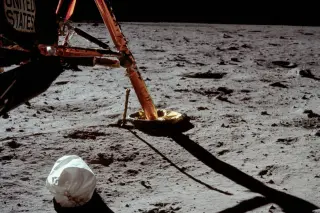
Moon Jettison Bags May Reveal Living Microbes After 57 Years

Researchers propose sampling an Apollo jettison bag left beneath the Moon since 1969 to test whether any human microbes survived 57 years of vacuum, radiation and temperature cycling. The aim is not cleanup but to measure survival limits and the fate of DNA and other traces in real lunar conditions, across six sites with different shading, to inform future crewed missions and planetary protection protocols.

A 1973 Venus Flyby: NASA's 396-Day Three-Astronaut Interplanetary Dream
space2 months ago

A 1973 Venus Flyby: NASA's 396-Day Three-Astronaut Interplanetary Dream

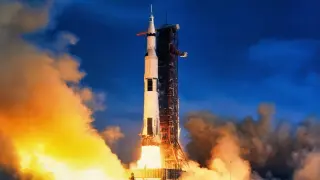
NASA once explored a bold 1973 plan to send three astronauts on a 396-day Venus flyby using modified Apollo hardware and a Saturn V, with a wet-workshop habitat in the S-IVB and gravity assist to return to Earth while deploying atmospheric probes; the mission would have tested year-long life support and deep-space operations, but budget and political priorities shifted, ending the proposal and shaping Skylab as the lasting offshoot of Apollo-era spaceflight.

Omega Speedmaster: From Racing Chronograph to Moonwatch Legend
technology2 months ago

Omega Speedmaster: From Racing Chronograph to Moonwatch Legend

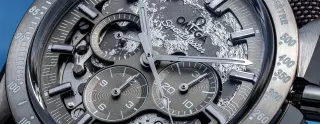
Originally launched in 1957 as a racing chronograph, the Omega Speedmaster evolved into NASA’s Moonwatch after rigorous testing, becoming the first watch worn on the Moon and the only wristwatch qualified for EVA; through Gemini, Apollo 11, and Apollo 13, its Caliber 321 and later evolutions (861, 1861, 3861) powered astronauts and demonstrated enduring reliability, while modern variants—including FOIS, Dark Side of the Moon, Gray Side, Moonshine Gold, and the Silver Snoopy Award editions—continue to showcase its blend of iconic design and advanced horology.

Apollo Moonprints: Here for Millions of Years, Not Forever
space3 months ago

Apollo Moonprints: Here for Millions of Years, Not Forever

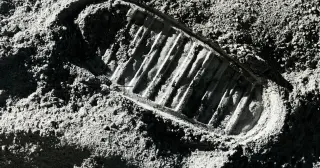
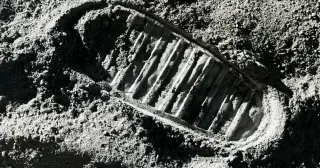
Apollo bootprints pressed into the Moon’s dry, airless regolith are expected to persist for about ten million years due to the lack of wind, water, and atmosphere. Slow erosion from micrometeorite impacts, solar wind, and extreme temperature cycling will eventually erase them, but NASA’s Lunar Reconnaissance Orbiter shows the sites remain intact from orbit. Future crewed or robotic activity near the sites could disturb the footprints, and there are protections being used to preserve the Apollo landing areas.

Black dodges NDA questions as Epstein probe hits a snag in House hearing
politics3 months ago

Black dodges NDA questions as Epstein probe hits a snag in House hearing

Leon Black refused to answer questions about nondisclosure agreements during a closed House hearing into Jeffrey Epstein, prompting subpoenas for the NDAs and for a future deposition; Democrats say the NDAs and Epstein’s involvement are central to the probe, while Black’s team calls the move partisan. The testimony revisits Black’s long ties to Epstein and the payments involved, and follows an Apollo Global Management independent review that found no evidence of wrongdoing by Black or Apollo, even as related lawsuits and investigations continue.

The Moon's pause: politics, not physics, kept humans from stepping again
space3 months ago

The Moon's pause: politics, not physics, kept humans from stepping again

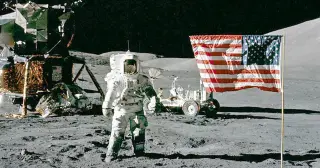
Space history explains why no human has walked on the Moon since 1972: the Apollo program ended not from lack of capability but because its Cold War mission—beating the Soviets—lost political and budgetary momentum once Neil Armstrong stepped onto the lunar surface. NASA redirected funds toward Skylab and the Space Shuttle, dissolving the Saturn V production line and the workforce to sustain lunar missions. Restarting the Moon program with Artemis is rebuilding that infrastructure, but its success will depend on whether new strategic reasons—competition with China, commercial interests, and scientific goals—provide enduring support beyond political momentum.

Apollo Moon Flags Bleached to White, Leaving Shadowed Reminders
space3 months ago

Apollo Moon Flags Bleached to White, Leaving Shadowed Reminders

Space Daily reports that the six nylon flags planted on the Moon by Apollo crews between 1969 and 1972 have likely faded to white due to decades of ultraviolet exposure, solar wind, and extreme day‑night temperature swings; while LRO imagery shows five flags still standing (Apollo 11’s flag was reportedly knocked over), color cannot be confirmed from orbit, making the white, brittle rectangles the new honest reminder of the Moon’s harsh environment.

Apollo Bootprints Might Endure for a Million Years on the Moon
science4 months ago

Apollo Bootprints Might Endure for a Million Years on the Moon

The Moon’s windless, waterless environment preserves Apollo bootprints for a very long time, with LRO imagery showing tracks decades after the landings. However, slow erosion from micrometeorite impacts and a process called impact gardening gradually churns the top few centimeters of regolith, meaning there’s no precise expiry date for a single print. A million-year timescale is plausible but not guaranteed, and some experts estimate traces could fade over tens to hundreds of millions of years. In any case, the landing-site marks will outlast nearly all human-made structures while slowly disappearing on geological timescales.

Apollo debris taught the Moon to ring and revealed its solid, fractured interior
space4 months ago

Apollo debris taught the Moon to ring and revealed its solid, fractured interior

From 1969–1972 NASA intentionally steered spent Apollo hardware into the Moon to serve as calibrated seismic sources; the near-side seismometer network recorded highly diffused, long-lasting signals—nearly an hour in some cases—because the Moon’s dry, fractured megaregolith scatters and slowly absorbs seismic energy, not a hollow shell, producing a bell-like reverberation rather than sharp Earth-like waves. Apollo 12’s LM impact created a ~9-meter crater and the larger third-stage impacts rang even longer; gravity mapping by the GRAIL mission and continued data analysis confirm the Moon is solid, not hollow, though the seismic network logged more than 12,000 moonquakes before going standby in 1977.

Decades after a silent Moon rover, a laser reflector finally answers Earth
space4 months ago

Decades after a silent Moon rover, a laser reflector finally answers Earth

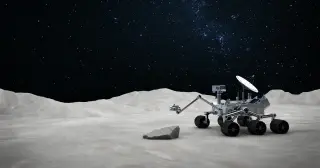
A Soviet Lunokhod 1 rover carried a passive laser retroreflector that went silent in 1971; nearly forty years later NASA’s Lunar Reconnaissance Orbiter pinpointed Lunokhod 1’s location, enabling the APOLLO laser-ranging program to re-measure the Earth–Moon distance. The 2010 return was far stronger than typical retroreflector signals (about 2,000 photons, four to five times Lunokhod 2), due to favorable orientation and less degradation. Since then Lunokhod 1 has become a valuable, ongoing part of lunar ranging, supporting tests of general relativity and precise Earth–Moon distance measurements.

Pentagon Opens Trove of Declassified UAP Files, From Apollo Era Sightings to New Infrared Footage
science5 months ago

Pentagon Opens Trove of Declassified UAP Files, From Apollo Era Sightings to New Infrared Footage

Pentagon released a declassified trove of Unidentified Anomalous Phenomena files—more than 160 documents detailing over 400 incidents from the 1940s to 2024 on a public site—some Apollo-era sightings among them. While no evidence of alien contact is presented and some cases are debunked, officials say the data will be released rollingly to boost transparency under the PURSUE framework, with NASA backing ongoing disclosures.

Behind the back-leverage: HSBC’s $400m hit from Apollo-backed lending
business5 months ago

Behind the back-leverage: HSBC’s $400m hit from Apollo-backed lending

HSBC faces a roughly $400 million loss from a back-leverage loan to Market Financial Solutions, with Atlas SP Partners (an Apollo unit) handling sponsor due diligence; the episode underscores the risks of sponsor-led private credit where lenders rely on intermediaries and non-recourse structures, highlighting the need to verify sponsors’ checks even as the industry prioritizes speed and diversification.