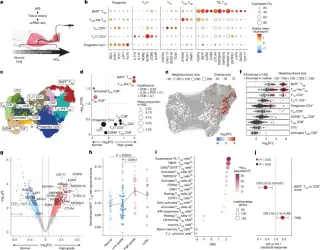
Researchers identified a specific network of regulatory T cells that emerges in preinvasive lung lesions, offering a potential method to detect and intercept non-small cell lung cancer before it becomes invasive.
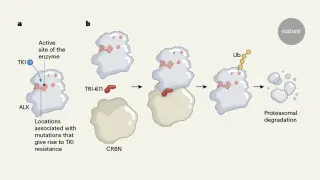
A new study in Nature introduces a molecular glue degrader that eliminates ALK kinase enzymes, offering a potential solution for lung cancer cases that develop resistance to standard inhibitors. This approach aims to prevent cancer recurrence by removing the target protein entirely rather than just blocking its function.
Merck and Daiichi Sankyo voluntarily withdrew their accelerated approval application for the antibody-drug conjugate ifinatamab deruxtecan (I-DXd) in small cell lung cancer after the FDA deemed the data insufficient. This setback delays revenue from a $4 billion partnership and impacts competitors like Amgen and GSK.
A new study in Science identifies a rare inherited EGFR T790M mutation that dramatically increases lung cancer risk, particularly among never-smokers. Researchers found that carriers face 62 times the odds of developing the disease compared to non-carriers who have never smoked, and 25 times the odds overall. The mutation is rare nationwide but significantly more prevalent in Southern Appalachia due to a historical founder effect. While the study does not prove that genetic testing improves outcomes, it suggests future screening could be based on inherited risk rather than just smoking history.
A rare inherited mutation in the EGFR gene, known as T790M, has been identified as a significant risk factor for lung cancer, particularly among non-smokers. A large-scale study involving over 3.3 million individuals found that carriers of this mutation have a 62-fold higher risk of developing lung cancer if they have never smoked, and a 25-fold higher risk overall. The mutation is rare, affecting approximately 1 in 15,850 people, and is most prevalent in populations with Southern Appalachian ancestry. Researchers suggest that genetic testing could lead to earlier screening and detection for at-risk individuals.
A large study using 23andMe and other genetic data identified a rare inherited EGFR T790M mutation that dramatically increases lung-cancer risk, even in nonsmokers. Nonsmokers carrying the mutation have about 62-times higher odds of developing lung cancer than noncarriers, while the overallMutation carriers have roughly 25-times higher odds across smokers and nonsmokers; the mutation is very rare (about 1 in 15,850 people). It is more common in the U.S. Southeast (Alabama, Mississippi, Tennessee), which may help explain regional cancer disparities. The findings suggest genetic testing for people with a family history and earlier CT-based screening for carriers, with a clinical trial underway to assess screening timing and effectiveness.
A Stanford-led study built a ‘Virtual Biotech’ of up to 37,000 AI agents that analyzed results from more than 55,000 clinical trials and gene-activity data. The system identified CD276 as a promising lung-cancer target and proposed an antibody-drug conjugate strategy, demonstrating how AI could accelerate drug discovery, though the approach has not been experimentally or clinically validated and requires human oversight.
A rare inherited mutation called EGFR T790M is now linked to a dramatically higher lung-cancer risk, especially among people who never smoked and are from Southern Appalachia (notably Tennessee and Alabama). The gene makes lung cancer roughly 62-fold more likely in never-smokers and about 10-fold more likely in smokers, ranking among the strongest cancer-risk mutations identified. Researchers trace the mutation to ancestors from the British Isles who settled in Appalachia 200–225 years ago, highlighting a regional genetic factor in cancer risk and the potential need for targeted screening.
A Greek study of 100 patients undergoing bronchoscopy found microplastics in 70% of participants; those later diagnosed with lung cancer had a higher microplastic burden in lung samples than those without cancer. The findings are observational and do not prove causation, and researchers say more work is needed to determine whether inhaled microplastics contribute to lung disease or are simply retained differently in diseased lungs.
An early NEJM-published trial found that a drug approved for pancreatic cancer shrank tumors in about one-third of patients with advanced non-small-cell lung cancer who had already undergone standard treatments; larger trials are underway to confirm its safety and effectiveness.
Peter Cullen, the legendary voice of Optimus Prime, died at 85 in Los Angeles. His death certificate lists cardiac arrest with a respiratory arrest as the immediate cause, with the underlying condition noted as malignant neoplasm in the lower lung. Cullen, also known for voicing Eeyore, is set to be buried at Forest Lawn on Sept. 9 and was honored with a Lifetime Achievement Award at the 2023 Children’s & Family Emmy Awards.
A Utah mother of five with Stage 4 lung cancer underwent surgery to remove her right lung and has been placed on the transplant list, with ongoing hospitalization and care.
A UK woman, Jade Fardon, diagnosed in 2022 at age 29 with stage IV ALK-positive lung cancer despite never smoking, was treated with a targeted drug that shrank tumors. She later developed brain metastases requiring gamma knife radiotherapy and brain surgery, and after progression she switched to new medication and ongoing monitoring. She remains active in work and fundraising while raising awareness that lung cancer can affect young, non-smokers.
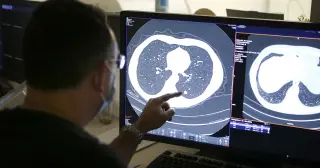
Lung cancer can stay silent for years, so screening with annual low-dose CT is advised for adults aged 50–80 who have at least 20 pack-years of smoking and either currently smoke or quit within 15 years. LDCT helps detect tiny tumors before symptoms appear, but not all nodules are cancer and screening can cause anxiety or unnecessary tests. Non-smokers may still be at risk due to pollution, occupational exposures, or genetics, so discussing risk with a doctor is important. Quitting smoking remains the best way to reduce risk.
A 75-year-old who quit smoking years earlier learned he had stage 1 lung cancer via a routine Medicare-backed low-dose CT screening, underwent robotic surgery and targeted therapy, and remains cancer-free for now; his case highlights that lung cancer screening can save lives but remains underused due to complex eligibility rules, stigma, and access barriers, prompting calls to broaden guidelines while balancing potential downsides.