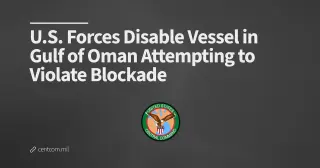
U.S. forces in the Gulf of Oman disabled the rudder of the Iranian-flagged tanker M/T Hasna after repeated warnings, enforcing the blockade against ships headed to Iran; the vessel is no longer transiting to Iran, and CENTCOM says the blockade remains in full effect.
U.S. Army Master Sgt. Gannon Ken Van Dyke was indicted in SDNY on charges including unlawful use of confidential government information, theft of nonpublic information, commodities and wire fraud, and money transactions from unlawful activity after allegedly betting on Maduro’s removal with Polymarket ahead of a raid announcement, netting more than $409,000. Prosecutors say he used classified information to place bets and tried to conceal his identity; Polymarket cited cooperation with the DOJ. Van Dyke, a Joint Special Operations Command communications specialist, was on active duty since 2008 and stationed at Fort Bragg at the time.
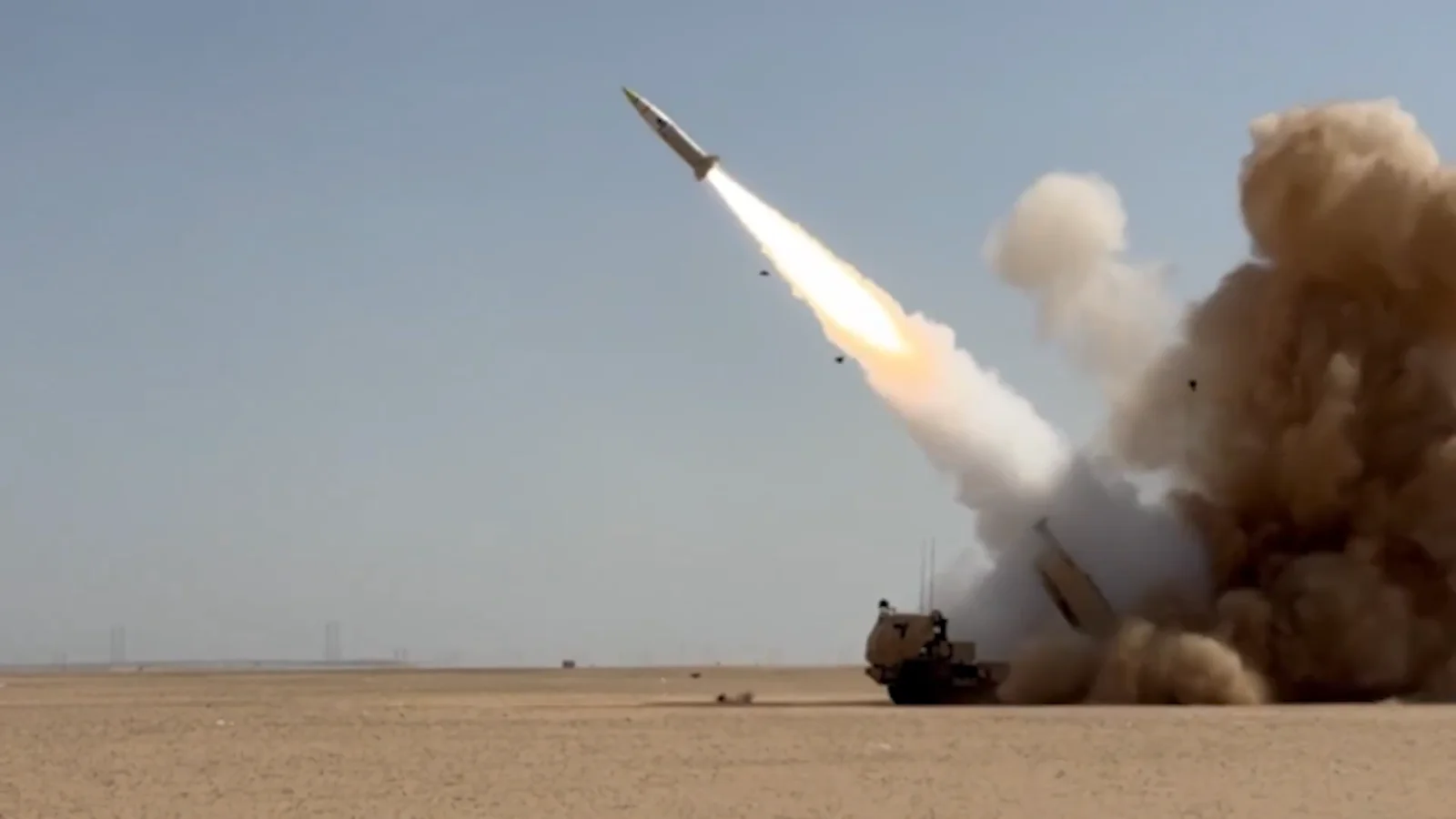
The piece summarizes a White House/Pentagon briefing about Operation Epic Fury against Iran, claiming overwhelming U.S. air power, rapid degradation of Iran’s missile and drone capabilities, sinking multiple ships, and the killing of senior Iranian leaders, framed as a decisive victory; independent verification is not provided in the article.
The United States and Ecuador announced joint operations against narco-terrorist networks in Ecuador, with initial activity focused on logistics and intelligence support as part of a broader Trump administration push to combat drug cartels; the move signals a new front in US military action in Latin America and has drawn criticism over legality and potential extrajudicial risks, while Ecuadorian President Noboa embraces tougher cooperation and plans higher tariffs on Colombian imports.
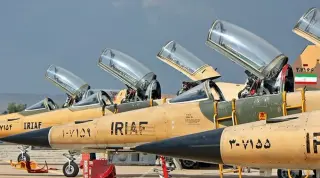
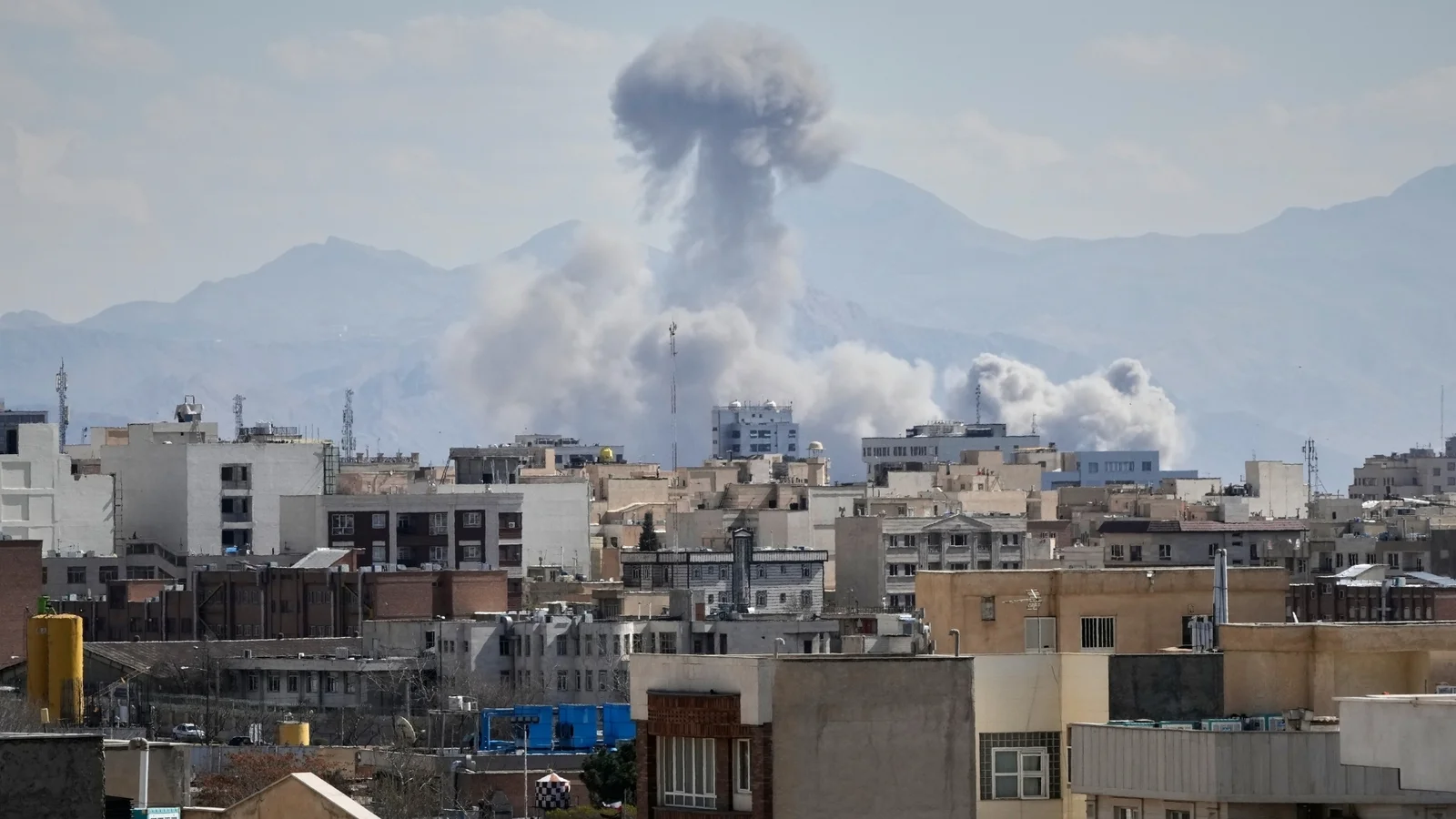
The U.S. and Israel launched Operation Epic Fury against Iran, aimed at destroying Iran’s missile program, navy, and leadership, with officials warning the action could deter Tehran’s capabilities. Iran and its proxies have mounted counterattacks with missiles and drones as the conflict expands across the region. Reports within the coverage claim the opening strikes killed Iran’s supreme leader Ali Khamenei and other top figures, while several U.S. service members have been killed and ongoing air, sea, and cyber operations continue, prompting evacuations and security alerts in places like Beirut, Jordan, and Kuwait as allies weigh involvement and oil markets brace for disruption.
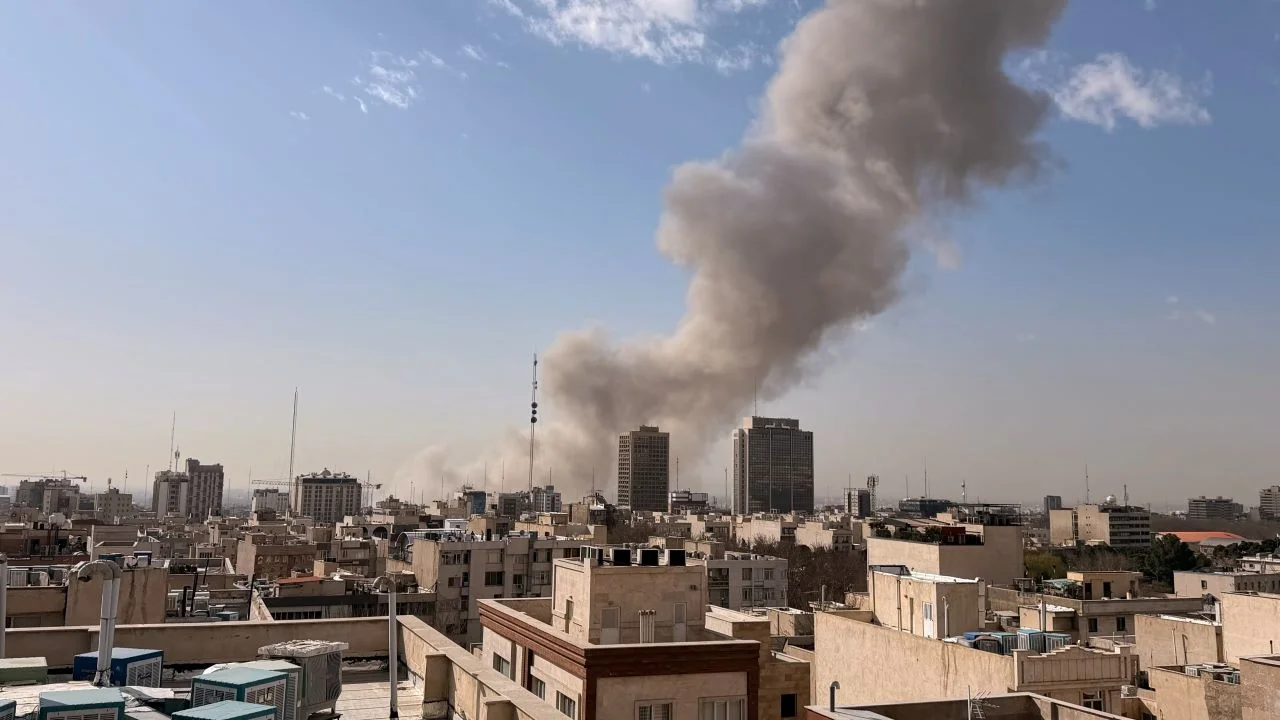
President Trump said three U.S. service members were killed in the weekend operation against Iran and warned that more American casualties are likely as major combat continues, while Iran vowed retaliation and Iran’s leadership faced reporting of attacks. The U.S. and Israel have conducted strikes in the region, Iran signaled openness to de-escalation talks mediated by Oman, and U.S. lawmakers are set for classified briefings on the operation. Iran’s state media also reported targeting of its broadcasting building but said broadcasting continues. The situation marks a broad, escalating confrontation in the region.
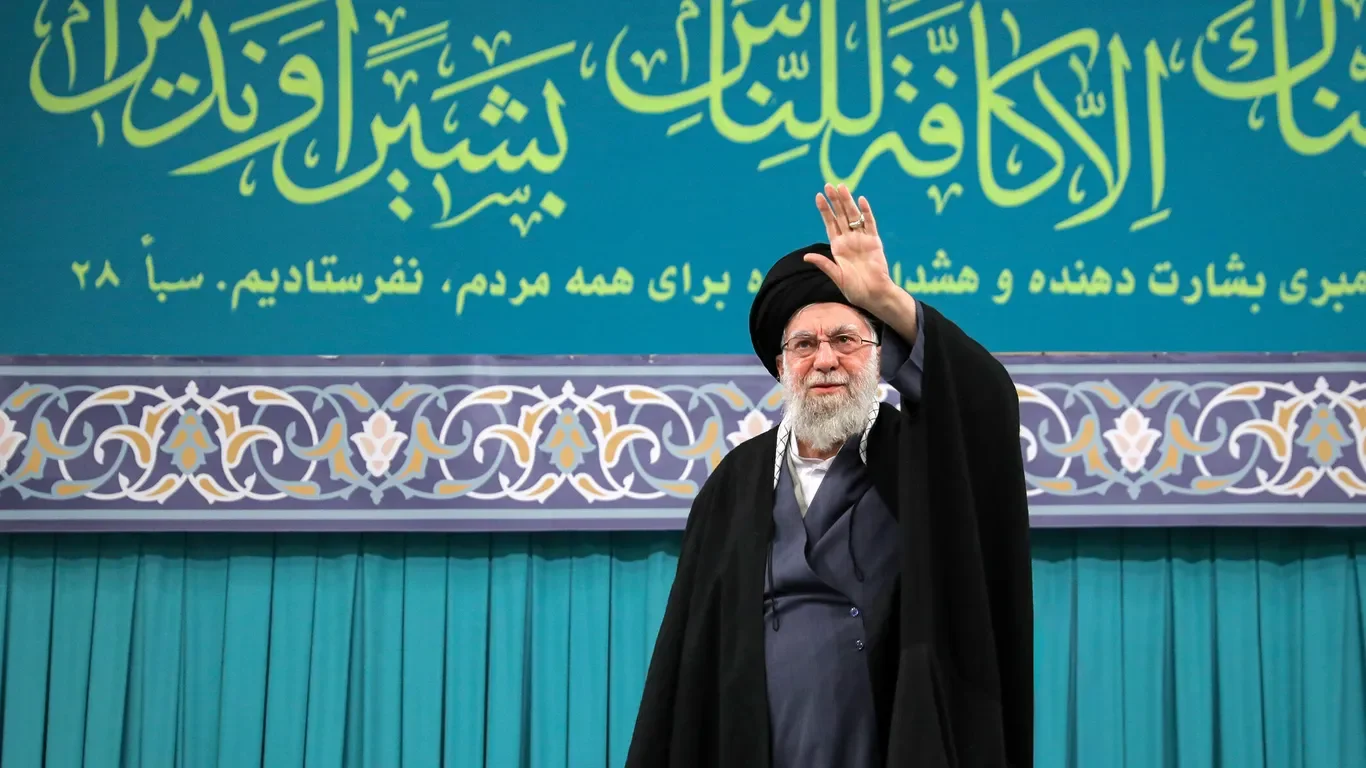
The article reports that the United States and Israel claim Iran’s Supreme Leader Ali Khamenei has been killed in a massive joint strike, with his body reportedly recovered from a destroyed compound. President Trump is cited as saying he’s certain Khamenei is dead, and an Israeli official is quoted confirming the claim. The operation also targets senior IRGC commanders, creating a leadership and succession crisis in Iran. The piece notes the potential collapse of the regime and calls from opposition figures for Iranians to rise up, describing the situation as breaking and evolving.
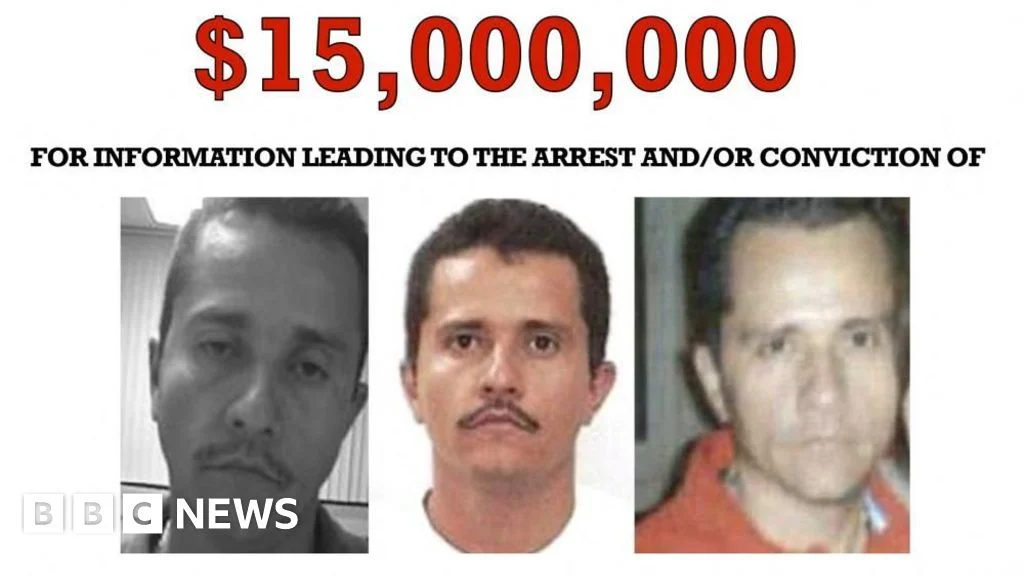
Nemesio Oseguera Cervantes, known as El Mencho, head of the CJNG, was killed while being transported to Mexico City after clashes with the army. Four cartel members were killed, three soldiers injured, and CJNG retaliated with roadblocks and violence across multiple states. The US provided information aiding the operation, seen as a significant development in Mexico's fight against cartels.
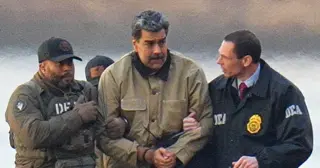
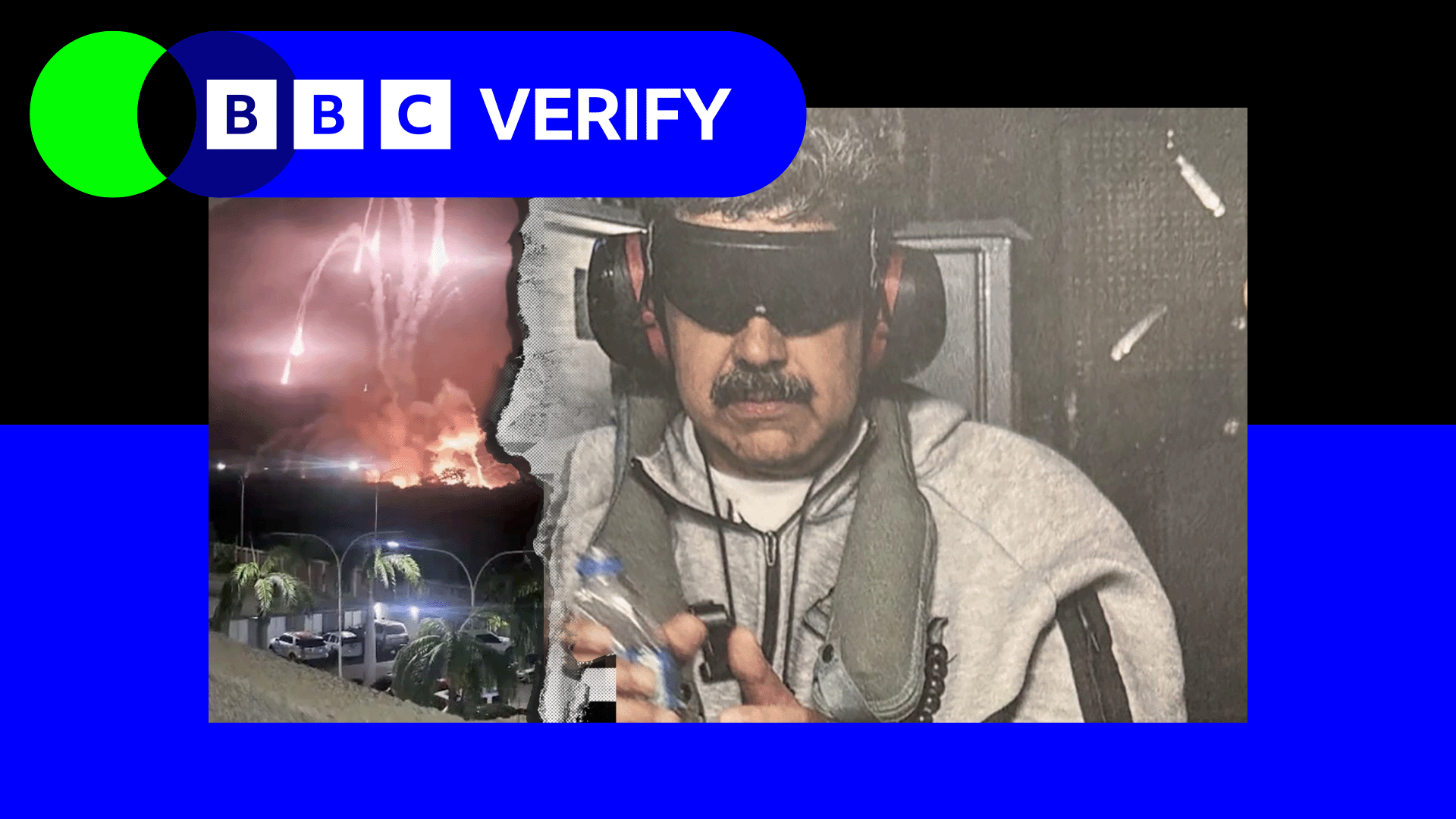
US conducted a large-scale military operation involving over 150 aircraft, striking multiple sites around Caracas and reportedly capturing Venezuelan President Nicolás Maduro, in a surprise attack that included strikes on key military bases and the port of La Guaira, with significant damage and casualties reported.
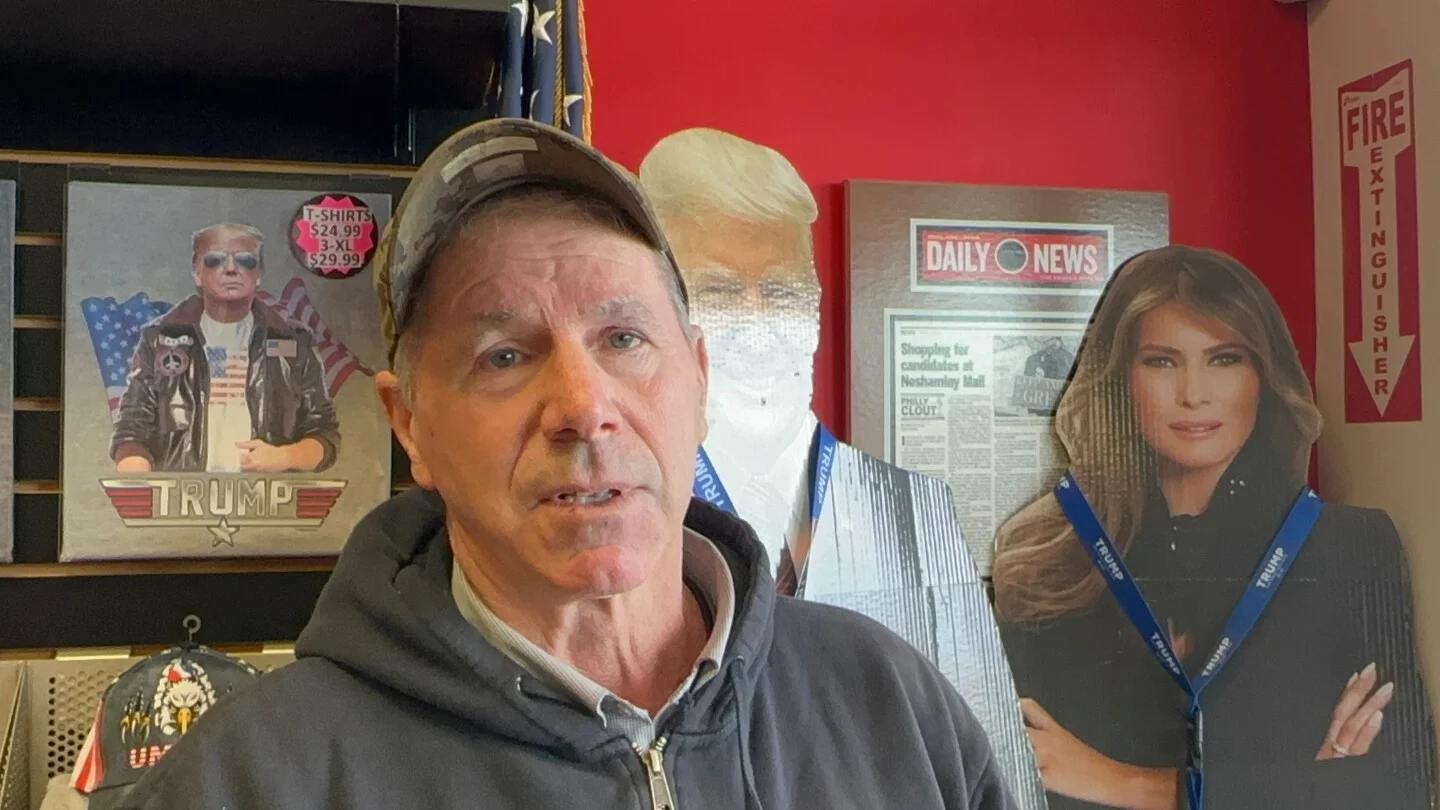
The article discusses the varied reactions of Trump supporters to the U.S. raid that captured Venezuelan leader Maduro, highlighting initial support, concerns about potential conflicts, and differing opinions on U.S. foreign intervention.
Venezuela's Maduro appeared in a US court pleading not guilty to charges after being captured in a US military operation, while Trump claimed to be in charge of Venezuela and issued warnings to other countries, amid heightened tensions and international reactions.
Russian forces attempted to use a gas pipeline as a covert route for an assault in Ukraine's Kupiansk sector, but the operation was detected and thwarted by Ukrainian troops, resulting in at least 40 Russian soldiers killed and no strategic gains. Despite setbacks, Russian infiltration efforts continue, with Ukraine maintaining control of the area.
Donald Trump warned Venezuela's new leader Delcy Rodríguez of severe consequences if she doesn't cooperate, amid US efforts to oust Maduro, who was recently captured and charged in the US. The US conducted a secret military operation against Maduro and his wife, claiming it was law enforcement, but critics see it as an act of war, raising concerns about legality and regional stability.
Some Democrats are criticizing their party's weak response to Trump's raid to capture Venezuelan President Maduro, arguing that the party should celebrate the move against a dictator, despite concerns about legality and long-term effects. The disagreement highlights internal divisions over how to respond to Trump’s actions, with some fearing that a negative or overly cautious stance could harm the party's credibility and electoral prospects.
The U.S. military's capture of Venezuelan President Nicolás Maduro has led to widespread disruptions in Caribbean air travel, with hundreds of flights canceled and ongoing restrictions affecting major airlines and airports in the region.