Tag

Huntingtons Disease

All articles tagged with #huntingtons disease

Eli Lilly Acquires LoQus23 for $725M to Advance Huntington’s Disease Therapy
biotech3 days ago

Eli Lilly Acquires LoQus23 for $725M to Advance Huntington’s Disease Therapy

Eli Lilly has agreed to acquire UK-based biotech LoQus23 Therapeutics for up to $725 million to develop LQT-23, a small molecule inhibitor targeting Huntington’s disease. The deal, which includes an undisclosed upfront payment and milestone-based installments, marks Lilly’s 15th acquisition of 2026 and its second of the month. LoQus23’s lead candidate, LQT-23, aims to block pathogenic triplet expansion by inhibiting the MSH3 protein, a target identified through genetic and mechanistic studies. The company expects to submit a clinical trial application by the end of 2026, building on preclinical data showing efficacy in cellular and animal models. This acquisition expands Lilly’s neuroscience pipeline, which currently lacks approved Huntington’s treatments, and joins a crowded field of competitors targeting the same MSH3 pathway.

uniQure Stock Plunges 41% as Huntington’s Gene Therapy Misses Key 48-Month Endpoint
biotechnology1 month ago

uniQure Stock Plunges 41% as Huntington’s Gene Therapy Misses Key 48-Month Endpoint

uniQure shares dropped 41% after its Huntington’s disease gene therapy, AMT-130, failed to reach statistical significance on its primary endpoint at 48 months. While the composite Unified Huntington’s Disease Rating Scale (cUHDRS) showed only a 44% slowing of progression, the secondary Total Functional Capacity (TFC) endpoint remained strong at 61%. Analysts and executives argue that methodological flaws in the control group and the stability of functional outcomes support the drug’s path to accelerated FDA approval, despite the initial market sell-off.

Genetic study of 2.5 million people links fibromyalgia to brain function and Huntington’s gene
health4 months ago

Genetic study of 2.5 million people links fibromyalgia to brain function and Huntington’s gene

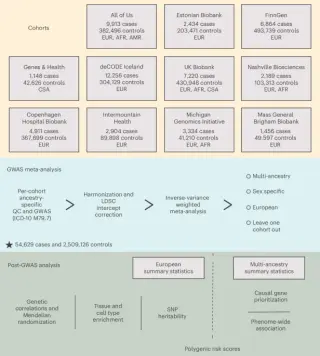
A massive genome-wide association study involving over 2.5 million individuals has identified 26 genetic loci associated with fibromyalgia, confirming it as a central nervous system disorder rather than an autoimmune condition. The strongest genetic link is a variant in the HTT gene, which causes Huntington’s disease, while heritability is exclusively enriched in brain tissues. Despite strong genetic correlations with conditions like low back pain and post-traumatic stress disorder, the study found no significant genetic differences between men and women, suggesting non-genetic factors drive the higher prevalence in women.

science4 months ago

Roche ends two Huntington’s disease drug programs after mixed HD2 results

Roche is discontinuing two Huntington’s disease drug programs: tominersen in the GENERATION HD2 trial, which lowered huntingtin and improved biomarkers but did not slow disease progression, and RG6496 in POINT-HD, halted after early data and long-term animal studies suggested dosing would be unsuitable. The decisions were not safety-related, and Roche will share more data later while continuing its unrelated RG6662 gene therapy program. The news underscores that huntingtin lowering remains a valid strategy but may require different approaches, dosing, or timing; participants’ contributions are acknowledged as the field moves forward.

VIP interneuron activation restores motor function in Huntington’s disease model
science4 months ago

VIP interneuron activation restores motor function in Huntington’s disease model

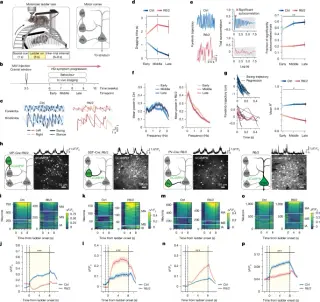
HD mice exhibit reduced activity in VIP inhibitory neurons and corticostriatal neurons in the motor cortex, correlating with motor deficits. Optogenetic activation of VIP interneurons normalizes their activity and rescues downstream corticostriatal neuron function, producing lasting improvements in movement that persist for days, suggesting cortical inhibition modulation as a potential therapeutic strategy for HD.

health5 months ago

Oral Huntington’s drug SKY-0515 shows durable 12-month signals and dual-targeting approach

Skyhawk Therapeutics reports 12-month Phase 1/2 data for SKY-0515, an oral splice-modulator that lowers huntingtin and PMS1. Higher-dose treatment reduced expanded huntingtin by about 69% over a year, with PMS1 mRNA down by up to 26%, and small, sustained improvements in the cUHDRS clinical score versus external natural-history data. While safety appears generally favorable in this early study, the results come from a small, non-placebo-controlled cohort and rely on external comparators, so they do not prove disease modification. A larger Phase 2/3 FALCON-HD trial is underway to determine if these signals translate into true slowing of HD progression. The therapy’s oral format and dual-target approach offer a promising two-pronged strategy, with global enrollment continuing and milestones reached in Australia/New Zealand.

Controversial FDA Regulator Prasad Exits Agency Amid Backlash
health8 months ago

Controversial FDA Regulator Prasad Exits Agency Amid Backlash

Vinay Prasad is set to leave the FDA for the second time, with his tenure marked by controversy, including a rejected mRNA vaccine, a controversial demand for an extra trial on a Huntington’s gene therapy from UniQure, public clashes with the company and alleged staff abuse, drawing mixed reactions from biotech investors and patient advocates as a replacement is named.

FDA attack on UniQure sparks new political headache over rare-disease drugs
health8 months ago

FDA attack on UniQure sparks new political headache over rare-disease drugs

An FDA-organized media call featured a senior FDA official publicly attacking UniQure’s Huntington’s disease gene therapy, calling its data distorted and the therapy failed, a move seen as injecting politics into rare-disease regulation and potentially complicating oversight ahead of elections, with echoes of recent vaccine-review controversies and congressional pressure on the agency.

FDA faces sharp questions as criticism grows over new drug decisions
health8 months ago

FDA faces sharp questions as criticism grows over new drug decisions

An FDA official held a rare press call to defend the agency’s decision to require an additional clinical trial for UniQure’s Huntington’s disease gene therapy, criticizing outside scientists and signaling concerns about potential conflicts of interest. The exchange follows ongoing uproar over the agency’s handling of drug approvals, including Moderna’s flu vaccine application, and underscores a tension between expanding rapid approvals and ensuring solid evidence through placebo-controlled trials in order to prevent unsafe or ineffective medicines.

FDA orders phase 3 for Huntington's gene therapy, delaying uniQure's path to approval
health8 months ago

FDA orders phase 3 for Huntington's gene therapy, delaying uniQure's path to approval

The FDA rejected uniQure's plan to file AMT-130 using phase 1/2 data with an external control and demanded a prospective, randomized, sham-controlled phase 3 trial, dampening near-term approval hopes and triggering a strategic review by the company; uniQure will discuss trial designs with the FDA and add a four-year durability analysis to the phase 1/2 data.

Monogenic diseases aren’t deterministic: context shapes genetic risk
health9 months ago

Monogenic diseases aren’t deterministic: context shapes genetic risk

New population-genomics research shows that many so-called monogenic diseases do not have 100% penetrance; a person carrying a disease-associated variant may remain healthy depending on other genetic factors and environment. Large datasets reveal that variants once believed to almost always cause conditions like inherited retinal degenerations, thyroid cancer, ovarian insufficiency, and even Huntington's disease do not guarantee disease in the general population, highlighting the need for nuanced genetic counseling and individualized risk assessments and potentially informing advances in gene therapies and embryo selection.