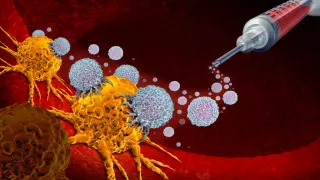
Recent mixed results in cancer vaccine trials have forced the biotech industry to reassess the scope of mRNA-based therapies. While a late-stage melanoma trial showed promise, other programs have failed or been halted, raising questions about which cancers can effectively be targeted by this technology.
As flu season approaches, health experts urge immediate vaccination to ensure immunity peaks before winter. The 2026 vaccine formulation includes protection against Subclade K, a strain that caused severe outbreaks last year. While the shot does not guarantee infection prevention, it significantly reduces the risk of hospitalization and death. Protection typically lasts five to six months, making early fall the optimal window for administration.
A personalized mRNA melanoma vaccine showed promising results in a Phase 3 trial, signaling the potential for mRNA-based vaccines to treat other cancers, with trials already underway for lung and pancreatic cancers; however, full data remain pending and political/regulatory factors could influence future development.
The FDA approved Moderna’s mFLUSIVA (mRNA-1010) for adults 50 and older as the first influenza vaccine using mRNA technology, with trial data showing about 26.6% greater effectiveness than traditional flu vaccines and a stronger immune response in older adults, plus a safety profile based on roughly 70,000 participants. The mRNA platform promises faster updates to match circulating strains, which could alter regulatory and manufacturing timetables. Real‑world performance will be tested in the 2026–27 season; meanwhile, cost, access, and how widely it will be stocked or adopted remain uncertain, and traditional flu shots will continue to be available this season. Uptake may hinge on vaccine confidence in mRNA technology, and long‑term changes to vaccine recommendations could follow real‑world effectiveness data.
Personalized mRNA cancer vaccines from Moderna and Merck are showing promising late-stage results in cancers such as melanoma, pancreatic and brain tumors by training the immune system to recognize tumor-specific mutations. When combined with immunotherapy, these vaccines have reduced cancer recurrence and extended remission in some patients. More than 120 trials since the early 2000s illustrate ongoing progress and optimization of targets and combinations, though bringing an mRNA cancer vaccine to the public could take 10–15 years amid funding shifts.
Moderna stock jumped about 6% midday after GSK moved its rival mRNA influenza vaccine to Phase III, a development investors view as platform validation for mRNA tech rather than direct competition to Moderna's mFlusvia, which recently received FDA approval. The move underscores the market’s focus on the broader potential of mRNA platforms (including Moderna’s melanoma program with MRK) rather than near-term vaccine revenue, with analysts cautioning that sustained upside hinges on broad solid-tumor success and continued adoption amid a backdrop of policy and financing developments for the modality.
BioNTech and Genentech terminated a phase 2 trial of autogene cevumeran (BNT122) in surgically resected stage II–III colorectal cancer after an independent safety board identified a numerical imbalance in overall survival favoring the observation group; the decision underscores the challenges of using personalized mRNA vaccines as monotherapy in immunotherapy-resistant tumors, though a separate BNT122 trial in combination with immunotherapy remains ongoing. BioNTech’s stock fell about 7.5% on the news, while Moderna advanced after a related phase 3 win.
Moderna’s shares jumped after Merck and Moderna announced that their Phase III melanoma trial of intismeran autogene with KEYTRUDA met its endpoints, a readout that was effectively foreshadowed by pre-announced signals: a fully enrolled study, Merck covering about half the trial cost, and prior commentary that implied a big move could come. The stock rose to around $145, within a 52-week range of roughly $22–$174, despite Moderna’s weaker 2025 results and restructuring. The piece highlights how identifying funded, binary events in a pipeline—well before a readout—can inform portfolio strategies, as demonstrated by Moderna’s surge.
Moderna executives remain confident in the personalized cancer vaccine intismeran autogene and plan to share more late-stage trial details with Merck at an upcoming conference. The company is refocusing on renal cell carcinoma and pulling back from bladder cancer, aiming to unlock a multibillion-dollar market, but investors still await full trial results before pricing in the program.
A phase 3 trial of a personalised mRNA vaccine (Intismeran) given with Keytruda after melanoma surgery extended disease-free time in over 1,000 high-risk patients. While the interim results are promising, they have not yet been peer-reviewed and regulatory approval is still required before NHS rollout.
Merck and Moderna reported that a personalized neoantigen mRNA vaccine, intismeran, added to Merck's Keytruda in adjuvant melanoma slowed recurrence and metastasis in a Phase 3 trial, signaling a potential new class of cancer immunotherapies, though detailed data have yet to be released.
FDA-approved Moderna’s mFlusiva, an mRNA flu vaccine, for adults 50–64 (full approval) and 65+ (accelerated approval) after trials showed about 27% higher effectiveness than the standard flu shot; the vaccine could be updated quickly to address circulating strains. It’s expected to be available this fall, though insurance coverage remains unclear. Side effects may be stronger than with traditional vaccines but are generally mild. Health experts say to get whichever flu vaccine is available to protect yourself early in the season.
The FDA has approved Moderna’s mFlusiva as the United States' first mRNA flu vaccine, giving adults 50+ access with full approval for ages 50–64 and accelerated approval for 65+, following a trial that showed it outperformed a standard-dose flu vaccine and suggesting mRNA could speed vaccine updates to evolving flu strains and potentially improve seasonal vaccines.
Sen. Ron Johnson released Fauci’s 2021 texts showing he privately warned that cytokine storms after the second COVID vaccine dose could theoretically be linked to miscarriages in the first trimester. Johnson says the private concerns contrast with public messaging and calls it the “tip of the iceberg” as he expands a probe into Fauci’s old government phone. The piece notes a 2021 NEJM study cited by Johnson about miscarriages among pregnancies exposed to mRNA vaccines (104 of 827), arguing the numbers may be skewed; Fauci has invoked the Fifth Amendment in related proceedings, and no comment from his team is reported yet.
FDA approves mFLUSIVA, the United States’ first mRNA influenza vaccine, marking a milestone for the platform after a year of funding reversals; unlike egg-based vaccines, it can be updated in two to three months and deployed closer to flu season, hinting at future breakthroughs across vaccines and therapies, though real-world uptake will depend on access, cost, and regulatory guidance.