Tag

Motor Learning

All articles tagged with #motor learning

Post-Training Vagus Nerve Stimulation Enhances Long-Term Motor Skill Retention in Mice
science7 days ago

Post-Training Vagus Nerve Stimulation Enhances Long-Term Motor Skill Retention in Mice

Researchers at Tohoku University have demonstrated that stimulating the vagus nerve after a training session can significantly improve long-term motor skill retention in mice. Published in iScience on August 25, 2026, the study indicates that this stimulation does not boost immediate performance but instead facilitates the consolidation of learning into durable memory. The mechanism appears to involve rhythmic changes in blood volume within the brain, specifically near the cerebellar flocculus, which may create a more receptive environment for neural plasticity.

Precision Brain Stimulation Aims to Accelerate Skill Acquisition
science-tech14 days ago

Precision Brain Stimulation Aims to Accelerate Skill Acquisition

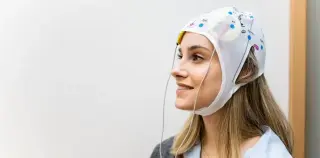
Researchers are advancing non-invasive brain stimulation techniques to enhance neuroplasticity and accelerate the learning of physical and cognitive skills. While early studies showed mixed results due to individual variability and lack of targeted precision, new methods using focused ultrasound and computational modeling aim to stimulate specific neural circuits at optimal times. The field faces challenges in standardizing outcomes and regulating consumer devices, which are increasingly available for performance enhancement without medical oversight.

science1 month ago

Post-Training Vagus Nerve Stimulation Strengthens Long-Term Motor Learning

Mouse study shows that applying vagus nerve stimulation after a training session does not boost immediate performance, but enhances long-term retention of a learned motor task by altering the brain’s vascular environment to favor consolidation. The effect appears days after training, suggesting a body–brain communication window that could be leveraged to improve durable skill learning, though applicability to humans remains to be tested.

Twenty minutes of moderate exercise preserves automatic motor learning, study finds
cognitive-science2 months ago

Twenty minutes of moderate exercise preserves automatic motor learning, study finds

A within-subject study of 26 healthy young adults found that a 20-minute session of moderate stationary cycling (keeping heart rate at 65–75% of max) prevented the typical rest-related decline in implicit sensorimotor adaptation and sped up overall response time. After cycling, participants’ implicit adaptation (post-rotation bias) remained near baseline (about 2.40–2.45°) compared with a drop after rest (2.20° from 2.93°), and total response time fell ~4% (555 ms to 532 ms), suggesting aerobic exercise primes the nervous system for automatic motor learning and rehabilitation.

"Spinal Cord's Independent Memory and Learning Mechanism Unveiled by Neuroscientists"
neuroscience2 years ago

"Spinal Cord's Independent Memory and Learning Mechanism Unveiled by Neuroscientists"

Researchers have discovered that a specific gene expressed in spinal nerves plays a crucial role in memorizing responses to potential threats, challenging the notion that motor learning and memory are solely confined to brain circuits. Through a study on transgenic mice, they found that inhibitory neurons in the spinal cord can learn novel responses long after the nerves have locked in place, shedding light on how the spinal cord can remain plastic throughout life. This understanding could inspire novel research into treatments for nervous system damage in humans, particularly in improving recovery after spinal cord injury.

"Revolutionary Noninvasive Stimulation Technique Modulates Deep Brain Structures in Neuroscience Breakthrough"
neuroscience2 years ago

"Revolutionary Noninvasive Stimulation Technique Modulates Deep Brain Structures in Neuroscience Breakthrough"

Scientists have made a groundbreaking discovery in neuroscience by successfully using a noninvasive brain stimulation technique to modulate deep brain activity, leading to enhanced motor learning, particularly in older adults. The study focused on the striatum, a key region involved in motor learning, and found that the stimulation increased activity in the putamen, resulting in improved performance in a finger-tapping task. The technique shows promise for developing new treatments for brain disorders and provides insights into the functioning of deep brain structures. However, further research is needed to understand the underlying mechanisms and long-term effects.

The Role of Memory in Learning and Memory Retention.
neuroscience3 years ago

The Role of Memory in Learning and Memory Retention.

Short-term motor memories, lasting less than a minute, are more important for relearning movements than long-term ones, according to a new study by Harvard researchers. The study challenges conventional thinking on the role of short and long-term memories in relearning motor skills, indicating the existence of mechanisms for regulating the learning rates for memories that are distinct from the memories themselves. Understanding short-term motor memories is crucial, as they could be just as vital as long-term ones for executing actions effectively.