Tag

Mycelium

All articles tagged with #mycelium

Scientists Uncover Why Fairy Ring Mushrooms Circle the Forest Floor
science11 days ago

Scientists Uncover Why Fairy Ring Mushrooms Circle the Forest Floor

Swedish researchers mapped fairy rings of Marasmius oreades, showing the underground mycelium forms a ring with DNA concentrated at the outer edge and experiments supporting a transient-escape mechanism that drives outward growth; the work in Uppsala and published in Royal Society Open Science (2026) remains preliminary but sheds light on how these circular fungal patterns form.
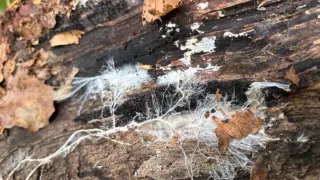

The Age of Fungi Remains an Open Question
science13 days ago

The Age of Fungi Remains an Open Question

Fungi challenge aging conventions because they grow as indeterminate, modular mycelial networks, making it unclear when a fungus begins, ends, or how old it is across species. A Trends in Microbiology paper proposes starting points like genetic tracking, mycelial genomics, and future technologies (e.g., fungi-on-a-chip) to begin measuring fungal age and guide systematic study.

Self-healing mycelium dress signals a new era for living textiles
technology20 days ago

Self-healing mycelium dress signals a new era for living textiles

Researchers in China have developed a textile from living mycelium as an engineered living material (ELM) that stays biologically active after fabrication, enabling self-cleaning and near self-repair via nutrient-triggered growth. Color and UV resistance can be added with co-cultured fungi and yeast. A prototype dress by Peelshere showcases potential for adaptive textiles and biomaterials, but durability, safety and manufacturing consistency need work before routine clothing or architectural use.

Oregon’s Underground Giant: a single honey fungus spanning the Malheur forest
science2 months ago

Oregon’s Underground Giant: a single honey fungus spanning the Malheur forest

An ancient Armillaria ostoyae honey fungus in Oregon’s Malheur National Forest spreads underground across about 10 square kilometres, a single genetic individual (Genet D) identified through DNA studies and estimated to be thousands of years old; surface signs are dying trees and autumn mushrooms, while the fungus propagates root-to-root via rhizomorphs. Its claim to be the largest organism on Earth depends on measurement method—by area it may not top the list, with contenders like Shark Bay’s seagrass and Utah’s Pando by mass—yet it remains one of the planet’s most expansive single living entities.

Hidden Giant Beneath Oregon: A Single Honey Fungus Spans 3.5 Square Miles
science3 months ago

Hidden Giant Beneath Oregon: A Single Honey Fungus Spans 3.5 Square Miles

A single Armillaria ostoyae fungus under Oregon’s Malheur National Forest covers about 2,385 acres (roughly 3.5 square miles) and is estimated to be 2,000–8,500 years old, making it the largest known living organism on Earth. Its underground mycelium and rhizomorphs slowly kill trees to feed the colony, while the visible autumn mushrooms are small and transient. DNA fingerprinting and vegetative pairing proved the entire forest-wide network is one genet. There is no way to eliminate it; management focuses on planting resistant species and careful thinning to slow its spread.

Oregon's Hidden Giant: The 8,650-Year-Old Honey Fungus Spanning 3.7 Square Miles
science6 months ago

Oregon's Hidden Giant: The 8,650-Year-Old Honey Fungus Spanning 3.7 Square Miles

The world’s largest known organism is a single honey fungus (Armillaria ostoyae) in Oregon’s Malheur National Forest, covering about 3.7 square miles with an extensive underground mycelial network and rhizomorphs. Genetic tests revealed it is a single clonal individual that killed trees by enzymatic decay, and estimates place its age between roughly 2,400 and 8,650 years.

Oregon's Glowing Giant: the World’s Largest Organism
science6 months ago

Oregon's Glowing Giant: the World’s Largest Organism

The world’s biggest and oldest organism is a single clone of honey fungus (Armillaria ostoyae) in Oregon’s Malheur National Forest, spanning about 3.7 square miles. Its vast underground mycelial network (with rhizomorphs) grows by feeding on trees, while the surface shows bioluminescent hints known as foxfire. Estimates place its age between 2,400 and 8,650 years, underscoring how a fungus can dwarf all other life in scale.

Scientists Uncover the Engineering Marvels of Fungi
science-and-environment9 months ago

Scientists Uncover the Engineering Marvels of Fungi

Scientists are exploring the potential of fungi, particularly mycelium, to address environmental challenges such as plastic waste and pollution, with innovations like fungi-activated diapers that could decompose plastics within a year and fungi-based materials for packaging, insulation, and chemical production, highlighting fungi's versatility as nature's original engineers.

Giant 35,000-Ton Organism May Be Earth's Largest
science1 year ago

Giant 35,000-Ton Organism May Be Earth's Largest

The humongous fungus in Oregon, known as Armillaria ostoyae, is the largest organism on Earth by mass, spanning 2,385 acres and weighing around 35,000 tons, primarily existing as an underground network of mycelium that plays a crucial role in decomposing organic matter and recycling nutrients, with debates ongoing about its true size and the definition of an organism.

Fungi Study Challenges Traditional Views on Cognition
science1 year ago

Fungi Study Challenges Traditional Views on Cognition

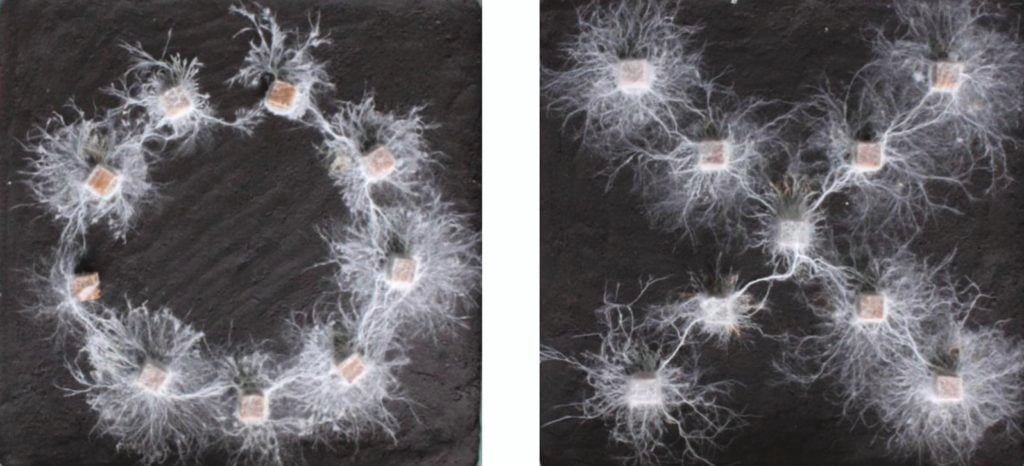
A study by researchers at Japan's Tohoku University has found that a species of wood-eating fungus, Phanerochaete velutina, can recognize and remember shapes, suggesting cognitive abilities without a brain. The fungi maintained specific patterns in their growth, indicating a form of spatial memory and decision-making. This challenges traditional views on consciousness and cognition, suggesting that intelligent behavior can occur without a central nervous system. The findings could have implications for understanding cognition in other life forms, including humans.

"The Environmental Power of Mushrooms: Mycelium, the Life Force of Earth"
environment2 years ago

"The Environmental Power of Mushrooms: Mycelium, the Life Force of Earth"

Mushrooms and their underground network of mycelium have the potential to play a crucial role in saving the planet. They can help combat climate change by sequestering carbon dioxide, breaking down pollutants, and restoring damaged ecosystems. Additionally, mushrooms offer sustainable alternatives to materials like plastic and leather, and can even be used to create renewable energy. Harnessing the power of mushrooms could contribute to environmental sustainability and biodiversity conservation.

"Scientists Propose Fungal Coating to Neutralize Killer Robots"
technology3 years ago

"Scientists Propose Fungal Coating to Neutralize Killer Robots"

Researchers have developed a living skin made of fungus, inspired by "The Terminator," which could act as a biodegradable and multifunctional sensor for electronics. The fungus, Ganoderma sessile, was grown on a seven-inch "Terminator" model, turning it into a "bio-cybernetic entity." While currently a proof of concept, the researchers hope their research could pave the way for living skins that could regulate building temperatures.

"Revolutionary Discovery in Home Construction: A Game-Changing Breakthrough"
science-and-technology3 years ago

"Revolutionary Discovery in Home Construction: A Game-Changing Breakthrough"

Scientists at Newcastle University in the UK are using fungal networks called mycelium to build lighter-weight structures, aiming to reduce reliance on concrete and minimize environmental impact. By mixing mycelium spores with materials that the spores can grow on, such as grains, and using flexible knitted molds, they have created mycocrete, a stronger and more versatile building material. This innovative approach could have a significant impact on the construction industry and help address the environmental issues associated with concrete production.