Tag

Face Recognition

All articles tagged with #face recognition

Apple Adds Limited Face Unlock to iPhone Duo in iOS 27.3 Beta
technology5 days ago

Apple Adds Limited Face Unlock to iPhone Duo in iOS 27.3 Beta

Apple introduced a new facial recognition feature for the iPhone Duo in the second beta of iOS 27.3, allowing users to unlock the device using the front camera when folded. This software-based solution addresses user complaints about the lack of standard Face ID hardware on the foldable. However, the feature is restricted to the lock screen, requires periodic re-authentication via Touch ID or passcode, and cannot be used for sensitive transactions like Apple Pay. The update also includes a new option to lock the device when folded shut and expands Siri AI capabilities.

iOS 27.3 Brings Face Recognition and Attention Aware Features to iPhone Duo
technology6 days ago

iOS 27.3 Brings Face Recognition and Attention Aware Features to iPhone Duo

Apple’s iOS 27.3 update introduces a new face unlock capability for the iPhone Duo, utilizing the front camera rather than the TrueDepth system. This update also extends Attention Aware features to the foldable device, allowing the phone to detect when the user is looking at the screen to manage notifications, display dimming, and alert volumes.

MSG briefly disables facial-recognition cameras during Taylor Swift wedding events
technology4 months ago

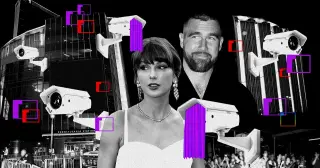
MSG briefly disables facial-recognition cameras during Taylor Swift wedding events

During Taylor Swift and Travis Kelce’s wedding weekend at Madison Square Garden, the venue temporarily locked out most security personnel from its Genetec video system and its facial-recognition software for a seven-hour period to protect client privacy, a rare departure that highlights the tension between celebrity privacy and pervasive biometric surveillance, and raises broader questions about who gets privacy in public spaces.

Mind Has Multiple Peaks: A Massive Study Finds Six Abilities Peak at Different Ages
science5 months ago

Mind Has Multiple Peaks: A Massive Study Finds Six Abilities Peak at Different Ages

A large, cross‑validated study of 48,537 web participants—supplemented by Wechsler data—finds there is no single cognitive peak. Six abilities peak at different ages: processing speed around 18–19; short-term (working) memory around 25; face recognition around 32; concentration/executive function around 43; emotional understanding around 48; and vocabulary (crystallized intelligence) around 67. These trajectories reflect different brain systems and life experiences, challenging the old single-peak model and suggesting that many cognitive strengths continue to develop into mid-to-late life. However, the study is cross-sectional and has sampling caveats.} ,

Wrongful Arrest Tests Reliability of One of America's Oldest Police Facial-Recognition Systems
technology5 months ago

Wrongful Arrest Tests Reliability of One of America's Oldest Police Facial-Recognition Systems

The ACLU filed suit against two Florida police departments after a Fort Myers man was wrongfully arrested in a Jacksonville Beach child‑abduction case based on a 93% facial‑recognition match from the FACES database, a match investigators treated as near proof of identity despite evidence he was hundreds of miles away and had no contact with the scene; the complaint alleges missed steps, omitted data from warrants, and a long‑running, minimally overseen system, underscoring calls for safeguards and accountability.

Meta Glasses Risk Turning Wearers Into Facial-Recognition Nodes, Warns EFF
technology5 months ago

Meta Glasses Risk Turning Wearers Into Facial-Recognition Nodes, Warns EFF

EFF reports that Meta's always-on surveillance glasses embed facial-recognition code that converts seen faces into 2,048-number faceprints and matches them against a stored database; the code is confirmed via static analysis, raising privacy concerns about turning wearers into a distributed surveillance network. Meta previously paid $650 million in a BIPA case over mass facial recognition, and internal documents suggest plans to deploy the feature in politically charged environments, though a public rollout remains unannounced.

Meta's Smart-Glass Face-Recognition Code Slips Into Millions of Phones
technology5 months ago

Meta's Smart-Glass Face-Recognition Code Slips Into Millions of Phones

WIRED’s review shows Meta quietly embedded a NameTag face-recognition system in its Meta AI companion app used with Ray-Ban/Oakley glasses, enabling on-device facial matching against phone-stored faceprints and triggering notifications when a face is recognized. The code exists in versions distributed to millions of users and is not yet exposed to consumers, but advocates warn it could normalize surveillance. Meta says no feature has shipped to consumers and any rollout would be done with transparency and careful consideration.

Bees with tiny brains master human-face recognition
science5 months ago

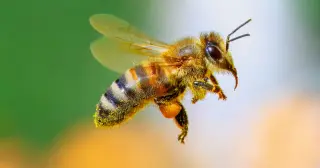
Bees with tiny brains master human-face recognition

Researchers trained honeybees (~1 mm brains) to distinguish human faces using photographs and rewards; the bees achieved 80–90% accuracy and remembered the trained face for at least two days, even when faces appeared from different viewpoints. The bees relied on configural processing—the relationships between facial features—similar to humans, challenging the notion that such high-level recognition requires large brains or specialized neural regions. The findings suggest that small neural systems with general learning rules can solve complex visual tasks and may inform AI approaches to recognition with limited resources.

Polar ID Goes Subdisplay: Metalenz Puts Face Unlock Behind the Screen
technology6 months ago

Polar ID Goes Subdisplay: Metalenz Puts Face Unlock Behind the Screen

Metalenz’s Polar ID uses polarization data captured by metasurface optics to distinguish real faces from masks, enabling biometric authentication that can operate beneath an OLED display. The system promises a notch-free, secure Face ID-like solution for laptops and smartphones, resistant to high-quality masks, with mass production planned for 2027; the under-display version is expected to arrive around 2028 after closer collaboration with display makers.

SwitchBot and Global Firms Advance Home Automation and Robotics
technology10 months ago

SwitchBot and Global Firms Advance Home Automation and Robotics

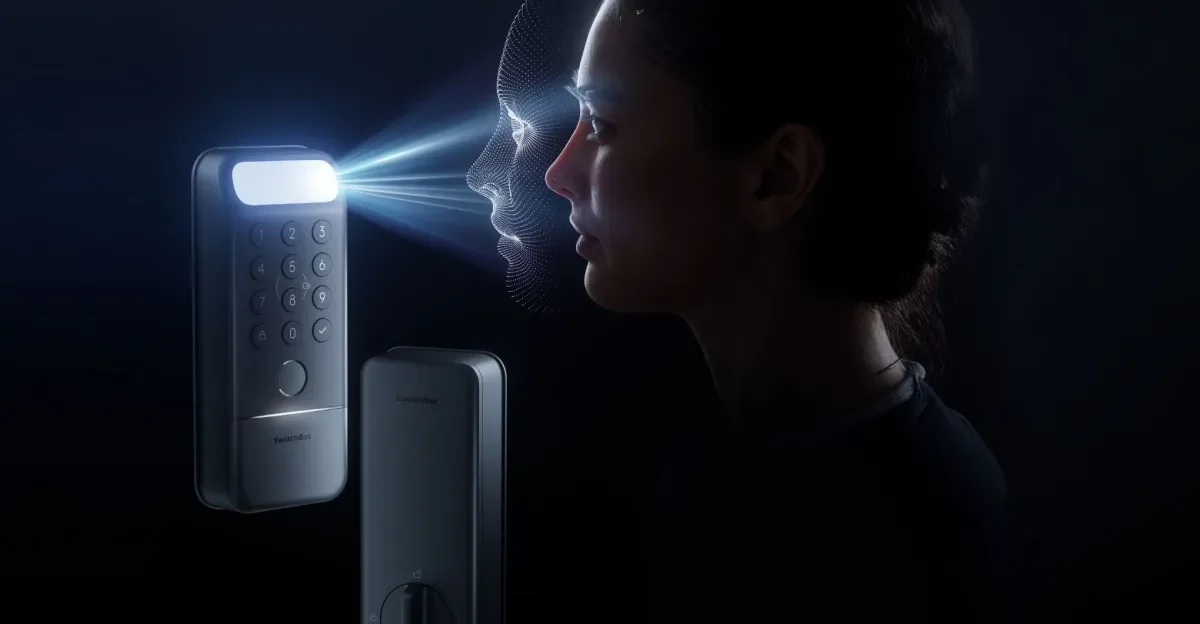
SwitchBot has announced the Lock Vision series, a smart deadbolt lock that uses 3D facial recognition for near-instant unlocking, supports Matter-over-Wi-Fi, and replaces traditional locks with a direct installation. It offers multiple unlocking options including face, passcodes, app, NFC, and physical key, with a battery life of up to six months per charge and a backup battery lasting five years. Pricing and availability are yet to be announced.

"Mayo Clinic Study Reveals Insights into Prosopagnosia"
health-and-medicine2 years ago

"Mayo Clinic Study Reveals Insights into Prosopagnosia"

Mayo Clinic researchers conducted a study on prosopagnosia, or face blindness, uncovering insights into its neurological causes, potential for improvement, and specific brain regions involved. The study included 336 patients with developmental or acquired prosopagnosia, revealing genetic links in developmental cases and associations with neurodegenerative diseases in acquired cases. Neuroimaging showed bilateral involvement in degenerative cases and right-sided lesions in non-degenerative cases. Some non-degenerative cases showed signs of transient or improving prosopagnosia, offering hope for potential improvement. The study highlights the complexity of prosopagnosia and the need for standardized testing and further research into treatment strategies and genetic underpinnings.

"Face-Recognizing Wasps Show Higher Cooperation and Intelligence"
biology3 years ago

"Face-Recognizing Wasps Show Higher Cooperation and Intelligence"

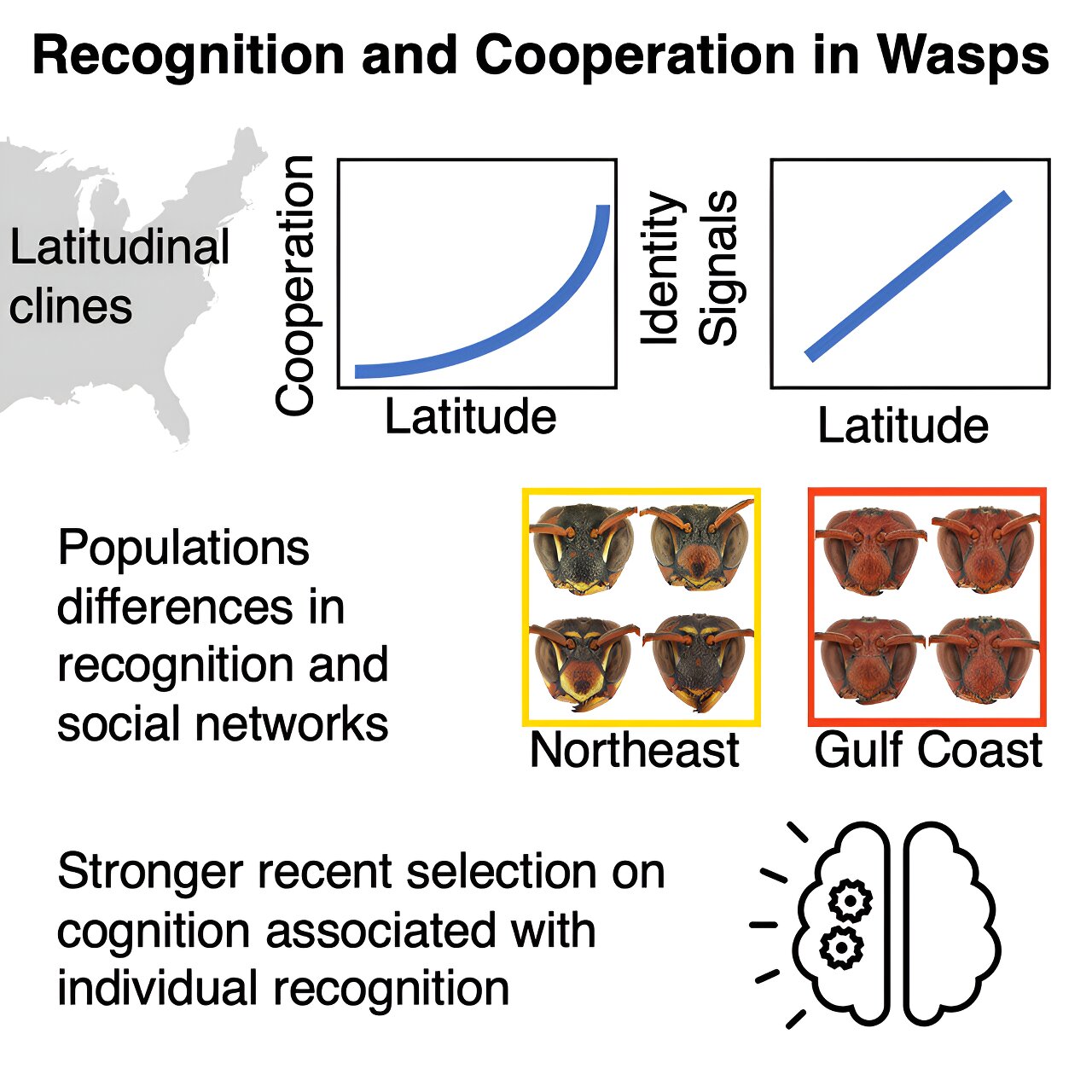
A study on paper wasps suggests that social interactions and the ability to recognize individuals may be linked to increased cognitive abilities and social cooperation. The research found that populations of wasps that recognized each other and cooperated more showed recent adaptations in brain areas associated with learning, memory, and vision. The study focused on two populations of paper wasps, with the northern population showing greater recognition of individuals and social cooperation compared to the southern population. The findings suggest that recognizing individuals may make wasps more selective and better able to manage their social interactions.