Eastern Pacific Storm Cristina Forms Off Nicaragua
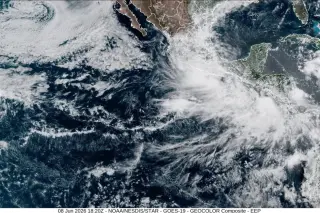
NOAA satellite imagery shows Tropical Storm Cristina forming off the coast of Nicaragua in the eastern Pacific, with updates ongoing as of June 9, 2026.
All articles tagged with #nicaragua

NOAA satellite imagery shows Tropical Storm Cristina forming off the coast of Nicaragua in the eastern Pacific, with updates ongoing as of June 9, 2026.

Brooklyn Rivera, an indigenous leader in Nicaragua, has died in custody after nearly three years in detention, a development that underscores ongoing concerns about political imprisonment and human rights under the Ortega government.

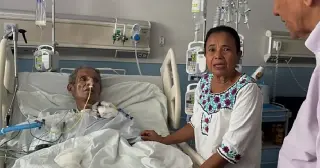
Brooklyn Rivera, a longtime Miskito indigenous advocate who helped win limited autonomy for Nicaragua’s northeast coast, died after nearly three years in government detention. The state attributed his death to a bacterial infection following Covid-19, while human rights groups condemned the circumstances as part of a pattern of disappearances and arbitrary detention and urged accountability.

Indigenous Miskito leader Brooklyn Rivera has died at 73 after years in state custody in Nicaragua; the government says the death was due to a bacterial infection following COVID-19, but rights advocates and UN experts contest the circumstances, citing an extended period of enforced disappearance with no independent medical oversight since Rivera’s September 2023 arrest on terrorism charges. The case has sparked international condemnation, including US calls for accountability and the demand for the release of political prisoners, as Rivera’s activism and leadership of Indigenous rights groups were central to his opposition to the Ortega–Murillo government.

Nicaragua has ended visa-free entry for Cuban citizens, cutting a route that had allowed thousands of Cubans to transit through Nicaragua on their way to the United States, in what officials and analysts describe as a response to U.S. pressure.

Nicaragua’s government has blocked a key transit route used by Cuban migrants seeking to reach the United States, underscoring ongoing regional migration challenges and shifting routes through Central America.
During a House Foreign Affairs hearing, Western Hemisphere Subcommittee Chair Maria Salazar urged strong U.S. action to defend religious liberty, spotlighting Nicaragua’s crackdown under Ortega and Murillo—expulsions of clergy, church closures, arrests of faith-based NGOs, and bans on processions—while stressing the resilience of Nicaragua’s Catholic and Evangelical communities and signaling a broader U.S. commitment to religious rights in the Western Hemisphere.

A California federal judge invalidated the Trump administration's attempt to end Temporary Protected Status for about 60,000 immigrants from Honduras, Nepal, and Nicaragua, ruling the decision was pre-ordained and unlawful, thus restoring their legal protections and work rights.

A 32-year-old woman from Nicaragua, Helen Massiell Garay Sanchez, was found dead inside a Dollar Tree freezer in Miami's Little Havana, prompting an investigation into her death, which is currently considered unclassified. Her family, who described her as a devoted doctor and mother, is raising funds to repatriate her body to Nicaragua for funeral arrangements. The circumstances of her death remain unclear, and the community is shocked by the incident.

An astronaut photograph captures two volcanic lakes on Nicaragua's Chiltepe Peninsula resembling googly eyes from space, highlighting their unique appearance and volcanic activity history, with the lakes' colors and sizes creating a striking optical illusion.

A federal appeals court has temporarily allowed the Trump administration to end deportation protections for over 60,000 people from Honduras, Nepal, and Nicaragua, after a lower court initially blocked the move. The decision is part of ongoing legal battles over the termination of Temporary Protected Status (TPS) for these countries, which provides temporary relief from deportation for individuals in unsafe conditions. The ruling leaves many migrants in uncertainty as the legal process continues.
The Ninth Circuit Court of Appeals paused a district court order that had temporarily prevented the termination of Temporary Protected Status (TPS) for 60,000 residents from Honduras, Nepal, and Nicaragua, allowing the Trump administration to proceed with ending TPS for these countries, which has caused concern among affected families and advocates.

A federal judge in San Francisco temporarily blocked the Trump administration from ending Temporary Protected Status for about 60,000 immigrants from Honduras, Nicaragua, and Nepal, delaying the termination until a November hearing, criticizing the administration's decision as racially biased and not based on objective country conditions.

The article discusses the difficulties immigrants face when attempting to self-deport under Trump-era policies, highlighting issues with documentation, lack of guidance, and the complex process of returning to their home countries, exemplified by cases from Nicaragua and Venezuela.

The Biden administration is ending Temporary Protected Status (TPS) for thousands of migrants from Honduras and Nicaragua, citing improved conditions in both countries, with protections set to expire in September. This move follows a pattern of the Trump administration's efforts to revoke TPS for various countries, facing legal challenges along the way.