Tag

Noirlab

All articles tagged with #noirlab

Sombrero Galaxy reveals enormous diffuse halo in new deep-sky image
science22 days ago

Sombrero Galaxy reveals enormous diffuse halo in new deep-sky image

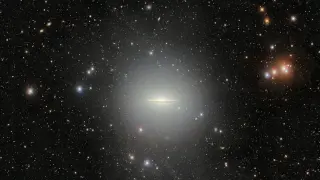
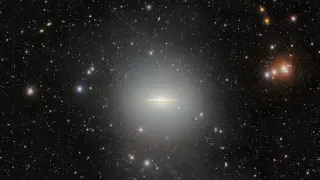
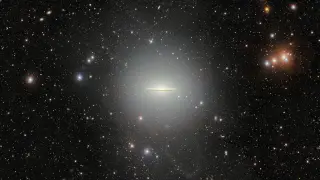
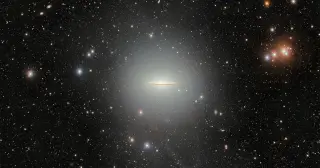
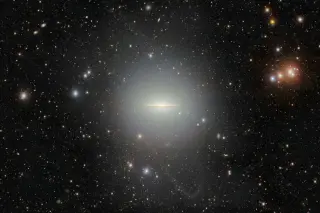
Astronomers using the 570-megapixel Dark Energy Camera in Chile captured a vast, diffuse halo around the Sombrero Galaxy (M104), extending far beyond its dusty disk and revealing a faint stellar stream that suggests past interactions with a smaller satellite galaxy. The image showcases both the bright central bulge and the faint outer structures in one frame, thanks to the camera’s sensitivity to extremely faint light.

Sombrero Galaxy reveals a colossal halo and faint stellar stream in a new deep-sky image
space23 days ago

Sombrero Galaxy reveals a colossal halo and faint stellar stream in a new deep-sky image

A new 570-megapixel image from the Dark Energy Camera at Cerro Tololo reveals an enormous, diffuse halo around the Sombrero Galaxy (M104) that extends beyond the bright disk by more than three times, plus a faint stellar stream suggesting past interactions with a smaller satellite. The image also sharpens the central bulge and dust lanes, highlighting star formation regions and the galaxy’s distinctive hat-like shape, thanks to NOIRLab’s deep-sky imaging capabilities, building on recent JWST mid-infrared observations.

Cosmic Hat on Display: The Sombrero Galaxy Revealed
space26 days ago

Cosmic Hat on Display: The Sombrero Galaxy Revealed

Space.com spotlights Messier 104, the Sombrero Galaxy, a spiral galaxy about 28 million light-years away in Virgo whose distinctive wide, hat-like disk earns it its nickname. The image was captured with the Dark Energy Camera (DECam) on the Blanco 4-meter telescope at Cerro Tololo, part of NOIRLab, and the galaxy hosts roughly 2,000 globular clusters. It’s too faint to see with the naked eye, though binoculars or a small telescope reveal its silhouette. This piece marks Space photo of the day for April 29, 2026.

Four-Hour Ground-Based Shot Reveals Neighboring Galaxy in Unprecedented Detail
science28 days ago

Four-Hour Ground-Based Shot Reveals Neighboring Galaxy in Unprecedented Detail

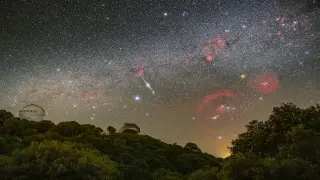
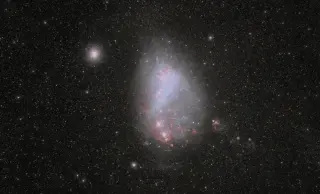
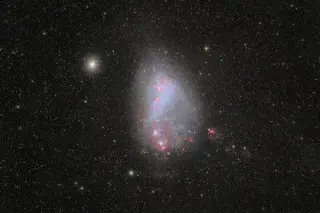
A ground-based image of the Small Magellanic Cloud captured from Cerro Pachón, Chile by Petr Horálek using a standard camera with a wide-aperture telephoto lens over four hours shows telescope-like detail, including intricate star fields and dust structures, underscoring how optimal conditions can make Earth-based imaging competitive with space telescopes and highlighting NOIRLab’s outreach through public-facing astrophotography.

Ground-based shot captures dazzling view of the Small Magellanic Cloud
space28 days ago

Ground-based shot captures dazzling view of the Small Magellanic Cloud

A ground-based image taken from Cerro Pachón, Chile, captures the Small Magellanic Cloud—a dwarf galaxy containing hundreds of millions of stars about 200,000 light-years from Earth—with a wide-aperture telephoto lens in a four‑hour exposure; the result, taken by NOIRLab ambassador Petr Horálek, looks like a image from a space telescope but was photographed on the ground, highlighting the SMC’s visibility to the naked eye from the Southern Hemisphere.

Ultra‑High‑Res Portrait: Sombrero Galaxy Revealed by 570‑MP Camera
space1 month ago

Ultra‑High‑Res Portrait: Sombrero Galaxy Revealed by 570‑MP Camera

The NSF’s 570‑megapixel Dark Energy Camera on the Victor M. Blanco 4‑meter telescope in Chile captured an ultra‑high‑resolution image of Messier 104 (the Sombrero Galaxy), detailing its dusty disk, extensive halo, thousands of globular clusters, and a tidal stellar stream that hints at a past merger, enabling deeper study of its structure and star formation.

Constante de Hubble medida con precisión récord de ~1% aviva la posibilidad de nueva física
science1 month ago

Constante de Hubble medida con precisión récord de ~1% aviva la posibilidad de nueva física

Un esfuerzo internacional reporta la medición directa más precisa de la tasa de expansión local: la constante de Hubble es 73.50 ± 0.81 km/s/Mpc (~1%), resultado de la red de distancias locales (H0DN) que combina diversas técnicas y datos de NOIRLab (CTIO y KPNO). Este hallazgo refuerza la tensión con las predicciones del Universo temprano, lo que podría indicar nueva física más allá del modelo cosmológico estándar.

Comet C/2025 K1 (ATLAS) fractures in the Sun’s glare, captured by Gemini North
space3 months ago

Comet C/2025 K1 (ATLAS) fractures in the Sun’s glare, captured by Gemini North

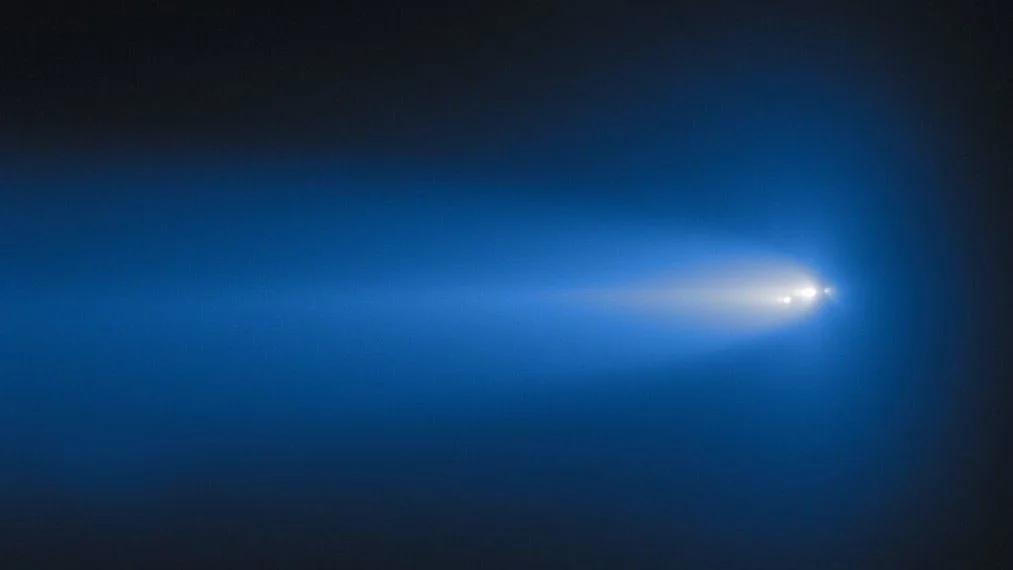
Discovered in May 2025 by ATLAS, Comet C/2025 K1 (ATLAS) was photographed by the Gemini North telescope breaking apart as it emerged from behind the Sun in Oct 2025. By early November its nucleus had fragmented into at least three pieces, a fate not uncommon for sun‑baked comets. The event, part of Live Science’s Space Photo of the Week coverage, underscores the volatile survival of comets near perihelion and foreshadows another sungrazer, 3I/ATLAS MAPS, potentially facing a similar solar encounter.

Cyberattack Forces Shutdown of Top Astronomical Observatories
science-and-technology2 years ago

Cyberattack Forces Shutdown of Top Astronomical Observatories

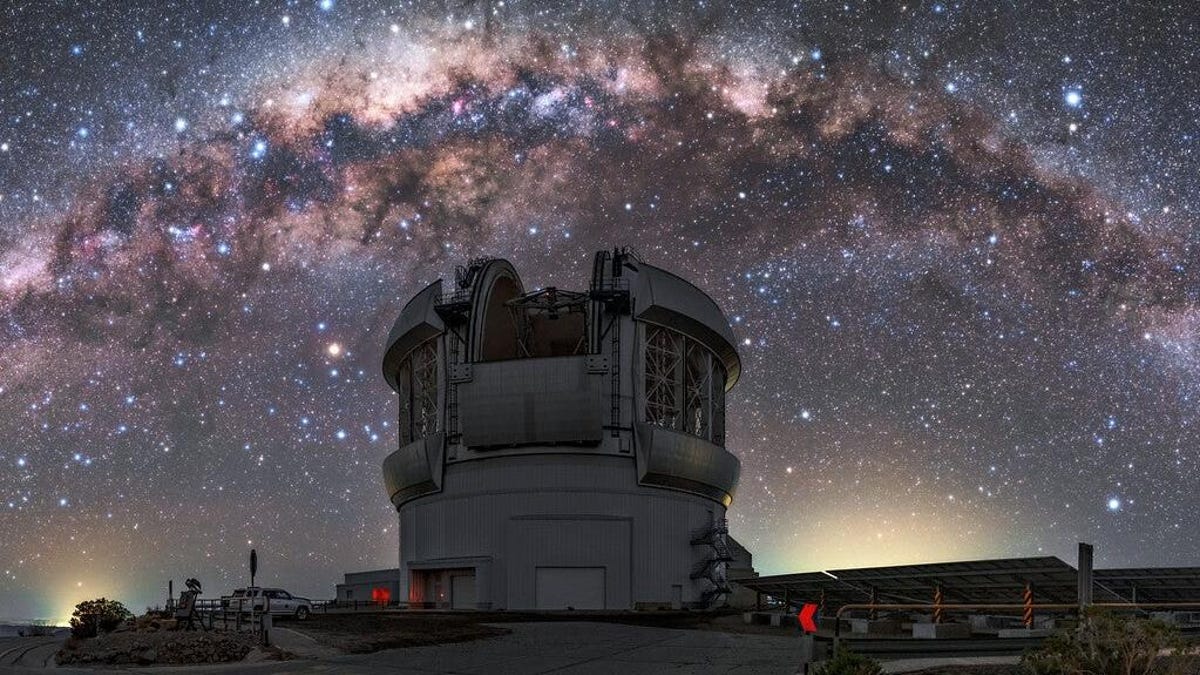
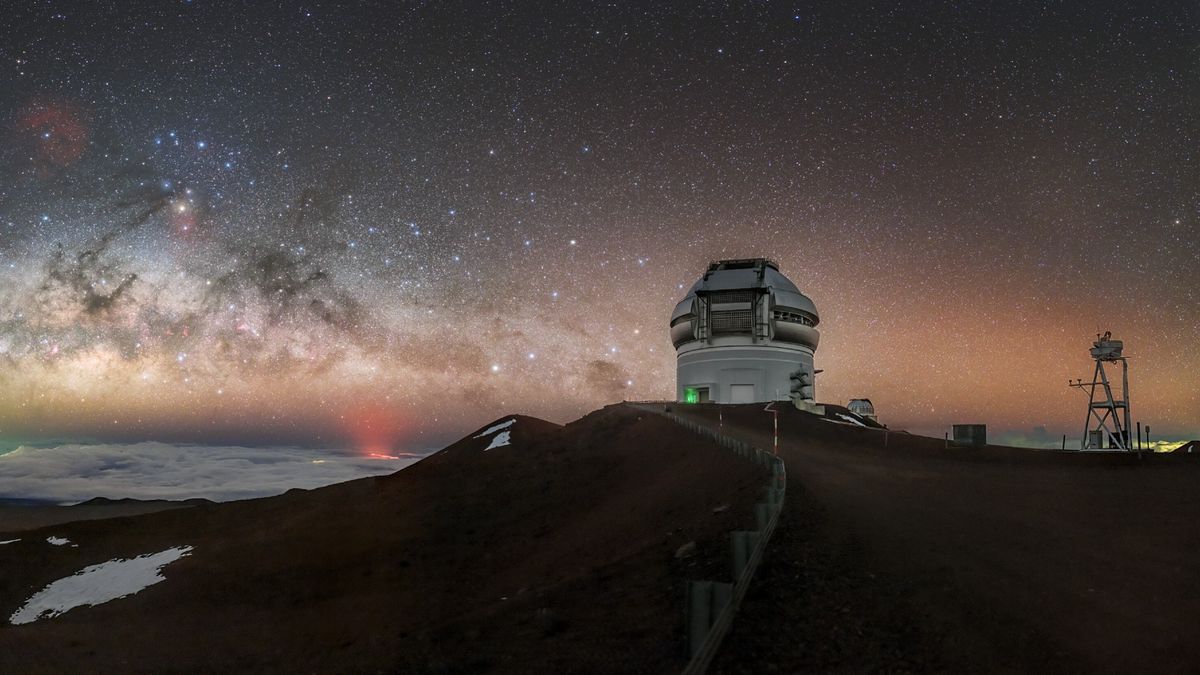
The International Gemini Observatory, a key player in global astronomical research, has temporarily suspended operations following a cyberattack. The Gemini North and South Telescopes, along with the Gemini.edu website, have been taken offline as a precaution. The National Optical-Infrared Astronomy Research Laboratory (NOIRLab), backed by the National Science Foundation, is working to restore normal operations and investigate the cyberattack. The culprits and their motives remain unknown, but previous cyberattacks on astronomical observatories and NASA have highlighted the need for enhanced cybersecurity in the space sector.

"World's Top Telescopes Paralyzed by Hackers"
cybersecurity2 years ago

"World's Top Telescopes Paralyzed by Hackers"

Hackers have targeted two of the world's most advanced telescopes, the Gemini North Telescope in Hawaii and Gemini South Telescope in Chile, along with other telescopes on Cerro Tololo in Chile, causing temporary shutdowns. The National Science Foundation's National Optical-Infrared Astronomy Research Laboratory (NOIRLab) is working with cybersecurity experts to investigate the cyberattacks and restore operations. The nature and origin of the attacks remain unclear. The incident occurred shortly before the United States National Counterintelligence and Security Center issued a bulletin warning about the threat of cyberattacks and espionage targeting American space companies and research organizations. This is not the first time astronomical observatories have been targeted, with previous attacks on the Atacama Large Millimeter/submillimeter Array (ALMA) and NASA.

"Massive Cyberattack Paralyzes Telescopes in Hawaii and Chile"
technology2 years ago

"Massive Cyberattack Paralyzes Telescopes in Hawaii and Chile"

A major cyberattack has disrupted remote connections to ten National Science Foundation (NSF) space telescopes, causing chaos in the astronomy community. The shutdowns have lasted for over two weeks, leading to missed opportunities for space observations. The reason behind the cyberattack remains unknown, and investigations are ongoing to resolve the incident.