Tag

Panstarrs

All articles tagged with #panstarrs

PanSTARRS Flaunts Dual Tails During Close Earth Approach
stargazing29 days ago

PanSTARRS Flaunts Dual Tails During Close Earth Approach

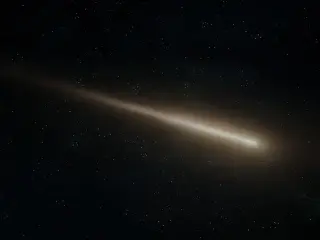
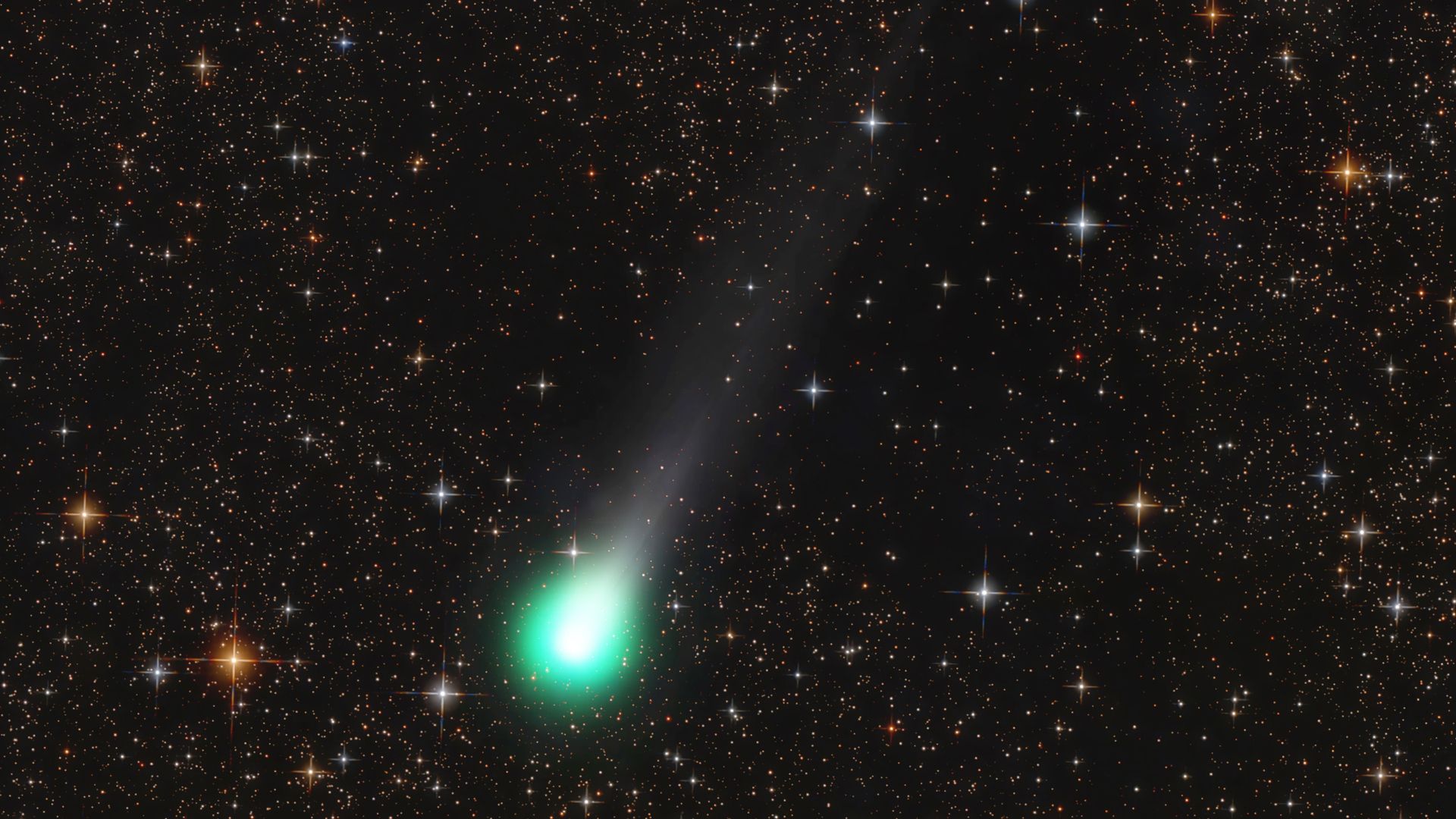
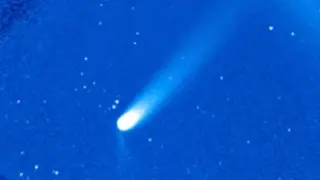
Space.com reports that Comet C/2025 R3 PanSTARRS displayed its ion tail as it passed about 45 million miles (72 million km) from Earth, with a dust tail lagging behind. The comet heated as it neared the Sun (perihelion on April 19) and then reached its closest approach to Earth around April 26, with SOHO imagery capturing the ion tail brightening and pointing away from the Sun.
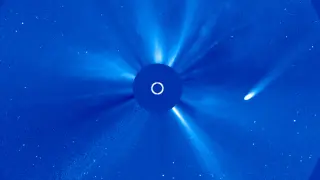
Comet PanSTARRS Slides Past Earth in a Real-Time Sky Show
space1 month ago

Comet PanSTARRS Slides Past Earth in a Real-Time Sky Show

A brightening Comet C/2025 R3 (PanSTARRS) will skim about 45 million miles past Earth, its closest approach on April 26, after surviving perihelion on April 19. The comet is visible in space-based imagery and can be tracked in near real time via the SOHO LASCO instrument and NOAA data feeds; it poses no threat and will fade as it moves away. Under dark southern skies it may be glimpsed with naked-eye, while binoculars reveal more detail as it traverses the solar-ward field.

Cosmic cameo: Fireball crosses path with Comet PanSTARRS over Czech castle
space1 month ago

Cosmic cameo: Fireball crosses path with Comet PanSTARRS over Czech castle

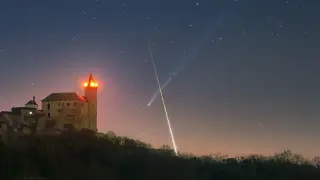
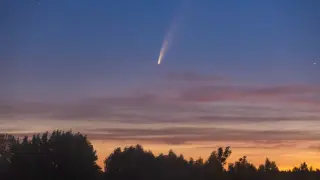
Photographers captured a rare time‑lapse of a bright fireball meteor streaking in front of Comet PanSTARRS above Kunětická Hora Castle in the Czech Republic on April 18, reportedly tied to an asteroid explosion over Belarus; PanSTARRS reached perihelion around April 19 and was one of 2026’s most visible comets, making for a striking celestial coincidence.

Comet PanSTARRS to Shine in Predawn Sky Before It Vanishes
space1 month ago

Comet PanSTARRS to Shine in Predawn Sky Before It Vanishes

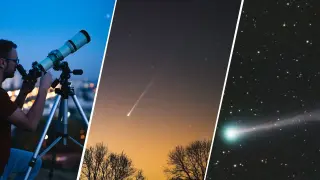
Comet C/2025 R3 PanSTARRS should reach naked-eye visibility (magnitude ~4.7) in the eastern predawn sky on April 17, about 90 minutes before sunrise, low on the horizon and a few degrees above Algenib in Pegasus. Locate the Great Square and spot PanSTARRS about five degrees above the star; binoculars (10x50) can reveal its glowing nucleus. The comet will brighten toward its perihelion around April 19, then move southward and fade from Northern Hemisphere skies for the foreseeable future.

Predawn PanSTARRS: Stunning Naked-Eye Comet Over Somerset
space1 month ago

Predawn PanSTARRS: Stunning Naked-Eye Comet Over Somerset

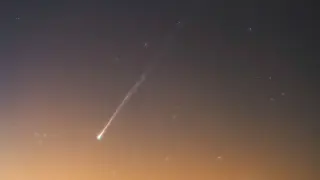
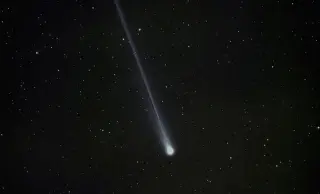
British astrophotographer Josh Dury captured a striking predawn image of comet C/2025 R3 (PanSTARRS) rising above the Mendip Hills in Somerset, England, as light pollution created a false dawn; the bright nucleus and a tail spanning about 10 degrees are visible to the naked eye ahead of PanSTARRS' perihelion around April 19–20, using 33 long-exposure frames with a Sony A7S III and a 135mm lens, and the comet likely originates from the distant Oort Cloud with an orbital period of about 170,000 years.

Comet PanSTARRS Could Shine Bright Enough to See Naked Eye This Month
space1 month ago

Comet PanSTARRS Could Shine Bright Enough to See Naked Eye This Month

Comet C/2025 R3 (PanSTARRS) is brightening in April and could become visible to the naked eye in the predawn sky this month, potentially reaching around magnitude 4 as it nears perihelion on April 20 and Earth on April 27. For Northern Hemisphere viewers, it will pass near the Great Square of Pegasus and drift toward Pisces from mid‑April, with a new Moon on April 17 helping dark skies; however visibility is uncertain and depends on the comet’s activity, so binoculars may be needed for a good glimpse.