NASA says the Aug. 2, 2027 total solar eclipse will deliver up to six minutes and 23 seconds of totality—the longest in decades and the longest until 2114—visible across Africa, Europe, and the Middle East; most of the U.S. won’t see it, with only a partial view possible in parts of Maine early on Aug. 2, 2027.
The 2 August 2027 solar eclipse—hailed as the 'eclipse of the century'—will deliver up to 6 minutes 23 seconds of totality at its peak in Egypt, with a path crossing Gibraltar, Spain, North Africa, and into the Middle East, presenting numerous viewing options across Europe and Africa; travelers are advised to book early as hotels fill up.
Britons will witness their strongest partial solar eclipse since 1999, with up to 96% of the Sun obscured and peak viewing around 18:58–19:15 BST depending on location; totality will be visible in parts of Spain and other regions, while UK weather may bring cloud cover; viewers should use certified solar glasses or safe viewing methods, and note the next UK total eclipse isn’t until 2081.
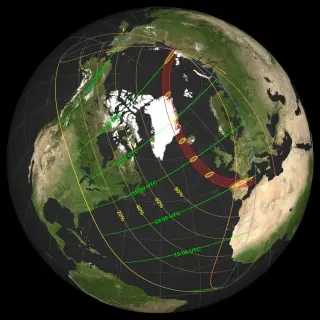
Space.com outlines a five‑day countdown to the Aug. 12, 2026 total solar eclipse, with Europe seeing a brief totality along a narrow path that crosses Greenland, Iceland, northern Spain and the Balearics; a partial eclipse will be visible across much of Europe and parts of the northeastern US and eastern Canada. The site will provide live coverage from two locations on the path—Daisy Dobrijevic aboard MS Spitsbergen in Greenland and Anthony Wood in Spain—plus viewing tips, weather caveats and reminders to use ISO‑certified eclipse glasses.
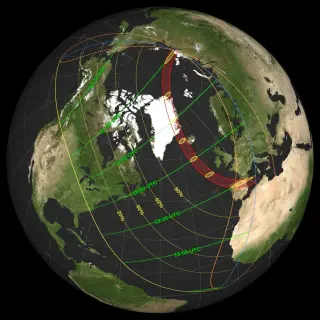
A total solar eclipse will darken parts of northern Spain on August 12—the first time mainland Europe sees such an event since 1999. The Moon will completely cover the Sun along the path of totality (stretching from northern Russia through Greenland and Iceland to Spain and northeastern Portugal), with Spain’s total phase lasting under two minutes (about 1:48 in Burgos). Partial eclipses will be visible across much of Europe. Viewers should use ISO‑approved eclipse glasses to protect their eyes, as looking at the Sun directly can cause serious damage.
The August 12, 2026 total solar eclipse will be best viewed from western Iceland (notably Látrabjarg) or northern Spain, where the path of totality covers more land and the weather is typically warmer; other viable spots include portions of Portugal, Russia, and Greenland, though they’re remote. North America will see only a partial eclipse, with visibility varying by location. For eye safety, look directly at the Sun only during totality using certified eclipse glasses or solar viewers, or use indirect viewing methods like a pinhole projector for the rest of the event.
A total solar eclipse on August 12, 2026 will sweep from the Arctic across Greenland and Iceland into northern Spain, with the centerline delivering up to about 2 minutes and 18 seconds of totality along a ~294 km-wide path. NASA maps provide precise contact times, but local viewing hinges on weather and a clear western horizon, making much of the experience a partial eclipse for many observers and the only mainland Spain totality in over a century.
On Aug 12, 2026, a total solar eclipse will traverse Greenland, Iceland, and northern Spain, with totality lasting up to 2 minutes 18 seconds; a broad swath of Europe will see a partial eclipse. Space.com is publishing viewing guides, safety tips and live coverage, with eclipse-related reporting from Greenland and northern Spain. Spain is expected to be popular for its weather, though observers should account for a very low sun on the western horizon at totality.
On Aug 12, 2026 a total solar eclipse will sweep across Greenland, Iceland, northern Russia, the Atlantic, Spain, and a corner of Portugal, with a wide swath of the Northern Hemisphere seeing a partial eclipse. Totality lasts up to about two to two-and-a-half minutes near the center; before and after, eye protection is essential. A NASA map provides location-based times for total and partial phases across cities in Europe, North America, and beyond, plus safety guidance and viewing options such as eclipse glasses, solar filters, or indirect methods like pinhole projectors.
Space.com lists 10 top locations along Spain’s east coast and the Balearic Islands to view the August 12, 2026 total solar eclipse, noting that totality will trace the east coast from Vilanova i la Geltrú to Cullera with Barcelona only seeing a 99% partial eclipse. The spots include Playa de Palma (Mallorca), Playa de la Malvarrosa (Valencia), La Muntanyeta dels Sants (Albufera area), Platja de Llevant (Salou), Circuit Ricardo Tormo (Cheste), Vinaròs, Altafulla, Far d'Artrutx (Menorca), Llacuna de l'Encanyissada (Ebro Delta), and Montsià Hills, offering totality windows from about 25 seconds to 1 minute 39 seconds. Viewers should aim for NW-facing, unobstructed vistas and can use tools like Xavier Jubier’s Google Map and the Eclipse Horizon Checker, checking conditions the night before for the best chance of a clear view.
A 12 August 2026 total solar eclipse will travel across the Arctic region with totality visible in Spain and northern Portugal, while the UK, Ireland and parts of North America will see deep partial eclipses. Spain offers prime viewing near sunset in cities like Bilbao, Valladolid, Zaragoza and Valencia, with Madrid and Barcelona seeing about 99% partial eclipse. The UK and Ireland will experience high obscuration (about 90%+ in many areas), and Alaska and eastern Canada/US will see partials that vary by location. Observers should wear certified solar eclipse glasses or use approved solar telescopes/filters, and may opt for safe indirect viewing methods like solar projections (e.g., via a colander). Timings and local viewing details are provided for major cities, along with safety guidance and tips for capturing the event.
The article explains that the path of totality for solar eclipses is less precise than maps suggest due to uncertainties in the sun's size, moon's topography, and Earth's terrain, leading to a 'zone of uncertainty' at the edges where visibility of the eclipse's totality can vary. New methods and more accurate measurements are improving predictions, but small discrepancies still exist, especially near the edges.
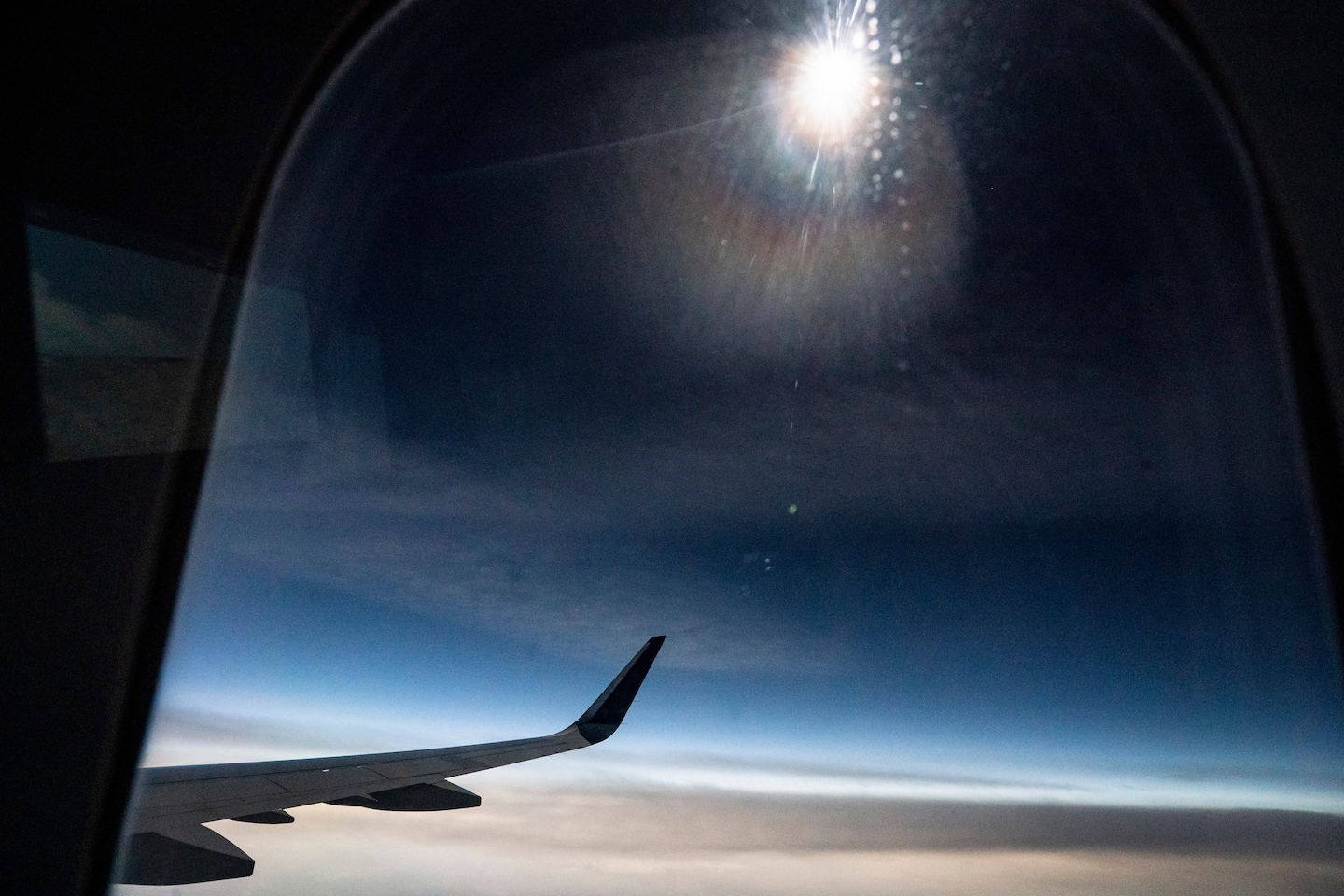
Delta Air Lines' special eclipse flight from Dallas to Detroit deviated from the path of totality due to air traffic control restrictions, causing passengers to miss a prime view of the total solar eclipse. The airline's Airbus A321neo flew in a circle at 33,000 feet to give both sides a look, but passengers didn't get the view they expected. Despite the disappointment, some passengers still enjoyed the experience, while others expressed frustration over the missed opportunity and financial investment.
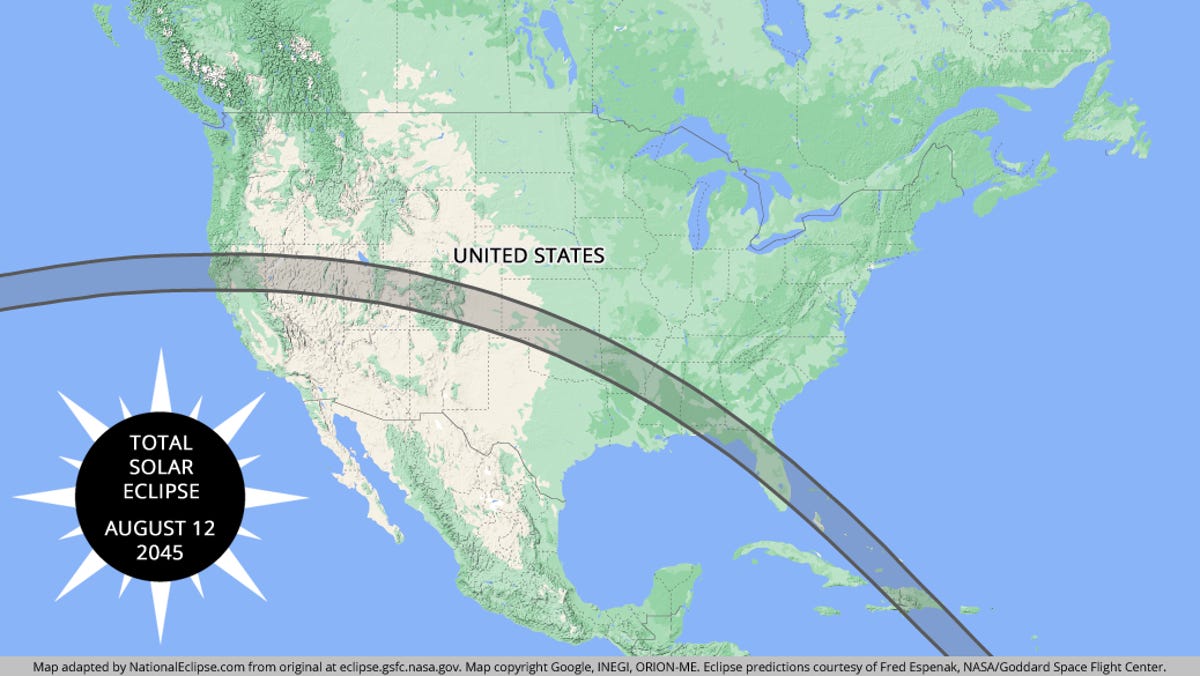
Naples, Florida experienced a partial solar eclipse on April 8, 2024, and the next total solar eclipse visible in the U.S. will occur on March 30, 2033, with Alaska being the only state in the path of totality. Florida will witness a total solar eclipse on August 12, 2045, with the path of totality covering several states, the Caribbean, and South America. The maximum duration of totality for the 2045 eclipse will be 6 minutes and 6 seconds. Additionally, there are several other total solar eclipses scheduled between 2024 and 2045, but the 2045 eclipse will be the next one visible across most of the contiguous United States.
The next total solar eclipse in Austin, Texas is not expected until 2343, with the path of totality crossing through the United States from Mexico to Greenland. However, the next total solar eclipse in the United States will occur in 2044, and in Texas in 2045, with other upcoming eclipses in 2026 in Greenland, Iceland, Spain, Russia, and Portugal.