Tag

Physics And Mathematics

All articles tagged with #physics and mathematics

Dark voids sprint past light in lab—without breaking relativity
physics-and-mathematics1 month ago

Dark voids sprint past light in lab—without breaking relativity

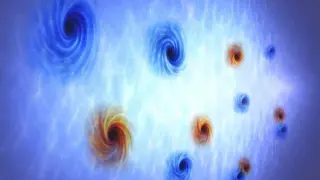
Physicists using ultrafast electron microscopy observed empty voids (singularities) in phonon-polariton waves inside a thin boron nitride sample that move faster than light. Because these voids contain no information, their superluminal motion does not violate special relativity, and the work reveals universal laws of wave dynamics with potential to advance ultrafast studies across physics and materials science.

Molecular vibrations act as a 'catapult' for ultrafast electron transfer in organic solar cells
physics-and-mathematics2 months ago

Molecular vibrations act as a 'catapult' for ultrafast electron transfer in organic solar cells

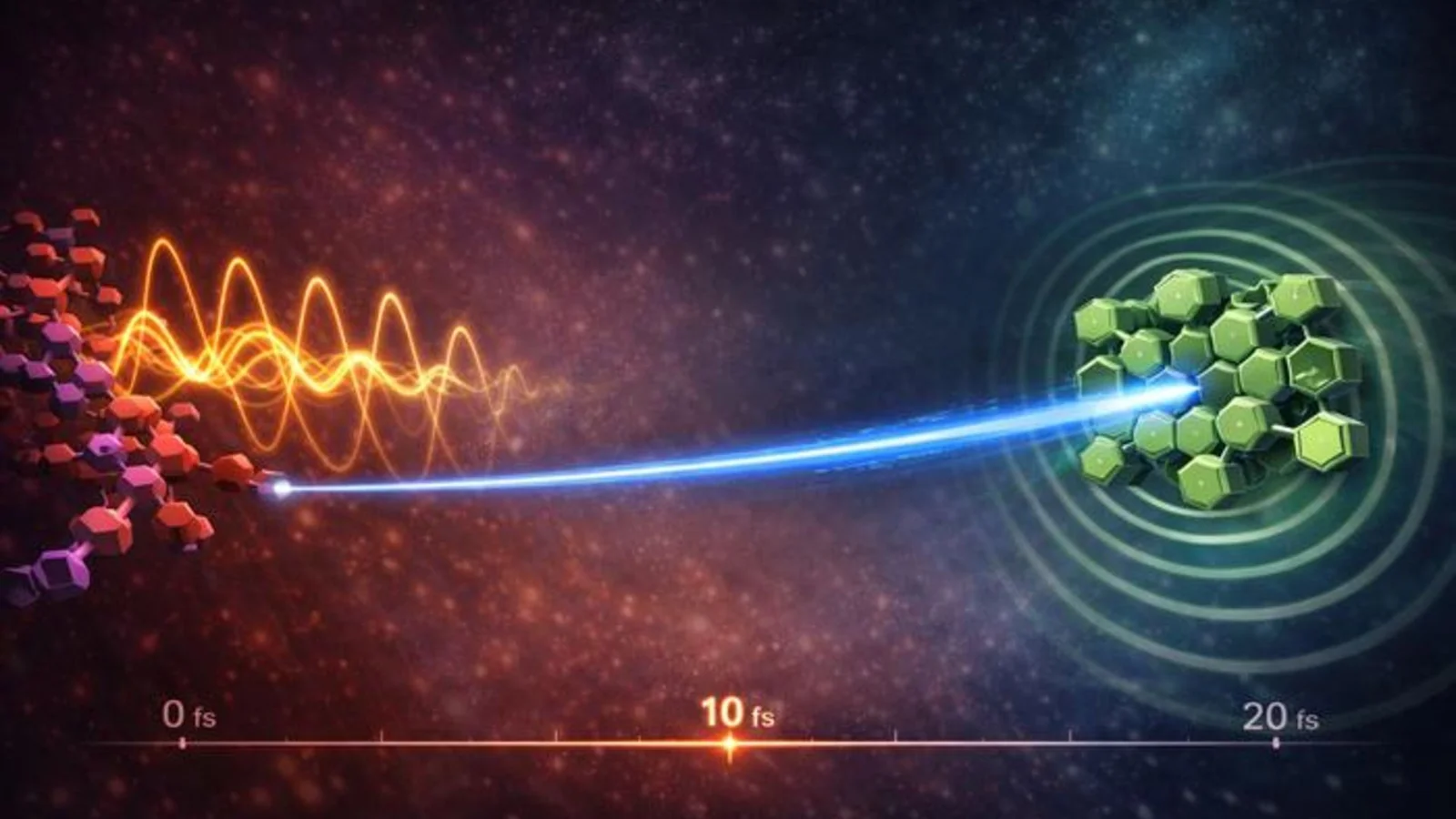
Researchers show ultrafast charge transfer at a donor–acceptor junction in an organic solar cell, where vibrations of the donor polymer launch an electron across the junction in about 18 femtoseconds. This vibronic mechanism acts like a molecular catapult, enabling faster, more coherent charge transfer than thought possible and suggesting new design strategies that exploit, rather than suppress, molecular motion to improve organic solar cell efficiency.

China produces pure hexagonal diamond and claims superior hardness over regular diamond
physics-and-mathematics2 months ago

China produces pure hexagonal diamond and claims superior hardness over regular diamond

Chinese researchers created small, pure hexagonal diamond (lonsdaleite) samples and demonstrated that it is stiffer and harder than cubic diamond and more oxidation-resistant; the 1.5 mm samples were formed by compressing organized graphite at about 20 GPa for 10 hours and heating to roughly 1,300–1,900°C, with the work published in Nature, indicating a feasible bulk production method and potential industrial applications in drilling, cutting, and thermal management.

Lab recreates the Big Bang’s first millisecond, revealing a soupy primordial plasma
physics-and-mathematics3 months ago

Lab recreates the Big Bang’s first millisecond, revealing a soupy primordial plasma

Physicists at the LHC's CMS collaboration watched a high-energy quark traverse quark-gluon plasma by using Z bosons as a clean directional tag. They observed a subtle less-than-1% dip in backward-produced hadrons, consistent with a wake in the primordial soup and offering new insight into the liquid-like properties of the early-universe plasma.

Webb Telescope Maps Cosmos's Invisible Skeleton in Unprecedented Detail
physics-and-mathematics3 months ago

Webb Telescope Maps Cosmos's Invisible Skeleton in Unprecedented Detail

Astronomers using the James Webb Space Telescope produced the most detailed map of dark matter yet, revealing how its gravity shapes ordinary matter in a patch of the Sextans constellation and uncovering about 800,000 galaxies; the findings, published in Nature Astronomy from 255 hours of JWST observations, demonstrate dark matter as the universe's scaffolding and hint at how cosmic structure formed, with plans to expand mapping using NASA's Roman Space Telescope.

Macroscopic quantum state realized with 7,000-atom sodium nanoparticles
physics-and-mathematics3 months ago

Macroscopic quantum state realized with 7,000-atom sodium nanoparticles

Physicists demonstrated a macroscopic quantum superposition by sending a beam of 7,000-atom sodium nanoparticles through a narrow slit, which produced an interference pattern and set a new record for the size of objects observed in quantum states; the result points toward future experiments with larger, even biological, molecules in quantum superpositions.

Dark matter–neutrino interaction hints at a cosmology breakthrough
physics-and-mathematics4 months ago

Dark matter–neutrino interaction hints at a cosmology breakthrough

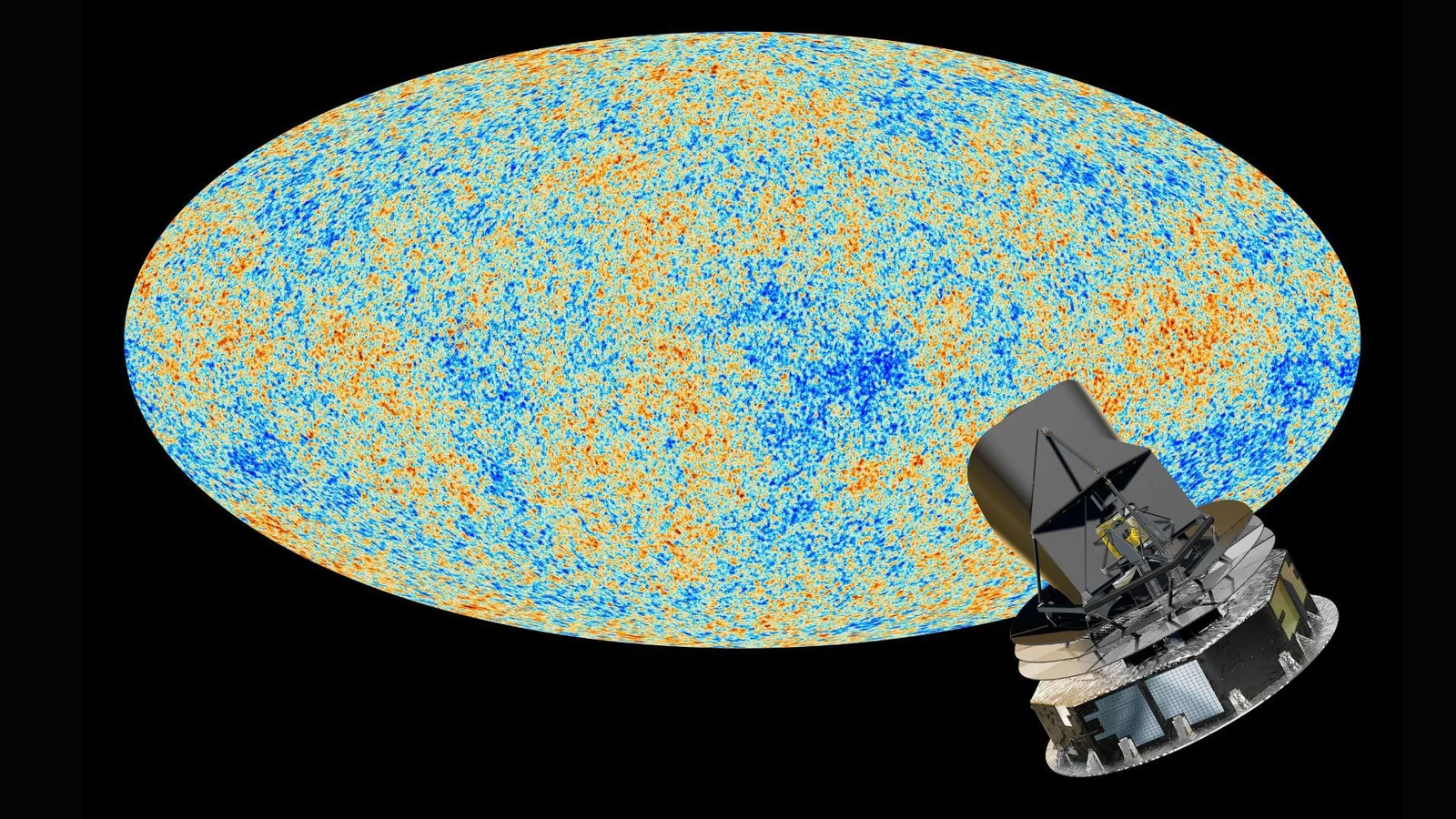
Researchers report a 3-sigma hint that dark matter and neutrinos may interact, transferring momentum and potentially reducing the universe’s observed clumpiness. If confirmed, this could require updates to the lambda-CDM model and help address the S8 tension between early- and late-universe measurements. The finding combines Planck/ACT early-universe data with BAO and cosmic-shear observations and simulations, but it remains unproven and will hinge on forthcoming data from surveys like the Vera Rubin Observatory for confirmation. A confirmed interaction would constitute a fundamental breakthrough in cosmology and particle physics.

Sticky Space? New Idea Says the Vacuum Could Be a Viscous Fluid Shaping the Cosmos
physics-and-mathematics4 months ago

Sticky Space? New Idea Says the Vacuum Could Be a Viscous Fluid Shaping the Cosmos

A new arXiv preprint proposes space may have bulk viscosity, effectively making the vacuum a viscous medium with spatial phonons that could slow cosmic expansion and better align DESI observations with reality. If true, this viscous-space model would challenge the standard Lambda-CDM cosmology and the cosmological constant, potentially redefining our understanding of dark energy. However, the idea is unreviewed and data-driven, with questions about whether viscosity is fundamental or a measurement artifact; upcoming data from Euclid and further DESI analyses will be crucial to test this hypothesis.