Reactivating hippocampal PV interneuron plasticity reverses deficits in a neurodevelopmental disorder model
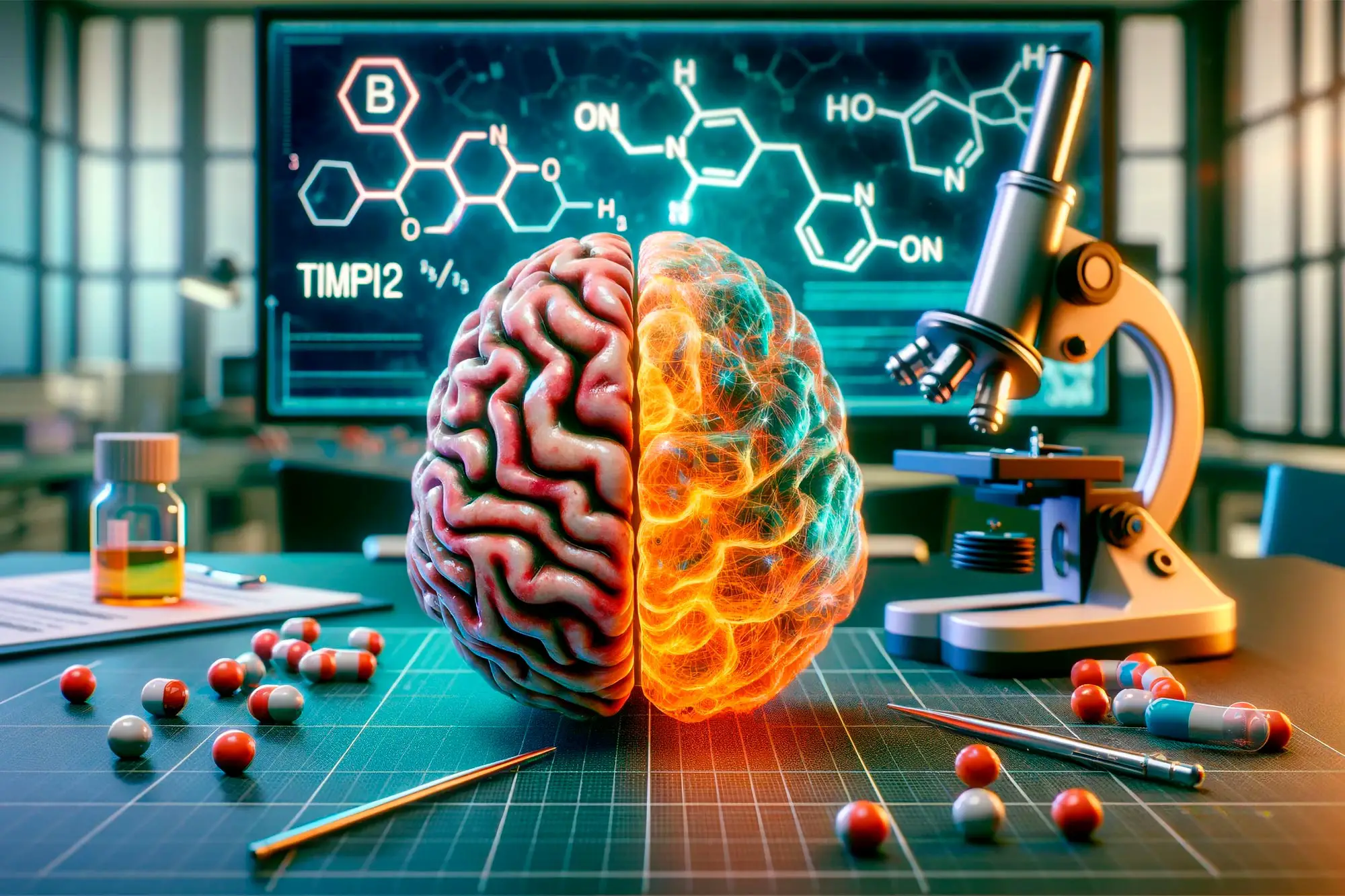
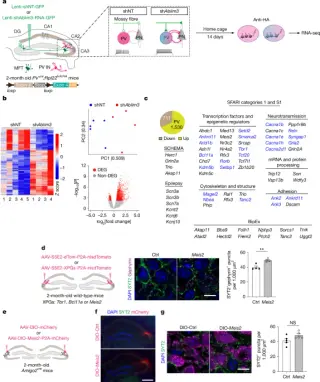
Researchers identify regulators of experience-dependent PV interneuron plasticity (XPGs) in the CA3/CA2 hippocampal circuit and show that adult upregulation of the Meis2 gene in PV interneurons restores this plasticity. This restoration improves ensemble activity and sharp-wave ripple dynamics, reduces seizures, and enhances cognition in a CNTNAP2-based neurodevelopmental disorder model, suggesting PV interneuron plasticity as a convergent, targetable mechanism to reverse developmental circuitry and cognitive deficits.