Tag

Preclinical Research

All articles tagged with #preclinical research

New Peptide and Antibody Approaches Target Sodium Channels to Silence Neuropathic Pain

New Peptide and Antibody Approaches Target Sodium Channels to Silence Neuropathic Pain

Two new preclinical studies offer distinct strategies for treating neuropathic pain by targeting voltage-gated sodium channels. Mimetic Medicines reported that a short lipidated peptide reduces Nav1.8 channel density in mice, while researchers at the University of Toyama and Shionogi demonstrated that antibodies targeting Nav1.7 suppress abnormal pain signals in rats without impairing normal protective sensations. Both approaches aim to address the hyperexcitability of sensory neurons that characterizes chronic nerve pain, offering alternatives to current treatments like pregabalin.


Targeted Tapeworm Drug Shows Promise in Early Endometriosis Trials
health16 days ago

Targeted Tapeworm Drug Shows Promise in Early Endometriosis Trials

A new study in Advanced Healthcare Materials reports that a modified version of the anti-parasitic drug niclosamide, delivered via a specialized nanocarrier, reduced lesion growth and pain sensitivity in mice with endometriosis. While the therapy remains in preclinical stages, it offers a potential non-hormonal alternative to current treatments that often fail to provide long-term relief.

Zurich researchers report stem cell transplants restore motor function in stroke-affected mice
science-and-health27 days ago

Zurich researchers report stem cell transplants restore motor function in stroke-affected mice

University of Zurich scientists found that transplanting human neural stem cells into the brains of mice one week after a stroke induced new neuron growth, repaired blood vessels, and restored movement. The study suggests a potential path for regenerative treatments, though significant hurdles remain before human trials.

SORDINO-fMRI enables silent, motion-resistant brain imaging in behaving mice
science1 month ago

SORDINO-fMRI enables silent, motion-resistant brain imaging in behaving mice

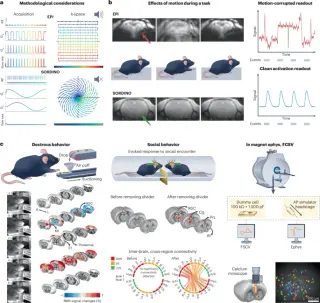
MacKinnon and colleagues have introduced SORDINO-fMRI, a new framework designed to capture brain-wide network dynamics in behaving mice without motion artifacts. This silent imaging method allows for simultaneous network-level recordings and cellular or chemical validation, addressing a major challenge in preclinical neuroimaging. According to Nature Neuroscience, the technique promises to open new opportunities for studying global brain dynamics during complex behaviors, potentially bridging the gap between large-scale network mapping and detailed cellular analysis in awake animals.

health2 months ago

Turmeric Compound Protects Blood Vessels in Diabetic Rats

Researchers at Florida Institute of Technology found that curcumin, the active compound in turmeric, improved blood vessel health in rats with Type 1 diabetes. The study, presented at the 2026 American Physiology Summit, showed that curcumin reduced inflammation and restored normal calcium activity in the aorta. While these results suggest potential benefits for cardiovascular complications associated with diabetes, the findings are based on animal models and require human clinical trials to determine safety and efficacy.

Two Drugs Spark Remyelination in MS Models, Hinting at Nerve Repair
health5 months ago

Two Drugs Spark Remyelination in MS Models, Hinting at Nerve Repair

Finnish researchers identified two drug molecules that promote remyelination in MS models, suggesting a potential path to repairing nerve damage rather than only reducing inflammation. One drug targets the unfolded protein response in brain cells, while the other alters scar tissue around damaged areas. Both produced strong remyelination and lower neuroinflammation in animal and cell models, but human trials and brain-delivery challenges remain before clinical use.

Seizure drug levetiracetam shows potential to prevent Alzheimer's by halting toxic protein buildup
health7 months ago

Seizure drug levetiracetam shows potential to prevent Alzheimer's by halting toxic protein buildup

Northwestern University researchers report that the anti-seizure drug levetiracetam blocked the production of amyloid-beta 42 in animal models, cultured human neurons, and post-mortem Down syndrome brain tissue, suggesting a possible Alzheimer’s prevention mechanism by stopping toxic protein formation. The findings are preclinical and observational with no human trials yet, and experts caution that any preventive use would require very early treatment and consideration of side effects, while researchers pursue longer-lasting versions and plans for human testing.

"New Drug Offers Hope for Chronic Pain Relief, Study Reveals"
health2 years ago

"New Drug Offers Hope for Chronic Pain Relief, Study Reveals"

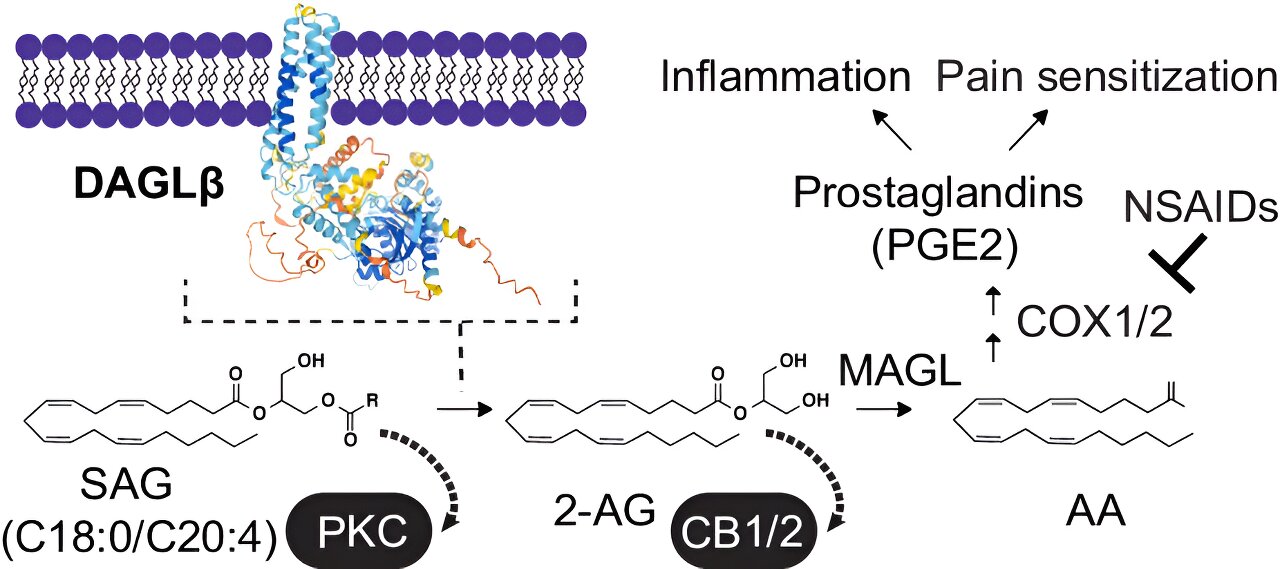
Researchers from Virginia Commonwealth University, the University of Texas at Austin, and the University of Virginia have developed a promising drug candidate, KT109, that targets the enzyme DAGLβ to reduce inflammation and alleviate chronic pain without the risk of addiction. The study, published in the Proceedings of the National Academy of Sciences, shows that the drug effectively tricks immune cells into shutting off inflammatory responses, offering a potential new treatment for chronic pain sufferers.

Promising breakthrough in pancreatic cancer treatment offers hope for longer survival
health2 years ago

Promising breakthrough in pancreatic cancer treatment offers hope for longer survival

Preclinical research conducted by researchers from VCU Massey Comprehensive Cancer Center and the VCU Institute of Molecular Medicine suggests that polyinosine–polycytidylic acid (pIC) delivered directly into tumor cells shows promise as a new treatment option for pancreatic cancer. The study found that pIC suppresses tumor growth, induces cancer cell death, and enhances survival in animal models with pancreatic ductal adenocarcinoma (PDAC). When used alone or in combination with gemcitabine, pIC was safe and non-toxic to normal pancreatic cells. The treatment combination significantly improved the survival of immune-competent mice with PDAC tumors. The study also revealed the mechanism of pIC's effectiveness and its ability to activate the immune system's response to cancer cells. The researchers believe this approach could have translational potential to improve the survival of people with PDAC and potentially other cancer types.

"Breakthrough Stroke Therapy Identification Method Developed by NIH Researchers"
medical-research3 years ago

"Breakthrough Stroke Therapy Identification Method Developed by NIH Researchers"

Researchers from the National Institutes of Health's Stroke Preclinical Assessment Network (SPAN) have identified uric acid as a potential therapy to enhance recovery from acute ischemic stroke. Using a new method for conducting preclinical animal research, the study rigorously tested the effectiveness of six novel therapies in reducing ischemic brain injury in rodents. Uric acid showed promising results and warrants further investigation in additional studies and potentially human clinical trials. The study highlights the importance of incorporating scientific rigor into preclinical testing and using animal models that resemble typical stroke patients.