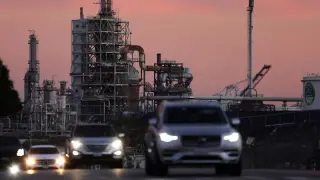
Ukrainian drone strikes hit Russia's Baltic fuel-export hubs, halting operations at Ust-Luga and threatening crude runs and fuel output as refiners seek alternative routes and cut throughput, with fuel oil bottlenecks potentially forcing plant shutdowns.
Despite the U.S. being the world's top oil producer, gas prices have risen to about $3.79 a gallon because global oil prices set the pace and U.S. refineries are mostly configured for heavier crude. The U.S. both exports roughly 11 million barrels per day and imports about 8 million, so the domestic price of fuel tracks international markets; diesel has topped $5 per gallon and jet fuel costs are lifting airline fares as a result.
The article warns that armed conflict involving Iran could endanger critical oil and gas infrastructure—pipelines, terminals, and refineries—that supply energy globally, risking disruptions to world markets and potential price swings.
After a January spike—gold topping $5,300/oz and silver near $120—prices have stabilized in February, but local coin shops are feeling the squeeze as refinery backlogs slow processing and reduce cash flow; shops are limiting daily buys to manage risk while continuing to serve customers.
A powerful winter storm disrupts operations along Texas’ Gulf Coast, forcing refineries, chemical plants, and manufacturers to scale back activity and tighten oil and gas supply as heating demand rises.
Ukrainian drone attacks on Russian oil refineries have reduced domestic processing capacity and caused a surge in Russia's crude exports, with at least 28 attacks since August impacting refinery operations and leading to increased seaborne crude sales, despite some infrastructure limitations.
Ukraine has intensified attacks on Russian refineries, causing significant damage and petrol shortages, while Russia responds with missile strikes on Kyiv and claims of territorial gains, amidst ongoing military and geopolitical tensions in the region.
Russia is experiencing a gasoline shortage exacerbated by Ukrainian drone attacks on refineries, which have damaged multiple facilities and increased domestic fuel prices. Despite these disruptions, Russia's large fuel reserves, surplus diesel production, and the ability to import fuel help mitigate a full-scale crisis, though the situation remains challenging and could worsen if attacks continue or escalate.
Russian fuel prices have surged to near all-time highs following Ukrainian attacks on key refineries, combined with seasonal demand, refinery repairs, and disruptions in air and rail travel, despite Russia's ban on fuel exports.
California's ambitious environmental goals conflict with its continued reliance on oil and gas, leading to refinery closures, increased imports, higher gas prices, and security risks, while policies may disproportionately burden the working class and outsource emissions abroad. The state needs a balanced, transparent approach to its energy transition that considers economic and social realities.
Gas prices are on the rise, with the national average for unleaded reaching $3.63, driven by the approaching peak driving season and the switch to more expensive summer gasolines. Experts predict that prices will continue to increase due to routine factors such as refinery maintenance and rising demand, as well as geopolitical factors like the Russian-Ukraine war and Israel's conflict with Hamas. U.S. intelligence suggests that Iran may retaliate for the Israeli attack in Syria, further impacting global energy markets. Defense Secretary Lloyd Austin has warned Ukraine against further attacks on Russian oil refineries, and GasBuddy anticipates gas prices to rise in the West Coast and later in the mid-Atlantic and Northeast states as they transition to summer gasoline.
Gas prices have surged to a four-month high due to increased demand and challenges faced by refineries, with the switch from winter to summer gasoline blends adding further costs. The national average for regular gasoline is currently at $3.39 per gallon, and while prices typically peak in June and July before falling, ongoing refinery outages and global supply issues could lead to continued price increases. Energy analyst Phil Flynn warned that if crude oil surpasses $80 a barrel, it could further elevate gasoline prices during the summer driving season.
Gasoline prices are on the rise due to refinery constraints and higher oil prices, with the national average at $3.35 per gallon. Severe weather and power losses have stunted US refining, leading to potential increases in retail gas prices. The Midwest and western states are facing significant price hikes, with California averaging $4.83 per gallon. US crude futures surged above $80 per barrel, despite OPEC+ extending output cuts. Expectations of continued production cuts have contributed to the upward trend in crude oil prices.
Two new refineries in Mexico and Nigeria are expected to start production next year, potentially adding 1 million barrels per day of fuel capacity and impacting refining stocks and gasoline prices. The increased capacity could slow or reverse the gains of refining stocks and hold down gasoline prices. Analysts predict that cracks, a measurement of margins used for refiners, will drop in the coming years. However, in the short term, refiner stocks and gasoline prices could continue to climb due to low fuel inventories and increased pressure from refinery outages and maintenance. Russia's temporary ban on gasoline and diesel exports may further tighten the global fuel market, offering potential upside for U.S. refiners.
Gas prices in the United States have reached a 10-month high, with the national average price for a gallon of unleaded gasoline at $3.87. The increase is attributed to rising oil costs since June, a slowdown at refineries due to extreme heat, and concerns over hurricane season. If a hurricane hits Gulf refineries, supply could be curtailed, leading to further price increases. Analysts warn that gas prices nearing $4 per gallon could impact budgets and contribute to inflation.