Tag

Retirement Planning

All articles tagged with #retirement planning

The Capital You Need to Forever Cover Medicare Premiums
personal-finance7 days ago

The Capital You Need to Forever Cover Medicare Premiums

Medicare costs around $5,000 per year per person when combining Part B, Part D, and Medigap, with Part B rising in 2026. To fund that forever, you’d need about $143,000 at a 3.5% yield or $100,000 at 5%. A 3.5% dividend-growth portfolio could grow that income over 20 years, while a high-yield, flat 10% plan risks principal erosion. The piece urges readers to tally the past year’s Medicare spending, compare yield-based strategies, model IRMAA with future income, and plan retirement in manageable steps—cover Medicare first, then other expenses—with fiduciary guidance.

401(k) Rollovers Dominate IRA Growth, Not Direct Contributions
personal-finance14 days ago

401(k) Rollovers Dominate IRA Growth, Not Direct Contributions

IRAs hold about $19.2 trillion while 401(k)s hold $10.1 trillion, and most IRA assets come from rollovers of workplace plans rather than new contributions (2023 saw $682B rolled into IRAs vs $89B in direct contributions). Aging baby boomers and the desire to consolidate accounts are driving rollover growth, with Cerulli projecting hundreds of billions more in rollover money in the coming years. While rollovers can simplify finances and access a wider range of investments, they forego some 401(k) protections and aren’t always the best move for every saver; keeping some funds in a 401(k) can still be prudent.

Retirees in 41 States Face Savings Shortfalls as Longevity Grows
personal-finance16 days ago

Retirees in 41 States Face Savings Shortfalls as Longevity Grows

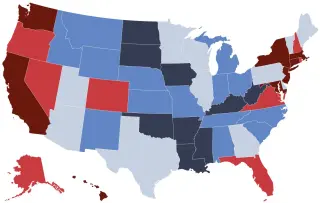
A CareScout analysis finds 41 states, plus DC, put retirees at risk of outliving their savings as life expectancy rises and costs climb, with the average 65-year-old facing about a $109,000 shortfall between anticipated income (Social Security and savings) and expenses. The worst gaps appear in New York, DC, California and Alaska, while nine states show a surplus, led by Washington. The report urges earlier and larger retirement saving, better longevity planning, and delaying Social Security to age 70, noting many seniors don’t use professional retirement planners.

AI or Early Retirement: White-Collar Boomers Reassess the Final Chapter
technology19 days ago

AI or Early Retirement: White-Collar Boomers Reassess the Final Chapter

Older workers face AI's upheaval in white-collar roles: some, including a 53-year-old engineer, are embracing AI and upskilling to stay in the workforce, while others consider early retirement or AI-driven hobbies. Data show lower AI adoption among 50–64-year-olds, yet decades of experience and strong soft skills can help them spot AI output and stay valuable, even as ageism and layoffs loom. The piece highlights a spectrum from adaptation to retirement planning as workers weigh meaning, finances, and purpose in a rapidly automated economy.

Beat the IRMAA Cliff: Drain the 401(k) Before 70 for Bigger Social Security Payoffs
personal-finance19 days ago

Beat the IRMAA Cliff: Drain the 401(k) Before 70 for Bigger Social Security Payoffs

The piece explains a six-year strategy for high earners with large traditional 401(k) balances: drain pre-tax funds from 64 to 70 to keep MAGI just under the first IRMAA tier (~$218,000 for joint filers) and then claim Social Security at 70. This can shrink the next year’s RMDs (e.g., from about $94k on a $2.5M balance to roughly $53k on a smaller balance) and, by delaying Social Security to 70, boost benefits by about 24% (and survivor benefits). Roth conversions can help fill tax headroom without large cash-outs. Be mindful that IRMAA uses a two-year lookback, so timing is crucial to avoid higher premiums—this is a sponsor-backed, strategy-focused retirement planning approach.

65+ Tax Break Tilted Toward the Wealthy — Start Your Prep Now
economy20 days ago

65+ Tax Break Tilted Toward the Wealthy — Start Your Prep Now

From 2025–2028, Americans 65+ can claim an extra $6,000 standard deduction (up to $12,000 for couples), but two‑thirds of the savings are expected to flow to upper‑income seniors (~$80k–$270k). The deduction phases out above $75k MAGI ($150k for couples), and the policy would cut Social Security revenue by about $30 billion annually, potentially straining solvency. The piece urges proactive retirement planning to offset the impact, including Roth conversions or strategic withdrawals, and cites advisor networks and gold‑IRA options as ways to navigate the change.

Patience Pays: Turning $500K Into a Six-Figure Dividend Income
personal-finance21 days ago

Patience Pays: Turning $500K Into a Six-Figure Dividend Income

Turning $500,000 into a six-figure inflation‑adjusted dividend income isn’t about chasing the highest yield. It’s about blending modest, durable yields with steady dividend growth to compound over 20–30 years. The piece lays out three paths: a conservative 3.5% yield with 7% annual growth (e.g., Johnson & Johnson, Procter & Gamble) could reach about $130k by year 30; a 5% yield portfolio (Realty Income) offers earlier cash but slower compounding; and a high-yield, durability‑conscious 10% yield (AGNC) carries greater risk to principal. It emphasizes total returns, tax considerations, reinvesting dividends, and patience to grow income over time.

Lawmakers weigh ending the Social Security earnings clawback for working retirees
politics21 days ago

Lawmakers weigh ending the Social Security earnings clawback for working retirees

Congress is considering the Senior Citizens' Freedom to Work Act to repeal the Retirement Earnings Test, which currently reduces Social Security benefits for some older retirees who continue to work and earn above set thresholds (about $24,480 for those reaching NRA in 2027+; higher thresholds apply for earlier retirees). Proponents say scrapping RET would simplify retirement and let beneficiaries work without losing benefits, while critics warn it could strain the Social Security Trust Fund and hasten future cuts (with estimates of a potential 24% benefit reduction by 2032). The piece notes various planning implications for retirees and suggests prudent financial planning as changes loom.

Expectations vs. Reality: Most Plan to Work in Retirement, But Few Do
business22 days ago

Expectations vs. Reality: Most Plan to Work in Retirement, But Few Do

The 2026 Retirement Confidence Survey finds about 75% of workers expect to work for pay after retirement, yet only roughly one-third of retirees actually do. The gap has been consistent for decades, with barriers like limited part-time opportunities and the difficulty of re-entering the job market as an older worker. Many cite financial insecurity and rising costs as motivations to keep working in retirement, even as some retirees 'unretire' to earn more or stay engaged.

retirement27 days ago

2027 Social Security COLA Could Climb to 3.8% on Fresh Inflation Data

Officials haven’t announced the official 2027 COLA yet, but The Senior Citizens League now projects a 3.8% increase based on CPI-W readings from July–September, which would lift the average benefit by about $77/month and would be the largest COLA in four years. Still, COLAs lag retirees’ costs and CPI-W targets wage-earner inflation, not seniors’ expenses, so real purchasing power could remain pressured if inflation stays high; the final 2027 COLA decision will come around October and could change before then.

Coast FIRE: A Flexible Middle-Ground Route to Financial Independence
personal-finance27 days ago

Coast FIRE: A Flexible Middle-Ground Route to Financial Independence

Coast FIRE is a middle-ground path to financial independence that requires less aggressive saving than traditional FIRE; once you hit your Coast FIRE number, your existing investments can continue to grow while you cover current expenses, enabling reduced work hours, career changes, or self-employment, illustrated by the Hills and Amberly Grant. The plan is flexible and should be recalibrated over time as life changes.

2027 Social Security COLA Seen at 3.8% Amid Inflation Risks
personal-finance27 days ago

2027 Social Security COLA Seen at 3.8% Amid Inflation Risks

The latest projection for the 2027 Social Security cost-of-living adjustment (COLA) is 3.8%, per The Senior Citizens League, which is above the long-term average and would add about $79 to the average benefit (~$2,081 as of April 2026). Inflation—especially energy costs—could push the COLA higher or lower before the official October announcement. Even with a higher COLA, many retirees may not see a dramatic boost to their purchasing power and might rely on other retirement income sources; the official COLA will be confirmed in mid-October.

Lawmakers Weigh $200 Monthly Social Security Boost Amid COLA Concerns
economy28 days ago

Lawmakers Weigh $200 Monthly Social Security Boost Amid COLA Concerns

Two bills in Congress would raise Social Security benefits by $200 per month: a temporary $200/month bump from January to July 2026 to offset higher prices, and a permanent $200/month increase tied to CPI-E, funded by removing the earnings cap on high incomes and extending solvency by about 75 years. Both face obstacles due to Republican control of Congress and a likely presidential veto, but they could spark debate about the COLA and the 2032 trust-fund depletion that threatens future benefits.

Ditching $7,000-a-Month Assisted Living for a Cash-Purchased Home
personal-finance1 month ago

Ditching $7,000-a-Month Assisted Living for a Cash-Purchased Home

After a $7,000-a-month assisted-living arrangement proved unaffordable, 74-year-old Lana Mountford bought a cash-priced 1,350-square-foot, two-bedroom home near Bellingham, WA for $580,000 and now lives independently with a part-time caregiver. Her ongoing costs include six weekly hours of care (about $200/week), a roof replacement (~$17,000), HOA, taxes, and utilities—much lower than her former bills. Despite COPD, asthma, high blood pressure, and chronic kidney disease, she plans to stay in her home long term with family support.

Rethinking Retirement: Are Safe Plans Holding You Back?
personal-finance1 month ago

Rethinking Retirement: Are Safe Plans Holding You Back?

Motley Fool host questions common retirement rules of thumb, arguing that conservative assumptions (like a strict 4% withdrawal) can be overly cautious today. The episode discusses higher potential first-year withdrawal rates around 5.5%, the impact of longevity risk on how long money must last, and the Omega framework for balancing spend-now vs. leave-behind wealth. It emphasizes distinguishing essential from discretionary spending, building a reserve for long-term care, and using planning tools to model scenarios—especially since cognitive decline can affect finances. The core message: rethink safe withdrawal strategies, plan for varying lifespans, and tailor your plan with flexible spending and robust tools rather than rigid rules.