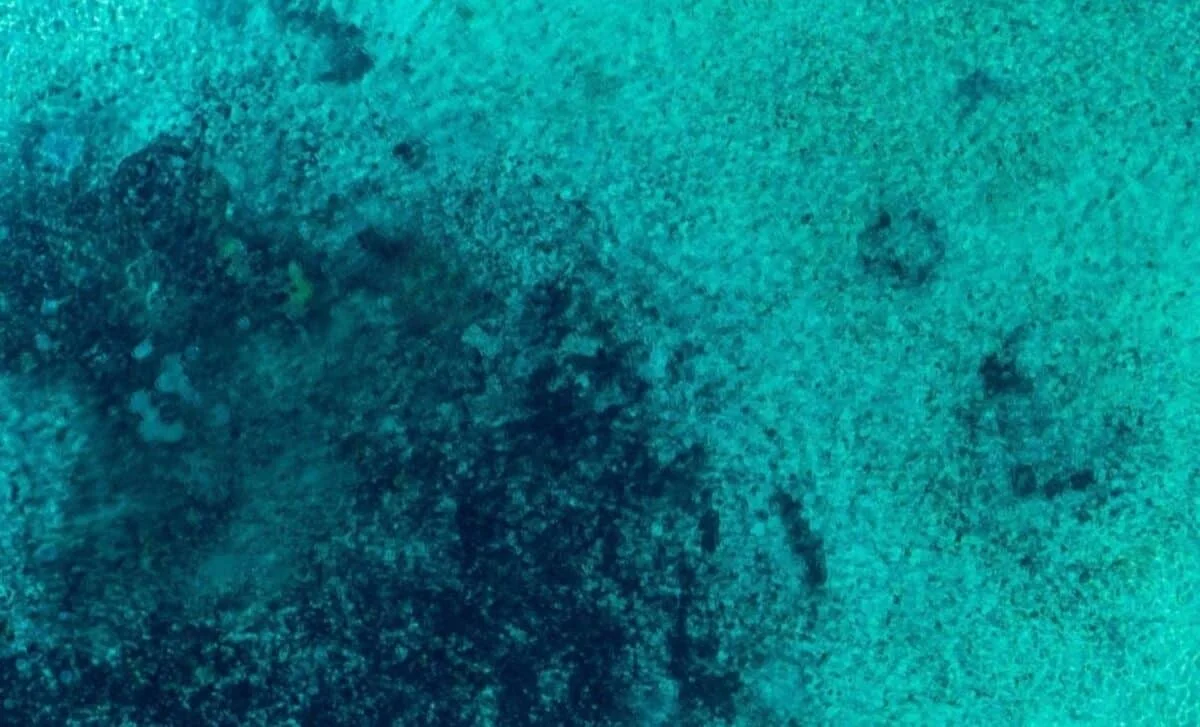
Researchers using an underwater geodetic observatory documented a rare, coupled tectonic–magmatic event at a mid-ocean ridge: a massive magma sheet intruded beneath the seafloor, tearing crust apart at about 5 cm per minute, followed by surface collapse and seismic activity, offering new insight into how the ocean floor renews itself.
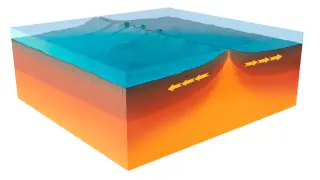
A French-led team deployed an underwater observatory in the southern Indian Ocean and directly measured the birth of new ocean floor, finding that seafloor spreading can occur largely without earthquakes and that much crust renewal happens aseismically, offering new insight into how Earth's crust forms at mid-ocean ridges.
Scientists using an undersea observatory at the Southeast Indian Ridge captured a rare, real-time birth of new seafloor during a 2024 tectonic event, revealing seafloor spreading can occur in dramatic bursts rather than steadily and opening new avenues for marine geophysics.
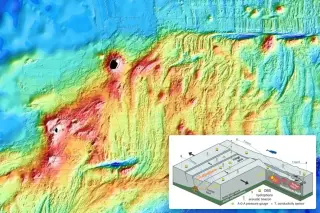
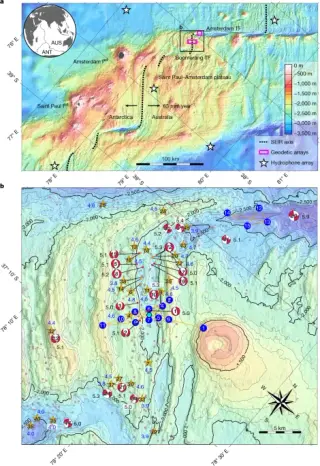
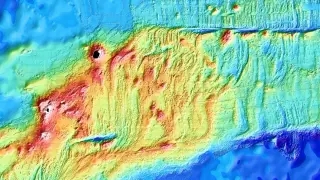
An autonomous seismogeodetic array on SEIR’s segment I1 captured a rapid seafloor spreading event beginning 26 April 2024, driven by a migrating swarm of extensional earthquakes that propelled a southeast- to northwest-propagating dyke from a deflating axial magma reservoir. This produced about 4 meters of subsidence and over 1 meter of horizontal extension in the axial valley, followed by the eruption of roughly 160 million cubic meters of lava on the seafloor over ~16 days, while triggering seismic and aseismic slip on valley-bounding normal faults and the adjacent transform fault. The multi-sensor data (hydrophones, acoustic ranging, bottom-pressure recorder, and swath bathymetry) suggest large-scale aseismic magmatic slip could be the primary mechanism driving MOR fault displacement, addressing long-standing questions about short-timescale MOR dynamics. 2D elastic-dislocation modeling of sill, dyke, and fault geometries supported the observed displacements.
Researchers operating an underwater observatory near Amsterdam Island recorded a rare, hours-long seafloor-spreading event in April 2024: sheet-like magma dikes injected around 150 million cubic meters of magma, forcing a 4.2-meter collapse of the ridge floor and rapid, up-to-5 cm-per-minute displacements. Much of the motion was aseismic, helping explain previously missing tectonic motion and providing a real-time test bed for seismic models. The findings, published in Nature, show seafloor spreading occurs in giant, episodic bursts rather than steady creep.
A 2024 French study near the Amsterdam–Saint Paul Plateau shows mid-ocean ridge spreading can occur in intense bursts: dyke intrusions, sudden subsidence of a magma reservoir, and meters of horizontal extension happened within days, with some events lacking seismic signals. About 150 million cubic meters of new material were produced, and the total extension equates to roughly 38 years of normal spreading, suggesting ocean-floor creation may be episodic rather than steady.
New mapping and rock analyses show the 500‑km King’s Trough off Portugal formed 37–24 million years ago where a temporary plate boundary intersected a mantle plume, causing intense fracturing and basin formation but stopping short of a full seafloor‑spreading ridge; the plume likely connects to the Azores system, offering a living example of how such underwater canyons develop under tectonic and thermal forces.
A new international study links a long-term drop in ocean calcium since the dinosaurs’ extinction to changes in marine carbon storage. Lower calcium altered how shells and skeletons form and bury carbon, effectively pulling CO2 from the atmosphere and cooling the planet by up to about 15–20°C over millions of years, with seafloor spreading slowing as a key driver of the reduced calcium input to seawater.