The latest Google Wallet update adds role-based sharing for digital car keys (co-owner, guest, service) with restrictions like speed, acceleration, and music volume, and makes it easier to share keys across devices, including smartwatches.
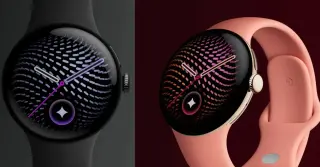
Google unveiled Wear OS 7 at I/O 2026, adding Gemini Intelligence integration, Wear Widgets for dynamic, customizable glanceable info, Live Updates on the watch face, a default workout tracker with built-in media controls, and a Remote Output Switcher, plus an AppFunctions API to enable Gemini-powered task automation. A Canary Emulator is available ahead of the full release later this year.
This week’s MacRumors Show covers Google’s Gemini Intelligence—cross‑app automation, Create My Widget, and a new Googlebook laptop with Chrome/Android Auto integration—along with the $99 Fitbit Air. It also surveys Apple Watch Series 12 rumors (incremental redesigns likely by 2028, possible Touch ID deprioritization, and a new chip) and a preview of watchOS 27 at WWDC, plus the ongoing Apple‑Gemini Foundation Models partnership powering future Apple AI efforts.
OnePlus announces the Watch 4 with a titanium case and sapphire glass, running Wear OS with Google apps. It uses a 646 mAh battery and claims up to 16 days of endurance in power-saving mode (about five days under normal use). The device includes ECG (China only at the moment) along with heart rate, SpO2, and skin temperature sensors, over 100 sport modes, and is powered by a Snapdragon W5 Gen 1 with a BES 2800 co‑processor. Pricing isn’t listed on OnePlus’ site, but AliExpress lists it around $342.
Leaks suggest the OnePlus Watch 4 will run Wear OS with an LTPO AMOLED display and serve as a higher-end successor to the Watch 3. Mass production reportedly began in March 2026, with images showing Evergreen Titanium and Black finishes. It may be a re-branded Oppo Watch X3, and Android 9.0+ will be required. Oppo has priced the X3 at €379 in Europe, hinting at the Watch 4’s possible pricing. A global release is expected soon.
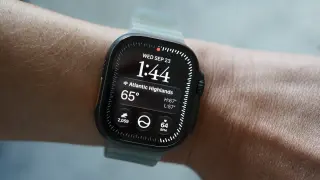
The Verge reports the Apple Watch Series 11 is on sale at about $299 for the 42mm GPS and $329 for the 46mm GPS across Amazon, Best Buy, and Target—its best price to date. It’s not a dramatic upgrade over Series 10, but it’s Apple’s fastest, most durable mainline watch yet, with up to 24 hours of battery life (38 hours in low-power mode), LTE efficiency, and health features like FDA-cleared hypertension alerts, sleep scores, and workouts in watchOS 26.
NBC Select highlights the best Amazon Spring smartwatch deals (Mar 25–31), featuring top picks from Apple, Fitbit, Garmin, Samsung and Amazfit with prices like Apple Watch Series 11 at $299, Google Pixel Watch 3 at $179.99, Samsung Galaxy Watch 8 Classic at $369.99, Garmin Vivoactive 5 at $174.28 and Amazfit Active 2 at $79.99; no Prime membership is required to save, though perks exist and the guide curates the best value across brands.
Apple’s budget-friendly Watch SE 3 is on sale at all-time lows: LTE model for $249, 40mm GPS for $219, and 44mm GPS for $249 (with LTE add-on available for $50). The watch gains a number of flagship features for the price, including an always-on display, on-device Siri, faster charging, 5G, and on-wrist music, powered by Apple’s S10 chip. Health features include ovulation tracking and sleep-breathing monitoring that can alert you to sleep apnea, though it omits higher-end sensors like EKG, blood oxygen, or hypertension alerts found on pricier models. Deals are available at Amazon, Target, and Walmart, making the SE 3 a compelling budget option for many buyers.
Engadget reports that Meta has released an official WhatsApp app for select Garmin smartwatches via the Connect IQ Store, letting users read and reply to messages, send emojis, view chat history, and accept/decline calls — all with end-to-end encryption. Availability is model-specific (Forerunner, Venu, Vivoactive, and Fenix devices), and compatibility must be checked in Garmin Connect IQ Store; this follows a WhatsApp app launch on Apple Watch last year.
Samsung’s Galaxy Watch Ultra 2 introduces full 5G connectivity, enabling calls, streaming, and web access directly from the wrist without a phone. Powered by Qualcomm’s Snapdragon Elite chip to boost performance and 5G integration, the premium Ultra lineup aims to stand out amid competition, but battery life remains a challenge as it eyes a Summer 2026 launch.
Meta is reportedly reviving its long-discussed smartwatch project, internally named Malibu 2, with planned release this year and features centered on Meta AI and health tracking. The effort, previously paused in 2022 as Reality Labs tightened spending, follows Meta’s broader wearables push (including AR glasses and Ray-Bans) with no official launch date yet announced.
Meta is reportedly planning to launch a Malibu 2 smartwatch with health tracking and AI features this year, alongside an updated Ray-Ban Display AR glasses, as it pursues an AR/MR roadmap that includes delayed Phoenix glasses to 2027; the move would follow Meta’s 2022 scrapped smartwatch plan and heighten competition with Apple, Google, Samsung, and others.
Meta Platforms is reviving its shelved smartwatch project, code-named Malibu 2, with plans for a 2026 launch that includes health-tracking features and a built-in Meta AI assistant, positioning it to compete with Apple and Google’s wearables.
Amazon's Presidents’ Day sale drops the Apple Watch 11 (GPS, 42mm) to $299 from $399, a $100 cut on a 2025-updated model praised for battery life and health features like ECG and sleep tracking.
After canceling the LTE data plan on his Galaxy Watch 5, the Android Central writer switched to a Bluetooth/Wi‑Fi smartwatch and saved about $120 a year while still using most features—offline music and maps, calls/texts via the connected phone, and workout tracking. He argues LTE isn’t essential if you carry your phone, notes Garmin watches work well without LTE, and invites readers to share whether data on a smartwatch is a must. He also acknowledges some data-dependent features (like satellite SOS) exist on certain models.