Tag

Sonic Boom

All articles tagged with #sonic boom

NROL-95 Launch Sparks Sonic Boom Over Cape Canaveral
technology26 days ago

NROL-95 Launch Sparks Sonic Boom Over Cape Canaveral

SpaceX’s Falcon 9 lifted off from Cape Canaveral for the NROL-95 mission, and the first-stage booster returned to Landing Zone 2, generating a sonic boom on the Space Coast. It marks the NRO’s first Cape Canaveral launch this year and a second collaboration with the U.S. Space Force’s Space Systems Command, with the booster on its seventh flight. The mission patch features a ferret, and Weather was forecast around 70% favorable as countdowns and livestream coverage proceeded.
NASA's X-59 quietly advances supersonic testing as US tour looms
technology1 month ago

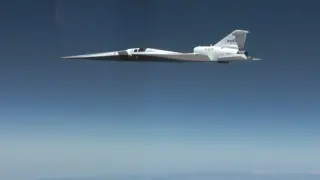
NASA's X-59 quietly advances supersonic testing as US tour looms

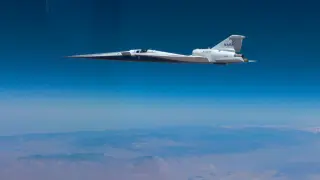
NASA’s X-59 quiet supersonic aircraft completed its first supersonic flight (Mach 1.1 at 43,400 ft on June 5, 2026) and a second (Mach 1.4 at 55,000 ft on June 12) as part of the Quiet Supersonic Technology program. Built as a “frankenjet” with off-the-shelf components, the long-nosed jet aims to replace loud sonic booms with a quieter thump (~75 dB) and will eventually tour the U.S. to collect public feedback and help regulators set overland supersonic standards. The aircraft uses an external vision system instead of a front cockpit window, with future tests planned to measure ground shockwaves and assess the economic viability of potential commercial overland flights.

NASA's Quiet-Supersonic X-59 Surpasses Sound Barrier in Landmark Flight
technology2 months ago

NASA's Quiet-Supersonic X-59 Surpasses Sound Barrier in Landmark Flight

NASA’s X-59 completed an 81‑minute test flight from Edwards AFB, reaching about Mach 1.1 (713 mph) at 43,400 feet—the first time the quiet-supersonic aircraft breached the speed of sound with its planned ‘quiet thump’ concept; the test aimed to advance over-land commercial supersonic flight by reducing noise, with future Mach 1.4 flights to gather data on public perception to help set new noise standards, monitored by a chase plane.

Three-Foot Meteor Explodes Over Northeast, Triggering Wide-Spread Sonic Boom
science2 months ago

Three-Foot Meteor Explodes Over Northeast, Triggering Wide-Spread Sonic Boom

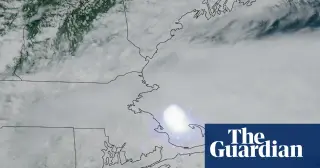
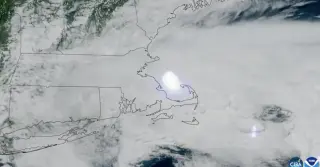
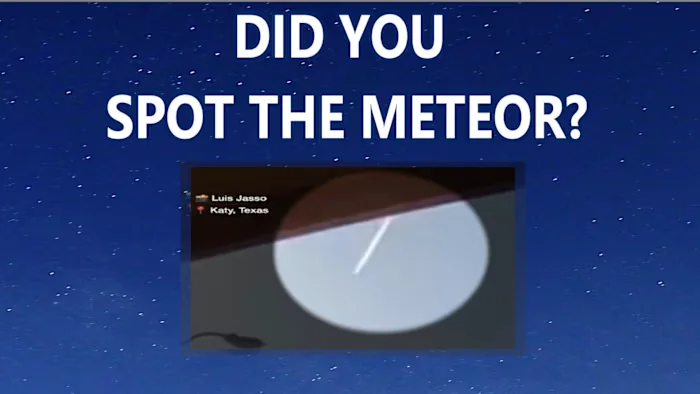
A three-foot meteoroid streaked over New England on May 30, 2026, punching through the atmosphere at about 75,000 mph and breaking apart around 40 miles up with an energy near 300 tons of TNT, unleashing a double sonic boom heard from Delaware to Montreal; NASA confirmed it was a natural object, not space debris or a satellite, and no injuries or ground impact were reported, with any fragments likely sinking into the ocean. USGS registered no seismic event, highlighting how atmospheric fireballs can be detected and documented without earthquakes. This event fits into a year with several large fireballs and underscores the growing role of coordinated observation networks in recording such phenomena.

NASA confirms daytime fireball over the Northeast released energy equivalent to 230 tons of TNT
space2 months ago

NASA confirms daytime fireball over the Northeast released energy equivalent to 230 tons of TNT

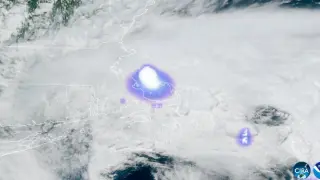
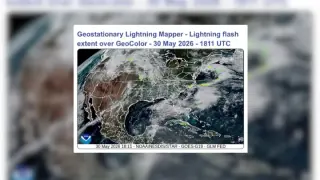
NASA confirmed a bright daytime fireball meteor, about 5 feet (1.6 meters) in diameter, exploded over the northeastern United States on May 30, releasing energy roughly equal to 230 tons of TNT. The object streaked through the atmosphere at about 42,000 mph (67,000 km/h), broke the sound barrier about 31 miles up, and debris rain fell over Cape Cod. An NOAA satellite captured the event, and there were no injuries or property damage reported, though residents heard a loud sonic boom. NASA notes such small meteors are common and pose little risk to cities.

Daylight meteor triggers widespread booms across New England and Canada
science2 months ago

Daylight meteor triggers widespread booms across New England and Canada

A roughly 3-foot-wide meteor brightened the daytime sky near the Massachusetts–New Hampshire border on Saturday, with loud double booms heard from Delaware to Montreal. NASA says it was natural material, likely breaking apart about 40 miles up at ~75,000 mph, releasing energy around 300 tons of TNT. Most fragments burned up; no confirmed ground impact, though shaking was reported and videos showed the fireball crossing the region. USGS did not record an earthquake event nearby.

Massachusetts Boom Traced to Daytime Meteor Fireball
science2 months ago

Massachusetts Boom Traced to Daytime Meteor Fireball

A daytime meteor about 3 feet wide exploded in the atmosphere near the New Hampshire border, triggering a loud boom heard across eastern Massachusetts. NASA said the fireball traveled around 75,000 mph and fragmented at about 40 miles up, releasing energy equivalent to approximately 300 tons of TNT. The event likely did not hit the ground, and officials reported no public safety threat, though many residents reported ground shaking and calls to police.

Columbia Shaken by Mystery Sonic Boom; Officials Weigh Aircraft vs. Meteor Theories
science2 months ago

Columbia Shaken by Mystery Sonic Boom; Officials Weigh Aircraft vs. Meteor Theories

A loud boom and ground shaking were reported around Columbia, SC, on May 28, 2026. The USGS says the event is consistent with a sonic boom rather than an earthquake, Shaw Air Force Base reported no related flight activity, and NASA found no meteor fireball or satellite detections. While some speculated about a meteor, NASA officials consider it unlikely. Most sonic booms are attributed to aircraft traveling faster than sound, and authorities encouraged residents to report any damage. No damage was initially reported.

Houston-area meteor shatters in the sky, triggering sonic booms, NASA says
science5 months ago

Houston-area meteor shatters in the sky, triggering sonic booms, NASA says

NASA says a bright meteor over southeastern Texas likely broke apart above the Houston area after streaking around 35,000 mph; the roughly 3-foot, one-ton rock caused sonic booms heard in the region and Doppler radar suggests meteorites may have dropped between Willowbrook and Northgate Crossing, with at least one homeowner reporting a rock in her home; this comes days after a separate daytime fireball over Ohio and Pennsylvania.

F-4 Phantom II: NASA’s Versatile Sky Laboratory for Aerodynamics and Sonic Booms
aviation-history5 months ago

F-4 Phantom II: NASA’s Versatile Sky Laboratory for Aerodynamics and Sonic Booms

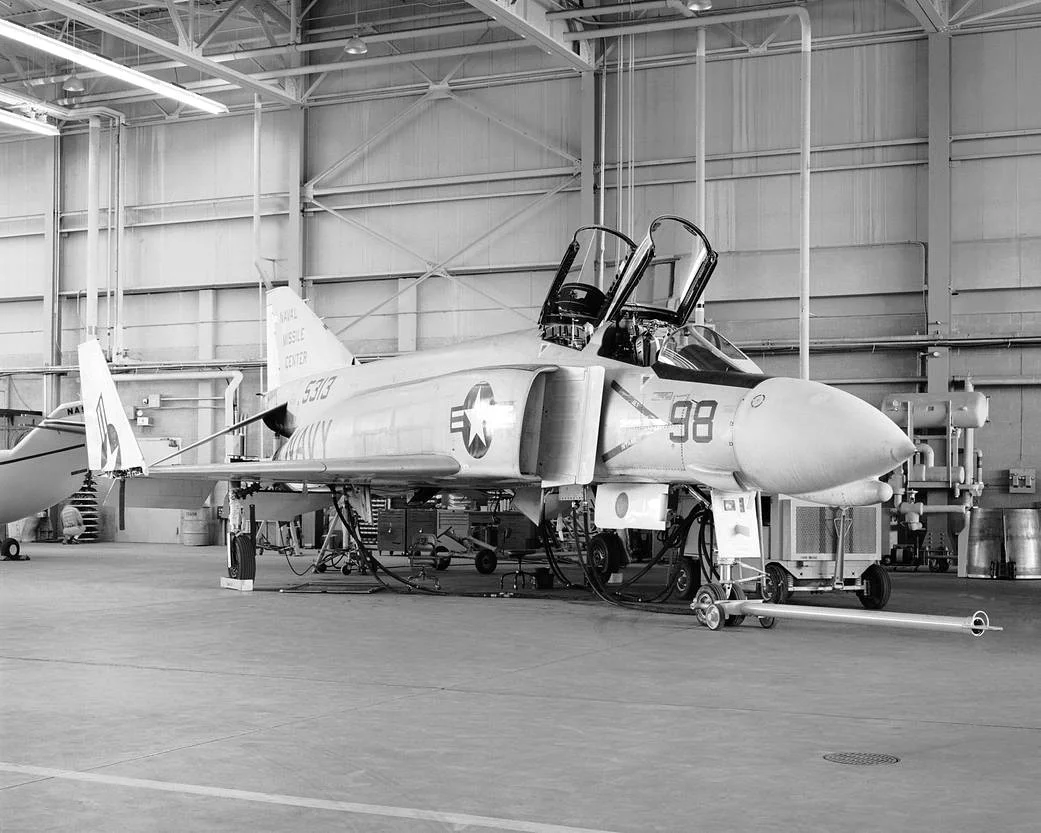
NASA’s Flight Research Center used variants of the McDonnell F-4 Phantom II from 1965 to the mid-1980s for a range of research, including biomedical monitoring flights with instrumented pilots (and monkeys), sonic-boom experiments near Ely, Nevada, and later spanwise blowing studies on the F-4C to probe boundary-layer control and lift, illustrating the aircraft’s versatility before returning to the U.S. Air Force.