Tag

Spintronics

All articles tagged with #spintronics

Ultrafast, low-heat magnetic switch could redefine AI hardware
technology12 days ago

Ultrafast, low-heat magnetic switch could redefine AI hardware

Researchers at the University of Tokyo unveiled a spintronic switch made from Mn3Sn antiferromagnet that can flip a binary state in about 40 picoseconds—up to 1,000× faster than the fastest AI accelerators and with far less heat and energy—offering a path to cooler, more efficient future hardware, though overall computing speed also depends on non-switching components and commercialization challenges.

Invisible magnet cancels its own field, paving the way for denser spintronic devices
science1 month ago

Invisible magnet cancels its own field, paving the way for denser spintronic devices

DTU researchers engineered a compensated ferrimagnet built from chromium and pyrazine in a metal‑organic network that remains internally magnetized while almost entirely canceling its external magnetic field, even above room temperature. This could reduce stray fields that hinder dense electronics and enable closer integration of spin‑based devices, but the technology is still fundamental research and will require studies of electrical properties and thin‑film integration before real‑world use.

Triplet superconductors inch toward breakthrough for quantum tech
science3 months ago

Triplet superconductors inch toward breakthrough for quantum tech

NTNU researchers report that the NbRe alloy may exhibit triplet superconductivity, a spin-carrying form that could enable zero-resistance spin currents and boost quantum computing. If independently verified, this would be a major advance for spintronics and quantum devices, though further tests are needed. The material also superconducts at about 7 Kelvin, a relatively high temperature for this field.

Terahertz microscope unmasks quantum vibrations of superconducting electrons
science3 months ago

Terahertz microscope unmasks quantum vibrations of superconducting electrons

MIT researchers developed a terahertz microscope that uses spintronic emitters and a Bragg mirror to compress terahertz light to micron-scale spots, enabling imaging of the collective terahertz oscillations of superconducting electrons in BSCCO at cryogenic temperatures and overcoming the diffraction limit—a breakthrough for studying quantum modes in materials with potential implications for room-temperature superconductivity and terahertz devices.

Revolutionary Magnetic State Promises Next-Gen Data Storage and AI Power
science5 months ago

Revolutionary Magnetic State Promises Next-Gen Data Storage and AI Power

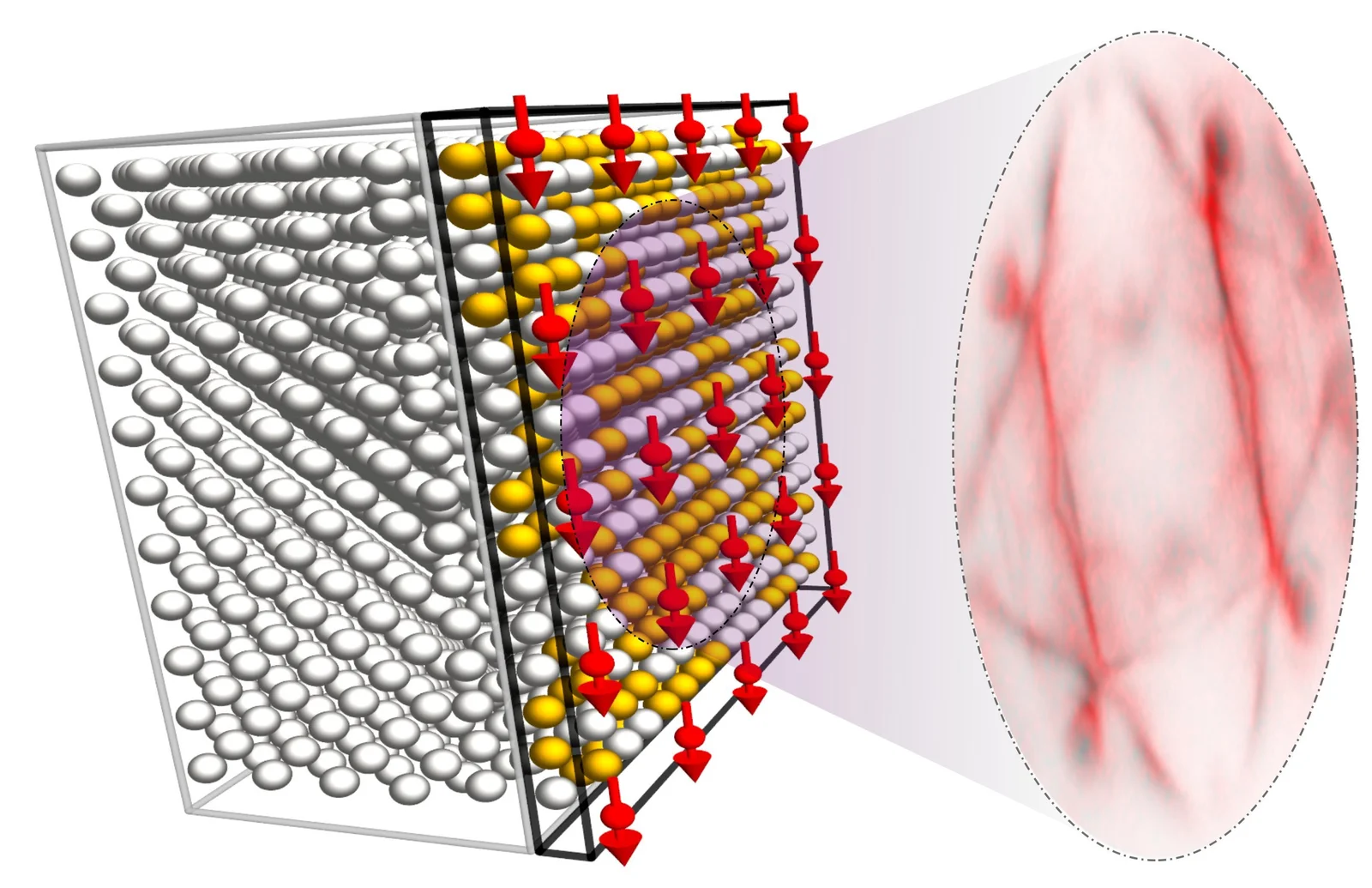
Researchers in Japan have demonstrated that thin films of ruthenium dioxide can exhibit altermagnetism, a new magnetic state that combines the advantages of ferromagnetism and antiferromagnetism, potentially leading to faster, denser, and more reliable data storage technologies. This discovery was achieved by controlling the crystallographic orientation of the material, confirming its intrinsic magnetic properties, and opening new avenues for spintronics and memory device development.

MIT Engineers Innovate Magnetic Transistor for Energy-Efficient Electronics
technology8 months ago

MIT Engineers Innovate Magnetic Transistor for Energy-Efficient Electronics

MIT researchers have developed a magnetic transistor using a magnetic semiconductor material, chromium sulfur bromide, which offers smaller, faster, and more energy-efficient circuits with built-in memory capabilities, overcoming limitations of silicon-based transistors and opening new avenues in electronics design.

Harnessing Wrinkles and Defects in 2D Materials to Boost Spintronic Device Efficiency
science9 months ago

Harnessing Wrinkles and Defects in 2D Materials to Boost Spintronic Device Efficiency

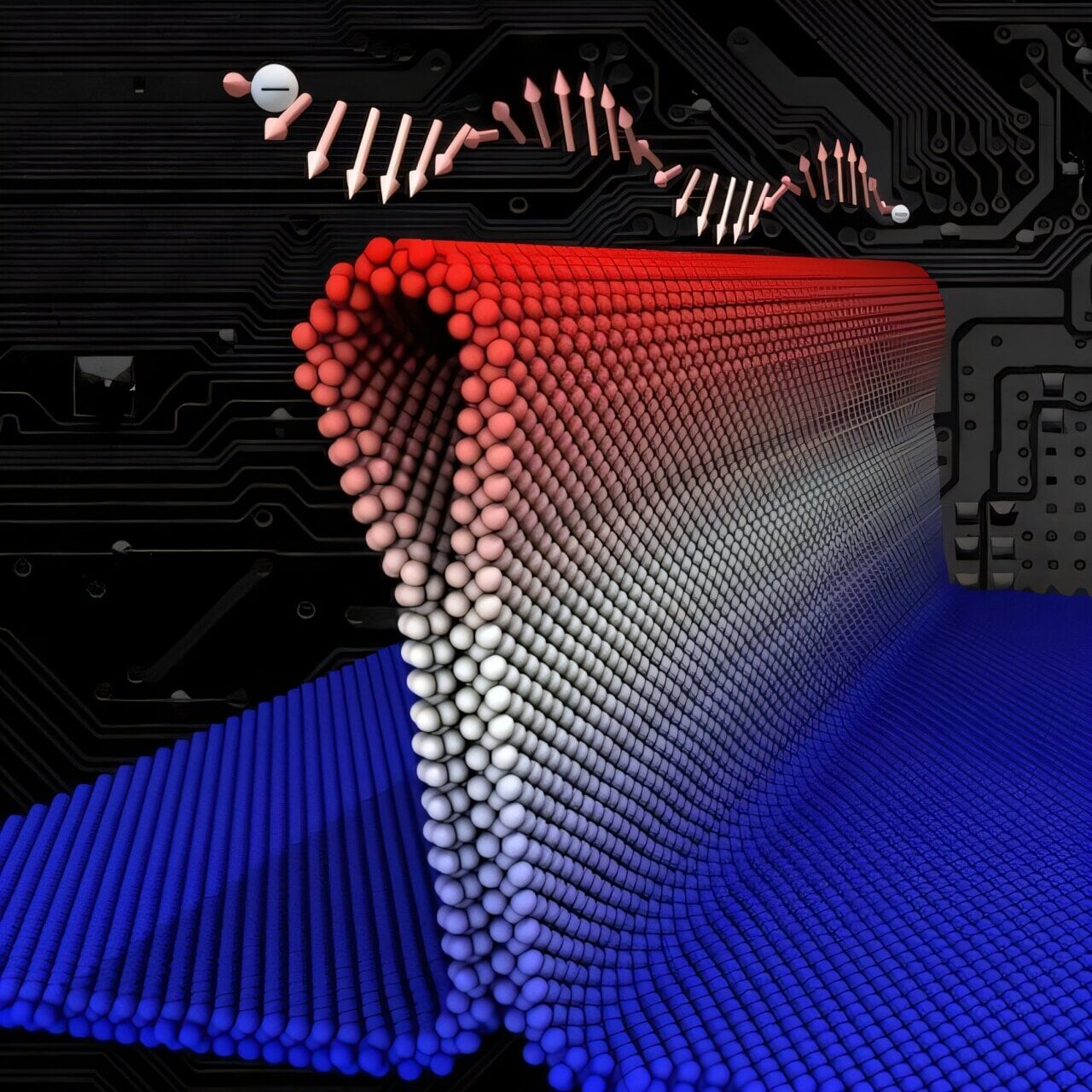
Rice University scientists discovered that tiny wrinkles in atomically thin materials like molybdenum ditelluride can control electron spins with high precision, enabling the development of ultra-compact, energy-efficient spintronic devices by creating persistent spin helix states through mechanical bending and flexoelectric effects.

Breakthrough in Magnetism Promises to Transform Digital Technology
science-and-technology1 year ago

Breakthrough in Magnetism Promises to Transform Digital Technology

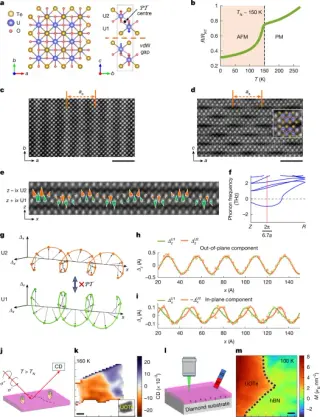
Researchers at the University of Nottingham have discovered a new class of magnetism called "altermagnetism," which combines the advantages of ferromagnetism and antiferromagnetism without their drawbacks. This breakthrough could revolutionize digital devices and spintronic applications by offering energy-efficient, scalable, and robust solutions. Altermagnets, with no net magnetization, are compatible with superconductors and ideal for quantum and neuromorphic technologies. The discovery opens new research avenues and promises advancements in memory systems and computing.

"Record-breaking Speed: Antiskyrmions Pave the Way for Advanced Computing"
science-and-technology2 years ago

"Record-breaking Speed: Antiskyrmions Pave the Way for Advanced Computing"

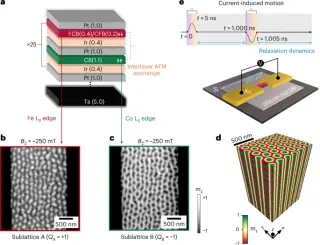
An international research team has found that magnetic nanobubbles called skyrmions can be moved by electrical currents at record speeds of up to 900 m/s, thanks to the use of an antiferromagnetic material as a medium. This discovery opens up new possibilities for developing higher-performance and less energy-intensive computing devices, as skyrmions are anticipated to be future bits in computer memory, offering enhanced avenues for information processing in electronic devices.

"Light-Speed Transfer: Electron Spin Transport from Earth to Mars"
science-and-technology2 years ago

"Light-Speed Transfer: Electron Spin Transport from Earth to Mars"

Scientists have developed a method to transfer spin information from electrons to photons using electrical pulses, enabling the transmission of polarized light signals over long distances at high speeds. This breakthrough in spintronics meets crucial criteria for practical applications and could revolutionize optical telecommunications, potentially enabling rapid communication between Earth and Mars, as well as advancing technologies such as optical quantum communication, neuromorphic computing, and ultrafast optical transmitters.