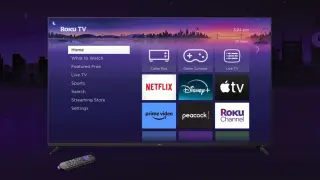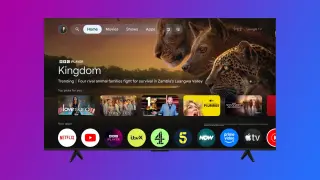
Roku is standardizing the home screen across Roku TVs, replacing brand-specific designs with a single Roku City purple backdrop and a small brand logo, bringing consistent navigation, easier software updates, and potential for deeper cross-device features as more manufacturers like TCL adopt the approach.
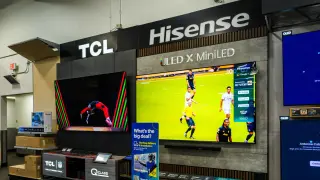
RTINGS notes Hisense excels at entry-to-mid range, but TCL provides a more consistent, safer overall budget-TV option with uniform brightness scaling and predictable picture across sizes. Both brands use Google TV and support Dolby Vision/HDR10+, with TCL sometimes benefiting from Bang & Olufsen audio tuning in specific models. Overall, TCL has a slight edge for most buyers, though the best pick depends on room and use case.
A late-April class-action filed in the Central District of California (Else v. Roku, Inc.) accuses Roku and TCL via TTE Technology of bricking Roku-enabled TCL TVs through faulty software updates, causing freezes, black screens, boot loops, or power-on failures across Roku Select/Plus and TCL Roku TV models. Plaintiffs allege marketing promised reliable performance and ongoing improvements, but updates degraded core functions, seeking class certification, damages, and changes to update disclosures and practices. The case is in its early stages and responses from Roku/TCL have not yet been publicly provided.
A federal class-action accuses Roku and TCL of releasing repeatedly defective software updates for RokuOS TVs that cause freezing, restarts, failure to turn on, or degraded performance. The suit covers Roku Select and Plus Series sets and TCL models running RokuOS; it seeks a jury trial, damages, and injunctive relief. Filed in a Southern California federal court, the case highlights concerns about firmware quality across affordable smart TVs within Roku’s long-standing partnership with TCL.
A federal class action accuses Roku Inc. and TCL North America of selling Roku-powered smart TVs that become inoperable after automatic software updates, including crashes and black screens. Led by Terri Else, the suit seeks nationwide and California subclasses under case 8:26-cv-00748 in the Central District of California, claiming rushed updates violate warranties and California law (UCL/CLRA) and seeking injunctive relief, damages, and full purchase-price restitution. If certified, the case could affect thousands of households and influence how software updates are treated in consumer electronics.
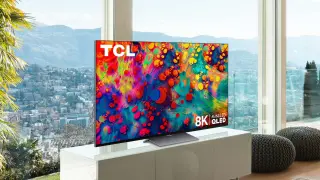
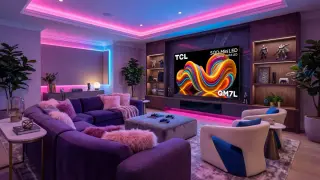
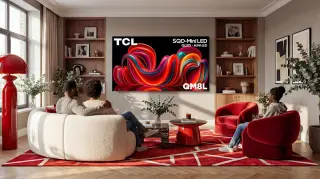
TCL rolls out its 2026 TV lineup led by the QM8L, a premium Micro RGB/SQD‑MicroLED model promising extreme brightness and color with up to 6,000 nits peak, 4,000 local-dimming zones, Halo Control, and the CSOT WHVA 2.0 Ultra Panel with anti-reflective coating, claiming 100% BT.2020 coverage. Pricing starts at $2,500 for the 65-inch QM8L and goes up to about $6,000 for the 98-inch; the RM9L RGB Mini‑LED and the QM7L lower‑tier options are also on offer, with larger RM9L sizes priced to about $8,000 (85”) and $30,000 (115”), while the QM6K remains in the lineup.
TCL expands its SQD-Mini LED lineup with its first RGB-Mini LED RM9L, priced from $8,000 for the 85-inch model (up to $30,000 for 115 inches), while QM8L and QM7L SQD-Mini LED TVs are available or preorder at starting prices of $2,500 (65") and $1,200 (55"), respectively; the RM9L features discrete RGB LEDs, anti-reflective panels, up to 6,000 nits brightness, Dolby Vision 2 after a software update, Bang & Olufsen audio, and Google TV with Gemini.
TCL unveils QM8L and QM7L mini-LED TVs built on its “super quantum dot” (SQD) tech, delivering 4K at up to 144Hz with thousands of local-dimming zones and brighter output at much lower prices than its RGB rival RM9L. The QM8L starts around $2,500 for 65
TCL has unveiled four new 2026 QLED TV lines (P8L, P7L, V6D-UK, C6K-UK) that deliver 4K HDR across formats (Dolby Vision, HDR10+), up to a 144Hz gaming refresh, and HDMI 2.1 across sizes from 43 to 98 inches. Some models run Google TV, others Fire TV, with features like VRR/ALLM and built-in Game Master. UK pricing ranges from about £379 to £1,999, and availability is slated for May 2026 at major retailers.
Sony is reorganizing its TV business by creating Bravia, Inc., with TCL owning 51% and Sony 49%, transferring manufacturing, supply chain, and logistics to TCL while Sony retains control of image processing, tuning, audio, and branding. The change is largely behind the scenes and won’t affect today’s Sony OLED/Mini-LED TVs. Bravia, Inc. is set to begin operations around 2027, with any material differences likely showing up gradually by 2028+. Buyers could see benefits like potentially lower costs, improved availability, and stronger Mini-LED development, but long-term risks include shifts in Sony’s control over picture quality and branding, and uncertainty around OLED strategy. For now, no immediate impact on current models.
TCL is upgrading its glare-free NXTPAPER displays by adopting AMOLED technology to boost brightness, outdoor performance, and color while preserving eye-friendly benefits. The AMOLED NXTPAPER aims for up to 3,200 nits brightness, 120Hz refresh, full color gamut, and blue-light reduction as low as 2.9%. Demonstrations at CES and plans to launch an AMOLED NXTPAPER smartphone by year-end are in motion, with MWC 2026 coverage ongoing but no device announced yet.
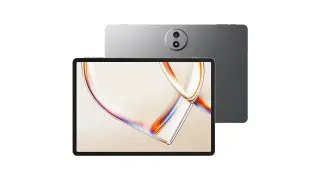
MWC saw TCL debut Natural Light, an LCD-based upgrade to its Nxtpaper tech that reduces glare with 90% circular polarization, trims blue-light emissions down to as low as 2.9% through filtration, and auto-adjusts brightness and color temperature to match ambient light, delivering up to 3200 nits brightness and full P3 color. TCL also showcased Tab A1 Plus and Tab A1 Plus Nxtpaper tablets (with US/Europe release plans) and announced the Nxtpaper 70 Pro will ship in the US in April; pricing hasn’t been disclosed.
Tom’s Guide’s review praises the TCL NXTPAPER 11 Plus as a standout budget tablet: an 11.5-inch, matte NXTPAPER display with Ink Paper and Color Paper modes that mimic ePaper to cut glare and eye strain, a pre-included folio case and active stylus, a customizable NXTPAPER Key backlight, and stock Android for smooth multitasking. It’s portable, sunlight-friendly, and designed for reading and light productivity, with a price around $370 (often under $300), making it a compelling iPad Pro or reMarkable alternative for everyday use on the go.
TCL drops big discounts on the QM8K midrange TV lineup, with the 65-inch model reduced from $2,500 to $1,000 (about 60% off) and larger sizes discounted as well (75" to $1,500, 98" to $3,000). The bezel-less design sits on a pedestal, and the TV runs Google TV with Chromecast and AirPlay 2, offering up to 5,000-nit brightness, 144 Hz gaming mode, and HDR formats including HDR10+ and Dolby Vision IQ.
Sony and TCL have signed a non-binding memorandum of understanding to explore a joint venture in which TCL would own 51% and Sony 49% of Sony-branded TVs and related audio hardware. The deal would give Sony access to TCL’s end-to-end manufacturing and TCL access to Sony’s acclaimed picture processing, potentially lowering costs and boosting Bravia performance, while keeping the Sony/Bravia name. It still requires regulatory approvals, and products are likely years away (potentially 2027), with many questions about how much Sony tech would flow to TCL and how premium vs. midrange lines would be divided. It signals a potential new phase for Sony rather than the end of the brand.