Tag

Trinitite

All articles tagged with #trinitite

Trinity Sand Reveals Two Rare Crystals From the First Nuclear Blast
science11 days ago

Trinity Sand Reveals Two Rare Crystals From the First Nuclear Blast

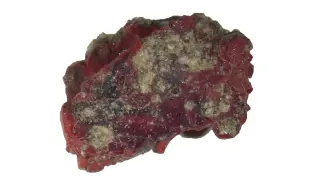
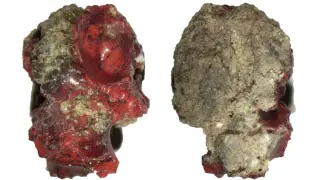
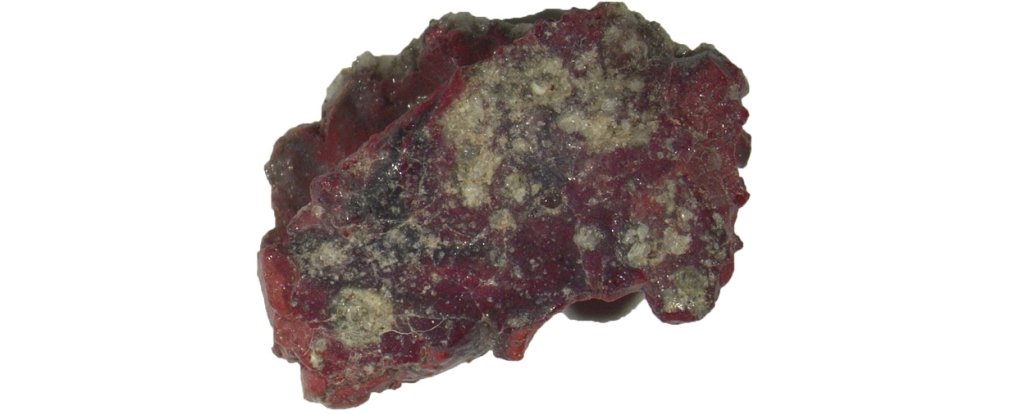
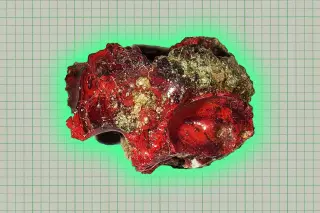
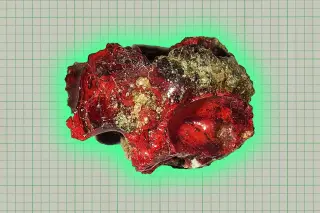
Researchers studying a Trinity test fragment of trinitite found two rare crystal structures formed by the explosion: a copper-rich red phase containing a quasicrystal and a silicon-based clathrate. Using nano-CT, electron microscopy, X-ray diffraction and modeling, they show both structures coalesced in the detonation, offering new insights into how extreme events produce unusual crystals.
Researchers Discover Unprecedented Clathrate Inside Trinity Test Crystal
science14 days ago

Researchers Discover Unprecedented Clathrate Inside Trinity Test Crystal

A new study in Proceedings of the National Academy of Sciences used CT and X-ray scans to analyze a rare red crystal from the Trinity test’s trinitite and found a previously unseen clathrate that traps atoms in its lattice—a material never observed in nature or in nuclear debris—highlighting the extreme chemistry produced by nuclear weapons, with the reminder that collecting such material is illegal.

Trinity Glass Yields First-Ever Clathrate Crystal
science14 days ago

Trinity Glass Yields First-Ever Clathrate Crystal

Scientists using CT and X-ray scans on trinitite—the glass formed by the 1945 Trinity nuclear test—have identified a hitherto unseen red clathrate crystal trapped within its lattice. This marks the first observation of such a clathrate in natural or nuclear-explosion materials, highlighting the extreme conditions produced by nuclear detonations; researchers caution that collecting samples from the blast site is illegal.

Trinity glass hides a rare silicon-based clathrate formed in the first nuclear blast
science16 days ago

Trinity glass hides a rare silicon-based clathrate formed in the first nuclear blast

Scientists analyzing red trinitite from the 1945 Trinity nuclear test found a previously unseen clathrate crystal, where silicon cages trap copper and calcium in 12- and 14-sided lattices—the first clathrate crystal produced by a nuclear explosion. The Trinity detonation's extreme temperatures (~2700°F/1500°C) and pressures (up to 8 GPa) likely forced atoms into unlikely configurations, expanding our understanding of mineral formation under extreme conditions.

Trinity Glass Reveals a New Calcium-Copper-Silicon Clathrate
science17 days ago

Trinity Glass Reveals a New Calcium-Copper-Silicon Clathrate

Analysis of red trinitite from the Trinity test uncovered a tiny copper-rich droplet containing a previously unknown calcium-copper-silicon clathrate crystal, a structure not seen in nature or in nuclear debris. Using single-crystal X-ray diffraction and density functional theory, researchers showed this clathrate, alongside a Trinity quasicrystal, formed under the blast’s extreme, non-equilibrium conditions. While scientifically intriguing for understanding metastable phases and extreme-material formation, the crystal is extremely rare and not practical for commercial use.

Trinity Blast Reveals Earth's First Clathrate Crystal in Trinitite
science18 days ago

Trinity Blast Reveals Earth's First Clathrate Crystal in Trinitite

Researchers analyzing red trinitite from the 1945 Trinity nuclear test identified a copper-rich cubic type-1 clathrate—the first clathrate found in nuclear-explosion products—alongside a quasicrystal in the same sample. The extreme, rapidly changing conditions of the blast created unusual crystalline phases, offering new forensic tools and insights into high-energy materials science.

New Silicon-Calcium-Iron Clathrate Discovered in Trinity Test Glass
physics-and-chemistry19 days ago

New Silicon-Calcium-Iron Clathrate Discovered in Trinity Test Glass

Physicists analyzing red trinitite from the Trinity test have identified a previously unknown silicon-calcium-iron clathrate, a nanoscale crystal structure formed by vaporized tower metals; confirmed with single-crystal X-ray diffraction and nanoscale imaging, this new phase could advance understanding of clathrates used in batteries, solar cells, and quantum devices, and provides a rare extreme-condition crystal for modeling.

World's First Nuclear Bomb Test Creates 'Impossible' Crystal
science-and-technology2 years ago

World's First Nuclear Bomb Test Creates 'Impossible' Crystal

Scientists have discovered a quasicrystal, a rare form of matter once thought to be impossible, in a sample of red trinitite created during the world's first nuclear bomb test in 1945. Quasicrystals are formed in extreme environments that rarely exist on Earth and require traumatic events with extreme shock, temperature, and pressure. The discovery of this quasicrystal in trinitite could provide insights into nuclear explosions and help in understanding illicit nuclear tests. It also suggests that there may be other natural pathways for the formation of quasicrystals, such as lightning strikes and meteor impact sites. The thermodynamic properties of quasicrystals could be a valuable tool for nuclear forensics.

The Atomic Origins of Trinitite Rock.
science3 years ago

The Atomic Origins of Trinitite Rock.

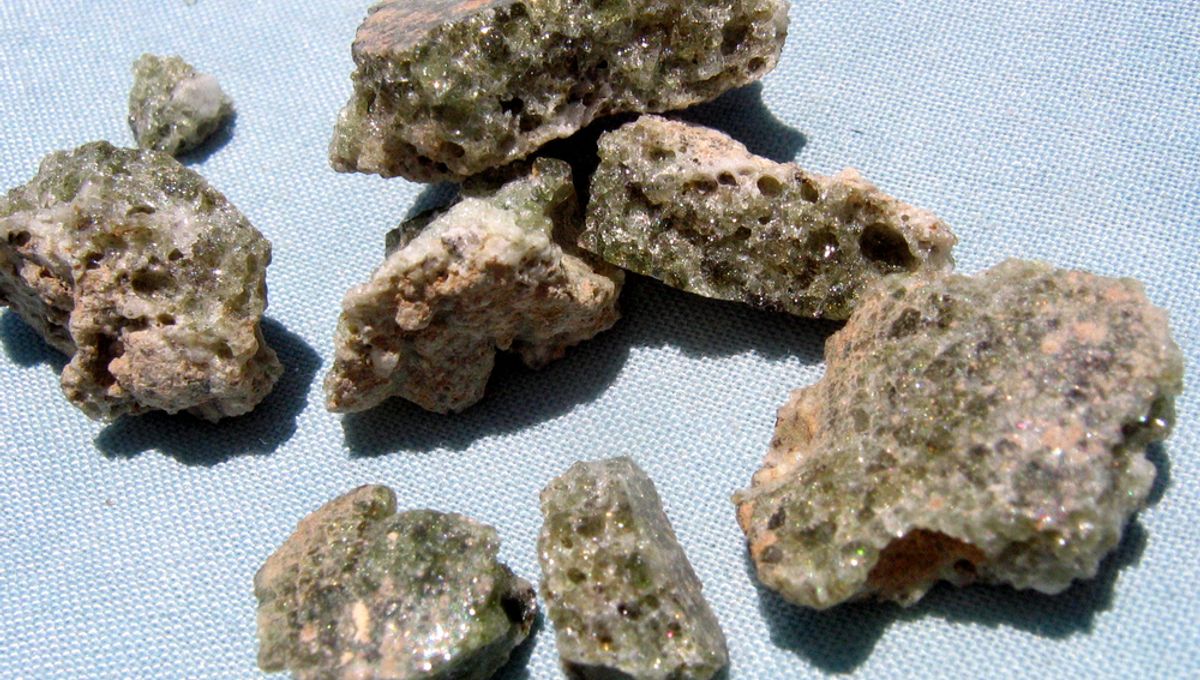
Trinitite is a green-red glass formed by sand that was melted by the heat of atomic bombs. It contains silicate dioxide, melted quartz grain, feldspar, and other minerals. Trinitite is mildly radioactive and can be used as forensic evidence to understand the composition and origin of nuclear bombs. Scientists have recently discovered that it contains "forbidden" quasicrystals, which have an unusual atomic structure not seen in typical crystals. Quasicrystals are known to be formed by meteorites and in labs, but atomic blasts also pack enough punch to create them.