Most of the Ocean Lives in Permanent Darkness, Shielded by a Thin Sunlit Roof
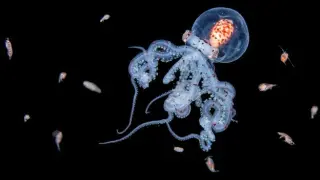
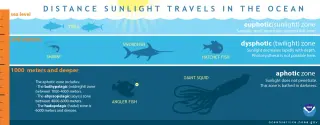
The ocean is structured by light: the sunlit euphotic zone extends to about 200 m where photosynthesis occurs, a twilight dysphotic layer from 200 to 1,000 m with insufficient light for plants, and an aphotic zone below 1,000 m where sunlight vanishes. Light depth varies with water clarity and particles, so two distinct thresholds define “dark”—one for photosynthesis and one for direct sunlight. Most deep-sea life relies on energy from above or chemosynthesis near vents, and bioluminescence is common in the deep ocean; diel vertical migration moves carbon and energy through the water column. NOAA notes that more than 90% of the ocean lies below the sunlit layer, making permanent darkness the norm in most of Earth’s blue world.