Tag

Unmanned Systems

All articles tagged with #unmanned systems

US Army Treats Half of Exercise Drones as Disposable Munitions
defense23 days ago

US Army Treats Half of Exercise Drones as Disposable Munitions

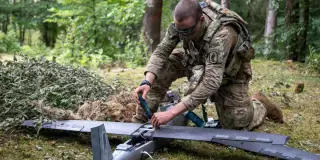
During the recent Saber Junction exercise in Germany, the US Army deployed approximately 1,900 autonomous systems, with roughly half classified as expendable. Officials described these low-cost drones as consumable munitions, emphasizing that soldiers should use them without concern for replacement. This approach aligns with the Drone Dominance Program, which aims to distribute tens of thousands of drones to squad levels to ensure consistent battlefield capability.

Ukraine Unveils Drone-Infused Unified Assault Doctrine
world1 month ago

Ukraine Unveils Drone-Infused Unified Assault Doctrine

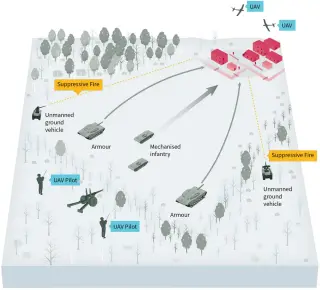
Ukraine has officially adopted a novel ‘drone-assault’ doctrine that fuses aerial drones, ground robots, and infantry into joint units to reduce human casualties while sustaining offensive momentum; drones handle reconnaissance and precision strikes, UGVs provide suppressive fire, and infantry closes and holds ground. The approach is credited with gains in Lyman and Kharkiv regions, including recapturing roughly 200 square kilometers, and is being advanced by the 3rd Army Corps (Azov) with a parallel push by the 2nd Army Corps. The tactic shifts frontline breach duties to robots, reserving infantry for holding, urban operations, and critical decision-making, signaling a significant evolution in modern warfare.

The Last Mile Goes Robotic: Ukraine’s Ground-Drones Redefine War
technology1 month ago

The Last Mile Goes Robotic: Ukraine’s Ground-Drones Redefine War

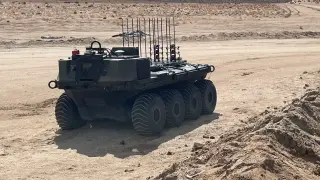
Ukraine has built a unified unmanned ground-robot fleet to shoulder the final mile of war—resupply, casualty evacuation, and even combat—reducing human exposure and enabling faster, scalable operations. By August 2026, ground robots had logged over 100,000 frontline missions, with some units delivering 90% of supplies and conducting all battlefield evacuations; a centralized Delta platform coordinates missions across air, sea, and ground. The system hinges on common standards, forward maintenance, and interoperable data, but faces terrain, communications, and electronic warfare challenges. Western militaries should prioritize integrated ecosystems rather than simply buying more robots.

Japan Eyes AI, Unmanned Warfare and Submarines in Record 2027 Defense Request
defense1 month ago

Japan Eyes AI, Unmanned Warfare and Submarines in Record 2027 Defense Request

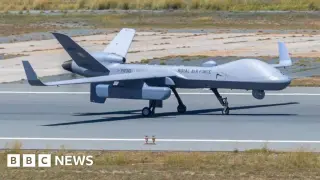
Japan's Ministry of Defense is asking for a record 8.9 trillion yen in FY2027, prioritizing AI and unmanned assets to adapt to 'new ways of warfare.' The request covers major maritime programs including New FFM frigates, Taigei-class submarines, long-endurance UAVs (MQ-9B SeaGuardian), Sakura OPVs, and enhancements to Aegis destroyers for Tomahawk deployment, as well as submarine- and underwater-launched missiles and UUV research. The final budget is expected to exceed 10 trillion yen, with hundreds of unpriced item requests awaiting year-end deliberations.

Britain’s Navy at a Crossroads: Hybrid Fleet or Continued Decline
defense2 months ago

Britain’s Navy at a Crossroads: Hybrid Fleet or Continued Decline

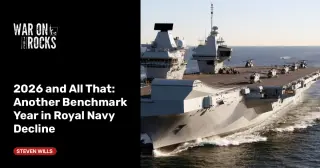
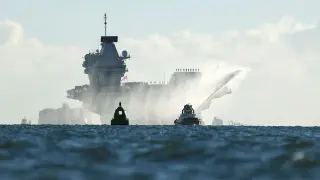
The piece argues that post‑World War II Britain has repeatedly trimmed the Royal Navy through successive defense reviews, culminating in the 2026 Defence Investment Plan’s shift toward a hybrid fleet centered on a Common Combat Vessel and drones. While touted as a way to maintain global reach with fewer crews and vessels, the plan risks becoming a cheaper but less capable “paper fleet” unless matched by sustained funding, industrial rebuilding, and cross‑party political commitment akin to the Naval Defence Act of 1889. If implemented with seriousness, it could arrest decline; if not, it may signal the sunset of Britain’s ability to project power at range.

Japan Upsizes Its Defense Playbook as Taiwan Risks and PRC Pressure Intensify
world-defense-security2 months ago

Japan Upsizes Its Defense Playbook as Taiwan Risks and PRC Pressure Intensify

Japan accelerates its defense modernization—test-firing a US-supplied Tomahawk and publishing a Defense White Paper that frames PRC coercion as Japan’s greatest challenge—while signaling ongoing deterrence in a Taiwan contingency. The PRC is expanding carrier-like capabilities with the Type 076 Sichuan to augment naval aviation, and it has boosted coercive actions around Scarborough Shoal in response to the Philippines’ UN baselines and expanded lawfare. US-Taiwan security ties deepen, including coordinated coast guard patrols, and Taiwan reports solid gains in recruitment and retention amid PRC pressure. PLA incursions into Taiwan’s ADIZ fluctuate, with continued law-enforcement patrols around Kinmen and growing emphasis on unmanned systems in amphibious concepts. The broader landscape shows China leveraging unmanned platforms, AI-assisted research, and undersea cable vulnerabilities, while regional actors in Oceania and Europe respond with countermeasures and alliances—alongside potential PRC arms sales to Iran—illustrating a wide, coercive-powers dynamic across the Indo-Pacific and beyond.

Putin Overhauls Russia’s High Command, Forms New Unmanned Forces
world2 months ago

Putin Overhauls Russia’s High Command, Forms New Unmanned Forces

President Vladimir Putin announced a broad reshuffle of Russia’s top military leadership, creating the Unmanned Systems Forces led by Denis Lyamin and reassigning front-line commands in Ukraine (Center under Andrei Ivanayev; East under Pyotr Bolgarev); former Center commander Valery Solodchuk was named Deputy Defense Minister to oversee logistics, and he is listed as a wanted war criminal by Ukraine’s HUR, as part of Moscow’s ongoing defense reforms.

France’s 50‑kg tilting‑head drone rewrites mine clearance as NATO orders surge
defense2 months ago

France’s 50‑kg tilting‑head drone rewrites mine clearance as NATO orders surge

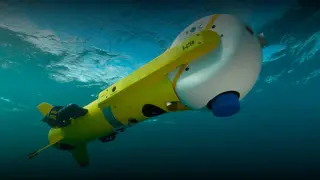
France’s Exail has produced the K-Ster C, a 50‑kg drone whose front end tilts ±90° to aim a shaped-charge warhead, allowing it to destroy mines from a small 9.5‑m boat without maneuvering the hull; NATO has placed hundreds of these expendable disposal vehicles, signaling a shift toward rapid, stand‑off mine clearance in contested waters such as the Strait of Hormuz.

Ukraine executes world's first known robotic amphibious assault
military-and-defense3 months ago

Ukraine executes world's first known robotic amphibious assault

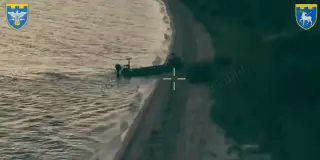
Ukraine's 123rd Separate Territorial Defense Brigade carried out the world's first known combat mission in which a naval drone delivered and deployed an armed ground robot behind Russian lines on the Kinburn Spit near Kherson, with the ground unit firing on a target and no soldiers involved, highlighting a growing role for unmanned systems in dangerous warfare.

Pentagon Creates Unifying Autonomy Chief to Oversee Drones and UxS
defense3 months ago

Pentagon Creates Unifying Autonomy Chief to Oversee Drones and UxS

Defense Secretary Pete Hegseth signs a memo establishing a Direct Reporting Portfolio Manager for autonomy (DRPM-UxS) to centrally oversee all unmanned and autonomous systems—covering ground vehicles, all small air vehicles, and most surface vessels—reporting to the Deputy Defense Secretary. The DRPM-UxS will be the single joint integrator for UxS programs, with the Defense Innovation Unit as the primary industry interface. DAWG and JIATF 401 become deputy offices under the DRPM-UxS, and some programs remain outside its scope (e.g., MUSV and major airframes). No individual is named yet to fill the role, which aims to speed fielding of UxS capabilities and cut bureaucratic delays.

Britain Bets on Drones and a Hybrid Navy in DIP Preview
defense3 months ago

Britain Bets on Drones and a Hybrid Navy in DIP Preview

Britain’s Defence Investment Plan preview signals a pivot to hybrid and unmanned warfare, with £5 billion earmarked for a drone transformation, at least six Common Combat Vessels to act as hubs for aerial, surface, and underwater drones, and a new Collaborative Combat Air programme for autonomous fighters flying alongside crewed jets, along with a broad push to develop inexpensive autonomous systems for land, sea, and air; the plan also includes a £15 billion uplift in defense funding amid political reshuffles.

Britain's Defence Investment Plan pivots to drones and deterrence with £298bn
politics3 months ago

Britain's Defence Investment Plan pivots to drones and deterrence with £298bn

Britain's long-awaited Defence Investment Plan pledges £298bn over the next four years—£15bn more than previously and the biggest uplift since the Cold War—yet critics say it underfunds defence at about 2.7% of GDP by 2030 (NATO target 3%). The plan pivots toward cheaper, autonomous systems and drones, with £63bn for the nuclear deterrent, £8bn for a UK-led next-generation RAF stealth aircraft, and a push to hybrid crews. It also funds replenishing Ukraine aid (£11bn), air/missile defence (£790m), and protection of undersea cables (£330m). The Army grows to ~76,000; some programmes are cut (e.g., Type 83 destroyers, Storm Shadow replacement), and expansion of Cadets is delayed.

Allied Fleet Drills Kick Off Valiant Shield 2026 and RIMPAC in the Western Pacific
military3 months ago

Allied Fleet Drills Kick Off Valiant Shield 2026 and RIMPAC in the Western Pacific

A week of major Western Pacific maneuvers sees the US-led Valiant Shield 2026 and Rim of the Pacific 2026 unfold with carrier strike groups, submarines, and advanced unmanned systems, involving Japan, Australia, Canada, New Zealand, and other partners across Guam, Japan, the CNMI, and the Indian Ocean. The drills feature anti-submarine warfare, air and missile defense, joint air operations, and interoperability tests, set against continued regional tensions from China, Russia, and North Korea, as well as related transit and maneuver activities by PLAN, JMSDF, and allied forces.

Unmanned Sea Drone Rescues Apache Crew Near Strait of Hormuz
military4 months ago

Unmanned Sea Drone Rescues Apache Crew Near Strait of Hormuz

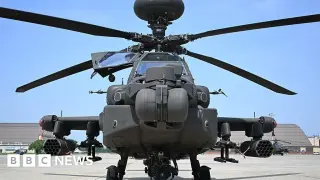
A US Army AH-64 Apache helicopter went down near the Strait of Hormuz off Oman. An American uncrewed surface drone, operated by Task Force 59, rescued the two crew members within about two hours; they are in stable condition. CENTCOM led the operation with support from the 82nd Airborne, the Air Force, and Navy units. The incident is under investigation and represents the first sea-drone rescue of its kind for US forces.