Tag

Us China

All articles tagged with #us china

White House: Global transit network shields China from U.S. tariffs
business21 days ago

White House: Global transit network shields China from U.S. tariffs

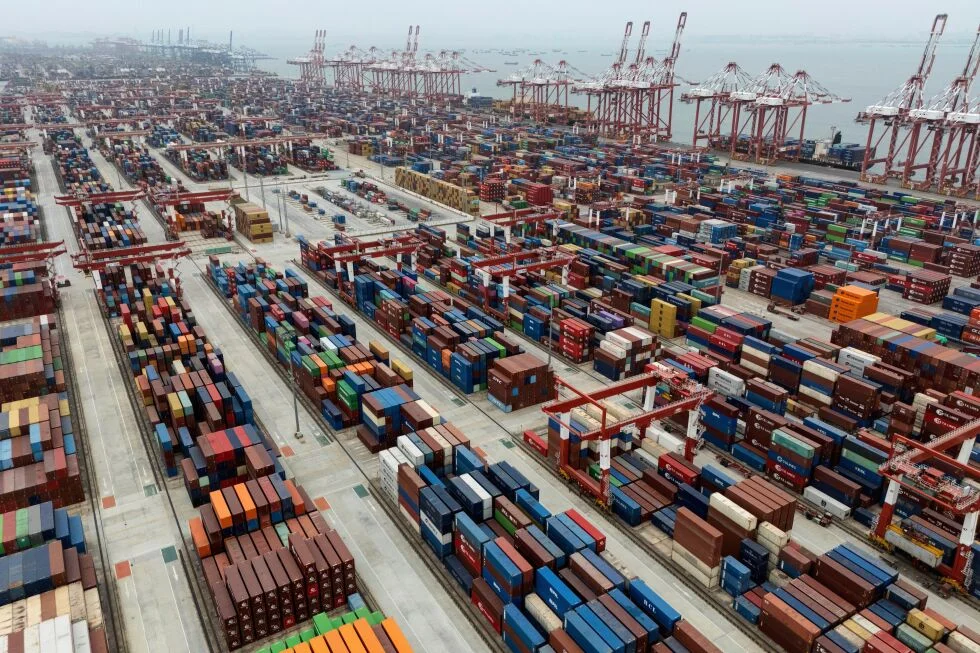
The White House says more than 40 countries helped China sidestep U.S. tariffs by routing exports through lower‑duty nations via transshipping, potentially costing American jobs and billions in revenue; China rejects the claims and says trade wars have no winners. The report also notes the use of AI tools to detect such schemes and comes ahead of a Trump–Xi meeting.

The New Lunar Rivalry: US and China Push for Permanent Moon Settlements
technology27 days ago

The New Lunar Rivalry: US and China Push for Permanent Moon Settlements

As the Moon becomes the next arena for global power, the US and China race to establish permanent lunar settlements: the US relies on private firms and the Artemis program to return astronauts by the late 2020s, while China pursues a streamlined, top‑down path aiming for taikonaut landings by 2030 and a 2040 lunar base, raising questions about governance, resources, and international law amid limited cooperation.

US imposes 15% polysilicon tariff to shore up chip and solar supply chains
business28 days ago

US imposes 15% polysilicon tariff to shore up chip and solar supply chains

President Trump signed an executive order imposing a 15% tariff on imported polysilicon and derivatives, effective December 4, with minimum prices of $21 per kilogram for polysilicon, $100 per kilogram for ingots and wafers, $0.22 per watt for solar cells, and $0.38 per watt for solar modules, and enabling incentives to spur US production. The move aims to bolster domestic chip and solar supply chains against China, drawing praise from US manufacturers like Hemlock and Wacker while eliciting Chinese objections as part of broader tech-tension dynamics.

US Signals Possible Sanctions on Chinese Open-Source AI for IP Theft
technology1 month ago

US Signals Possible Sanctions on Chinese Open-Source AI for IP Theft

Treasury Secretary Scott Bessent said the US may sanction Chinese open-source AI models if they are found to steal IP from US competitors via distillation, while stressing support for open-source models but not IP theft. He cited watermarks on US models appearing in Chinese offerings and highlighted Moonshot AI's Kimi K3 as a case study, noting ongoing industry debate over government action and the role of open-source in AI competition, with some US firms like Meta, Nvidia, and Reflection AI pursuing open-source work while Chinese models currently dominate.

Apple seeks White House clearance to source chips from blacklisted CXMT
technology2 months ago

Apple seeks White House clearance to source chips from blacklisted CXMT

Apple is lobbying U.S. authorities for a license to buy memory chips from ChangXin Memory Technologies (CXMT), a Chinese firm designated by DoD as a Chinese military company and added to the Commerce Department’s Entity List. The move, reported by the FT, aims to ease rising memory-chip costs that have contributed to higher iPad and Mac prices, with Apple said to have engaged the White House and other administration channels while licensing remains unlikely.

Oil surge, higher yields weigh on markets as Iran tensions persist
business3 months ago

Oil surge, higher yields weigh on markets as Iran tensions persist

Global markets fell Friday as oil surged and long‑term U.S. bond yields climbed amid Iran tensions and tepid progress from Trump’s China trip, with the S&P 500, Nasdaq and Dow down and mortgage rates near 6.65%. Investors worry about inflation and the Fed path, while European and Asian yields moved higher on energy concerns; no major Beijing deliverables or Hormuz breakthroughs emerged, and a Boeing–China deal remained uncertain.

Open Strait, Guarded Interests: China’s nuanced take on Hormuz
asia-pacific3 months ago

Open Strait, Guarded Interests: China’s nuanced take on Hormuz

China wants the Strait of Hormuz to stay open for traffic and energy flows, but not at the cost of its energy security or allowing Iran to gain leverage. Beijing favors a regional mechanism that could charge a non-toll-like environmental fee, avoids a blockade, and opposes any Chapter VII move that could authorize force against Iran. GCC states such as the UAE and Bahrain oppose giving Iran more influence and would prefer the US to resume pressure or bombing Iran. Beijing is wary that upheaval in Iran could threaten its energy security, as seen in Venezuela-like scenarios, so China remains cautious about UN resolutions and broader enforcement measures in Hormuz.

Chip Stocks Pull Back After Summit Yields No Big Tech Deals
business3 months ago

Chip Stocks Pull Back After Summit Yields No Big Tech Deals

Chip stocks slipped after the U.S.-China summit ended without major technology deals, signaling cautious investor sentiment toward the sector even as a handful of tech names showed mixed moves during the session; broader semiconductor-related instruments traded lower in a risk-off atmosphere as markets digested limited progress and potential policy implications.

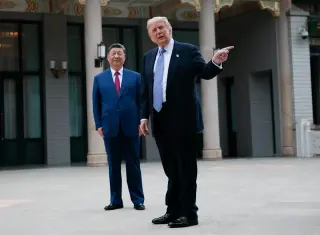
No Women at the Table: Critics Decry a Masculine Moment in US–China Talks
world3 months ago

No Women at the Table: Critics Decry a Masculine Moment in US–China Talks

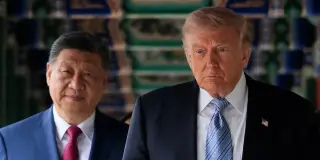
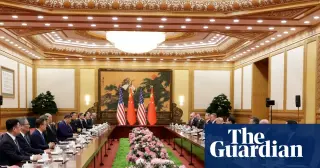
Photos of the Xi–Trump meeting in Beijing showed no women at the negotiating table, prompting critics like Harvard’s Gita Gopinath and Stanford’s Halima Kazem to say it signals a masculine, militarized, and exclusionary form of diplomacy. They note a regression from Obama-era meetings that included women and argue women’s voices are being sidelined in shaping global order. The visit did feature women in supporting roles (Lara Trump, Jane Fraser, Dina Powell McCormick), underscoring an uneven, ongoing dynamic in high-level diplomacy.

CAST boycott at NeurIPS underscores widening US-China AI rift
technology4 months ago

CAST boycott at NeurIPS underscores widening US-China AI rift

China’s state-backed CAST is boycotting NeurIPS 2026 over a policy that would bar researchers from certain Chinese institutions; NeurIPS later apologized and narrowed the ban, but CAST says funding for attendees will be redirected and NeurIPS papers discounted in evaluations. The dispute highlights a growing split in AI research between the US and China, with China already leading AI publications and authorship at NeurIPS, and analysts saying the move signals China’s intent to pursue AI more independently if Western venues are not welcoming, though it remains unclear how many researchers will actually withdraw.