Tag

Yellow Hypergiant

All articles tagged with #yellow hypergiant

Giant Star Turns Yellow, Hinting at a Possible Supernova
science1 month ago

Giant Star Turns Yellow, Hinting at a Possible Supernova

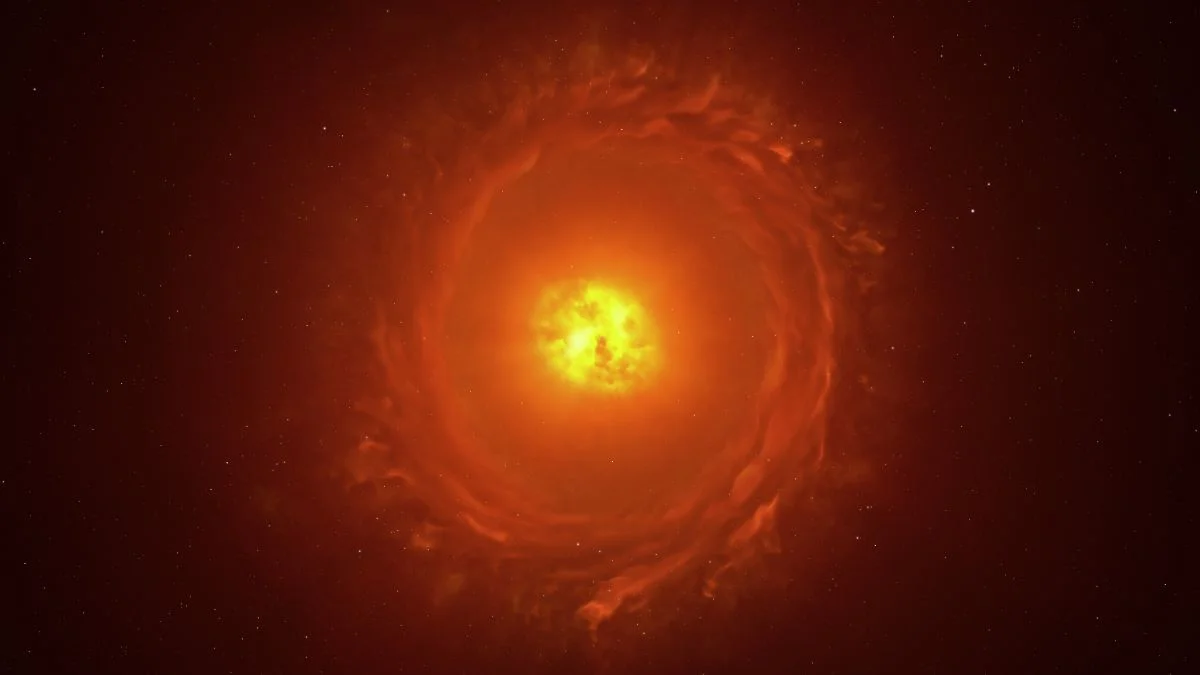
Astronomers monitoring the red supergiant WOH G64 in the Large Magellanic Cloud report a rapid evolution into a yellow hypergiant, with a temperature rise of about 1,000 C and significant shrinking. This rare color and size change may signal an impending supernova, though researchers offer two possible explanations—binary interaction with a companion or a prior eruptive episode—and the star’s exact fate remains uncertain.

Gigantic Star WOH G64 Poised for Cosmic Catastrophe
science1 month ago

Gigantic Star WOH G64 Poised for Cosmic Catastrophe

Astronomers say WOH G64, a red supergiant in the Large Magellanic Cloud about 165,000 light-years away and roughly 30 solar masses with a radius over 1,500 suns, is likely transitioning toward a yellow hypergiant after shedding outer layers; this may lead to a spectacular end in a supernova or direct collapse into a black hole, with the fate expected to unfold over hundreds to thousands of years in cosmic time.

Astronomers watch a 1,540-solar-radius star flip from red to yellow, hinting at a possible supernova
astronomy1 month ago

Astronomers watch a 1,540-solar-radius star flip from red to yellow, hinting at a possible supernova

Astronomers tracking the star WOH G64 in the Large Magellanic Cloud have observed it change from a red supergiant into a rare yellow hypergiant, a dramatic and unusually slow transformation that could mark the star’s evolution toward a core-collapse supernova or direct black-hole formation. The object, about 28 solar masses and roughly 1,540 times the Sun’s size, may be part of a binary system, with interactions potentially influencing its path to death. While this hints at a possible explosive finale, the final fate remains uncertain and would likely occur on timescales of hundreds to thousands of years rather than within our lifetime; the findings were reported in Nature.