
Swift Telescope Ends 22-Year Run with Uncontrolled Reentry Over Indonesia
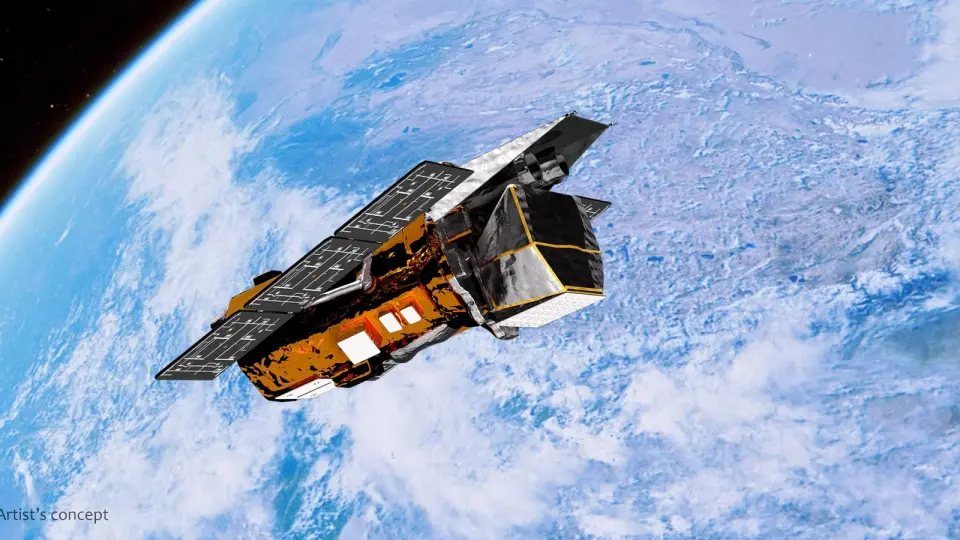
NASA’s Neil Gehrels Swift Observatory reentered Earth’s atmosphere on November 4, 2026, ending a 22-year mission that far exceeded its original two-year scope. The 3,200-pound telescope fell uncontrolled after a failed rescue attempt by Katalyst Space’s LINK spacecraft. Most of the craft burned up, but some debris survived, with a 1 in 2,100 risk of ground injury. NASA is now seeking proposals to potentially save the Hubble Space Telescope, which faces a similar orbital decay risk by the mid-2030s.
Key points
- Swift reentered over northern Sumatra, Indonesia, at 7:39 a.m. EST on Nov. 4, 2026, according to U.S. Space Force data.
- The observatory operated for 22 years, 11 times longer than its planned mission, observing over 2,000 gamma-ray bursts and 1,400 supernovae.
- Katalyst Space’s LINK rescue mission failed in July 2026 due to propulsion and orientation issues, leaving Swift to decay from atmospheric drag.
- NASA estimates a 1 in 2,100 chance of ground injury from surviving debris, though most of the spacecraft burned up.
- NASA issued a Request for Proposals to commercial firms to explore orbit-boosting or servicing options for the Hubble Space Telescope by 2032.
Background
Swift launched in November 2004 to study gamma-ray bursts but was repurposed to observe supernovae, black holes, and comets. In 2018, it was renamed the Neil Gehrels Swift Observatory after its first principal investigator. The failed Katalyst rescue attempt in 2026 was part of NASA’s effort to test commercial satellite servicing technologies, despite the mission’s failure to save Swift.
How outlets are covering it
Space.com and CNN emphasize Swift’s long operational success and the scientific value of the failed rescue attempt as a test of servicing technology. AP News highlights the uncontrolled reentry and the risk to ground safety, noting the 1 in 2,100 injury probability. The New York Times focused on the predicted reentry window and the risk assessment, while CNN and AP both note NASA’s subsequent interest in saving Hubble, with AP quoting NASA Administrator Jared Isaacman on the need to explore all options for Hubble’s longevity.
Why it matters
The reentry underscores the growing challenge of orbital debris and the need for sustainable end-of-life planning for space assets. The failed rescue highlights the risks and costs of extending satellite life, while NASA’s interest in Hubble signals a shift toward commercial solutions for maintaining critical space infrastructure. The incident also raises questions about current orbital debris mitigation standards, which are less stringent than those required for new launches.
What to watch
NASA will analyze data from the failed Katalyst mission to improve future satellite servicing efforts. The agency will evaluate proposals for Hubble’s orbit boost or controlled reentry, with a deadline of 2032. Increased solar activity may accelerate the decay of other low-Earth orbit satellites, prompting further review of end-of-life protocols.
- NASA's Swift space telescope crashes back to Earth after failed rescue attempt Space
- A 3,200-pound telescope is falling out of orbit. How it could unfold CNN
- NASA space telescope plunges to Earth after two decades studying cosmic explosions AP News
- A NASA Telescope Is Predicted to Crash Back to Earth Within Hours The New York Times
- NASA’s Swift Observatory Re-Entered Atmosphere NASA Science (.gov)
Want the full story? Read the original reporting
Read on Space