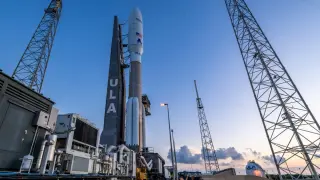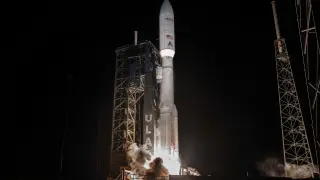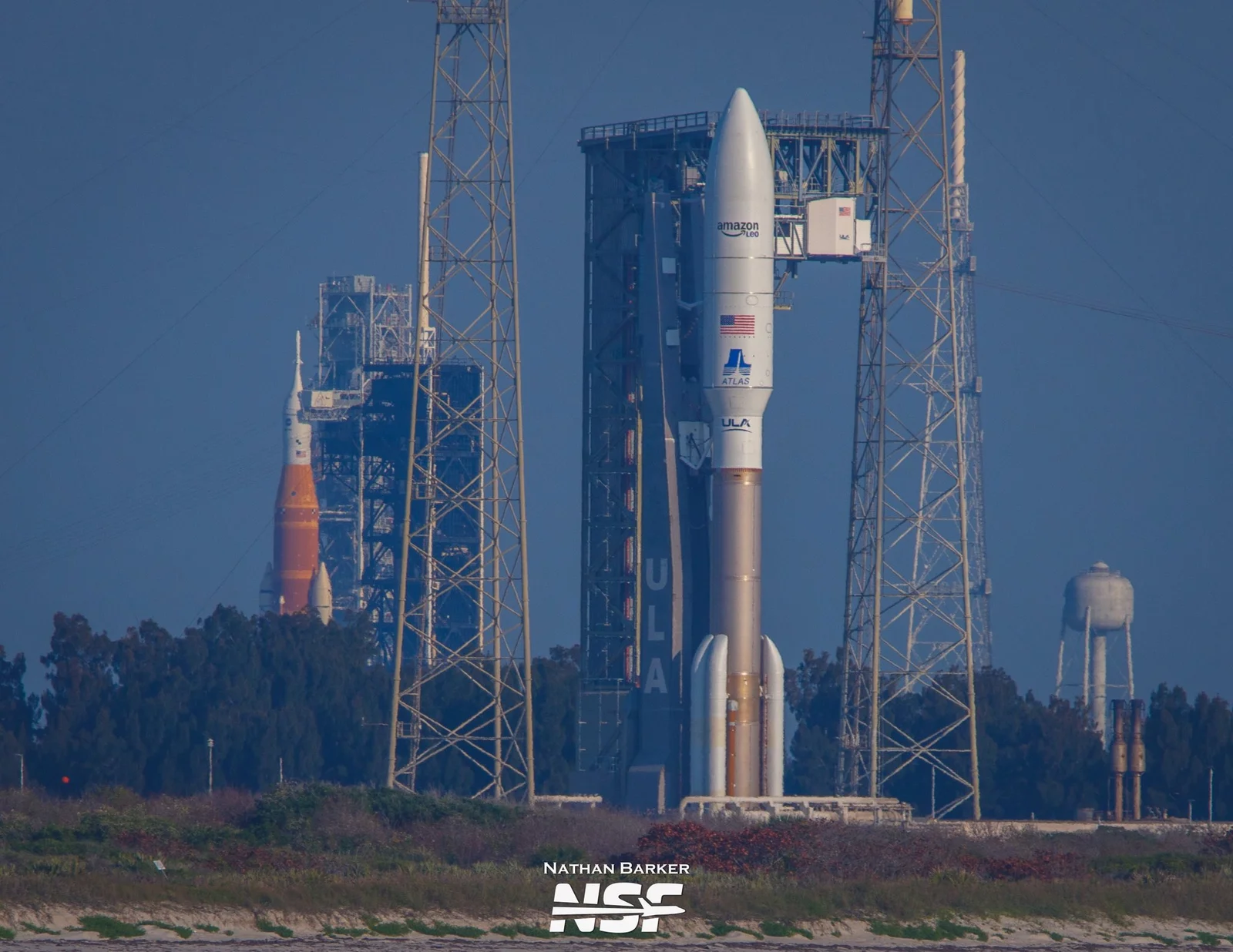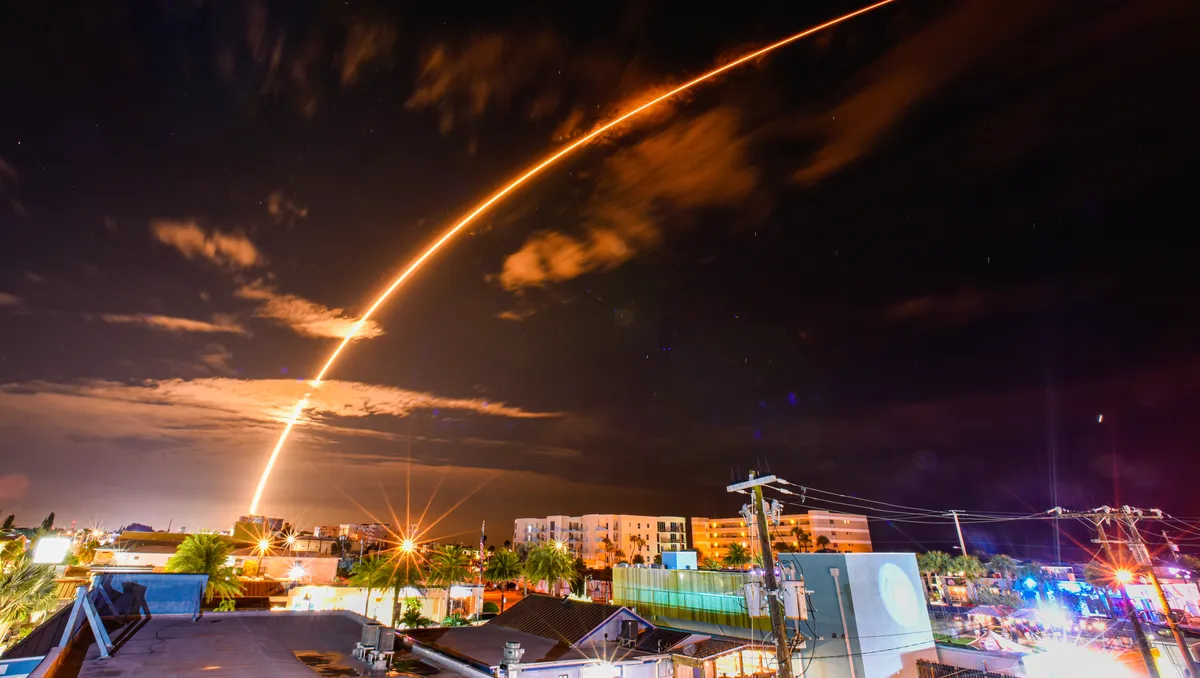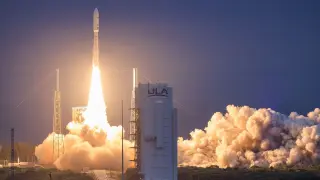
An Atlas V rocket launched from Cape Canaveral at 8:52 p.m., carrying 29 Amazon Leo satellites for United Launch Alliance, and was visible across the Philadelphia region thanks to clear skies.
ULA’s Atlas V rocket is scheduled to launch from Cape Canaveral at 8:52 p.m. ET to deploy 29 Amazon Leo satellites for the Amazon Leo broadband constellation, marking the sixth Atlas V mission in this program and potentially tying the rocket’s heaviest payload record (~18 tons); Amazon’s long‑term plan envisions more than 3,200 satellites in low‑Earth orbit, with live coverage available on Space.com and via ULA’s feed.
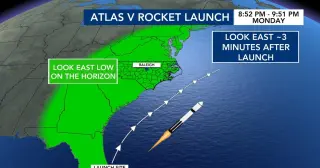
ULA's Atlas V is slated to launch Monday night, April 27, 2026, with a window from 8:52 p.m. to 9:51 p.m. Local sunset in Raleigh is around 8:00 p.m., so the rocket's vapor trail could be illuminated as it moves east, potentially forming a jellyfish-like glow about three minutes after liftoff. Look toward the eastern sky shortly after launch to catch the display; a live stream is available.
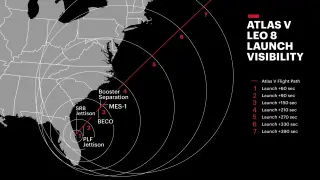
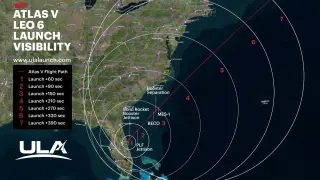
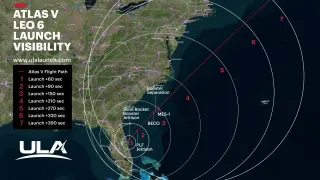
United Launch Alliance's Atlas V with five solid rocket boosters is set to lift off from Cape Canaveral at 8:52 p.m. ET on April 27, 2026, launching 29 Amazon Leo satellites into low-Earth orbit. A ULA visibility map suggests the launch could be visible across much of Florida and up the East Coast, weather permitting, with Palm Beach County viewers advised to seek clear, unobstructed viewpoints.
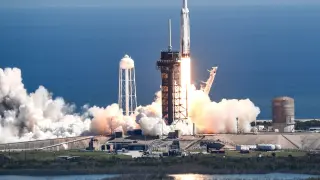
SpaceX will attempt a rare Florida doubleheader: a Falcon Heavy launch from Kennedy Space Center to deploy ViaSat-F3 into geosynchronous transfer orbit no earlier than 10:21 a.m. ET (with a liftoff window to 11:46 a.m.), followed by a ULA Atlas V mission from Cape Canaveral Space Force Station to deploy 29 Amazon Leo satellites no earlier than 8:52 p.m. ET; Falcon Heavy’s side boosters are expected to land at LC-2 and LC-40. Florida Today will provide live updates starting 90 minutes before liftoff.
ULA’s Atlas V rocket from Cape Canaveral, carrying the next batch of Amazon’s Leo satellites, is set to lift off at 8:52 p.m. ET on Monday, April 27, 2026. Weather and clouds willing, the brightness could be visible from most of Florida up the East Coast to New England, with sightings reported or projected for states including New Jersey, North Carolina, West Virginia, Indiana, Tennessee and Alabama on ULA’s visibility map. Florida Today will provide 90 minutes of prelaunch coverage at floridatoday.com/space, and viewers can watch via the Florida Today app or NASA+. Past Cape Canaveral launches have been seen well beyond Florida, highlighting the potential sky show for East Coast observers.
Nine rocket launches are scheduled this week across the US, Russia, Kazakhstan, and China, led by NASA’s Artemis II crewed Orion mission to the Moon on SLS. SpaceX has four Starlink missions (two from Florida, two from California); ULA’s Atlas V will deploy Amazon Leo satellites; Russia plans a Meridian-M on Soyuz 2.1a from Plesetsk; Baikonur hosts the first flight of Soyuz 5; and China’s CAS Space (Kinetica 2) and Space Pioneer (Tianlong-3) will mark debuts. Artemis II carries Reid Wiseman, Victor Glover, Christina Koch, and Jeremy Hansen for about 10 days of tests before heading toward the Moon, while other launches test new vehicles and capabilities from multiple nations.
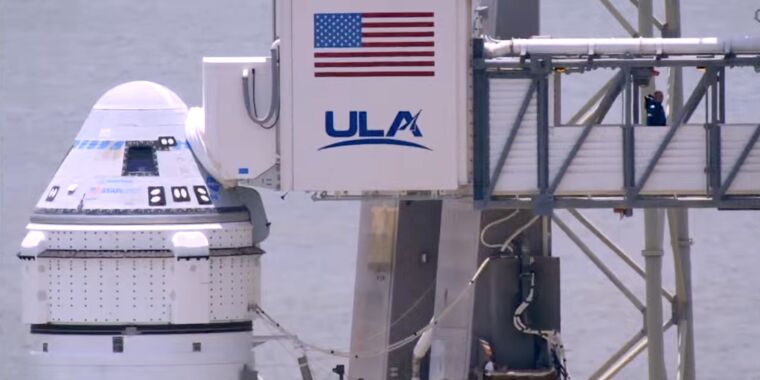
Boeing's Starliner test flight was delayed again due to a computer issue with the Atlas V rocket's countdown system, halting the launch just minutes before liftoff. NASA astronauts Butch Wilmore and Suni Williams were already aboard when the hold was called. The next launch attempt is scheduled for Wednesday, pending resolution of the computer glitch. This delay adds to a series of setbacks for the Starliner program, which is years behind its original schedule.
Boeing's Starliner mission, set to carry NASA astronauts Butch Wilmore and Suni Williams on its maiden crewed voyage, was called off minutes before liftoff due to an automatic hold triggered by the ground launch sequencer. The next possible launch window is Wednesday, but teams are still assessing the issue. This mission is crucial for Boeing to prove Starliner's capabilities and compete with SpaceX's Crew Dragon under NASA's Commercial Crew Program.
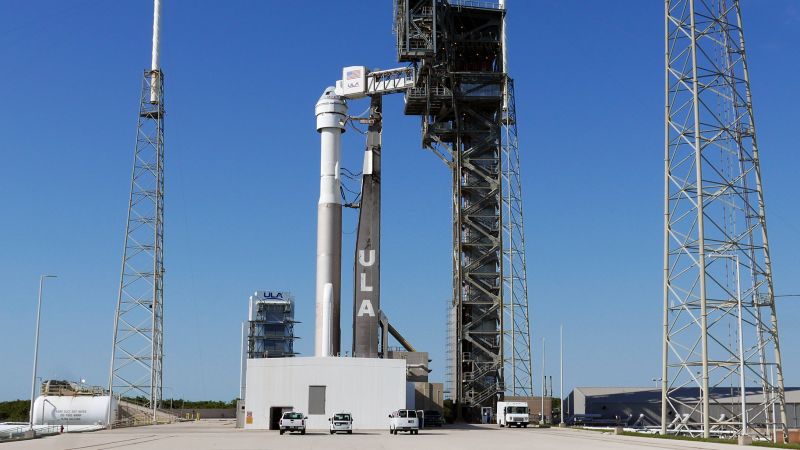
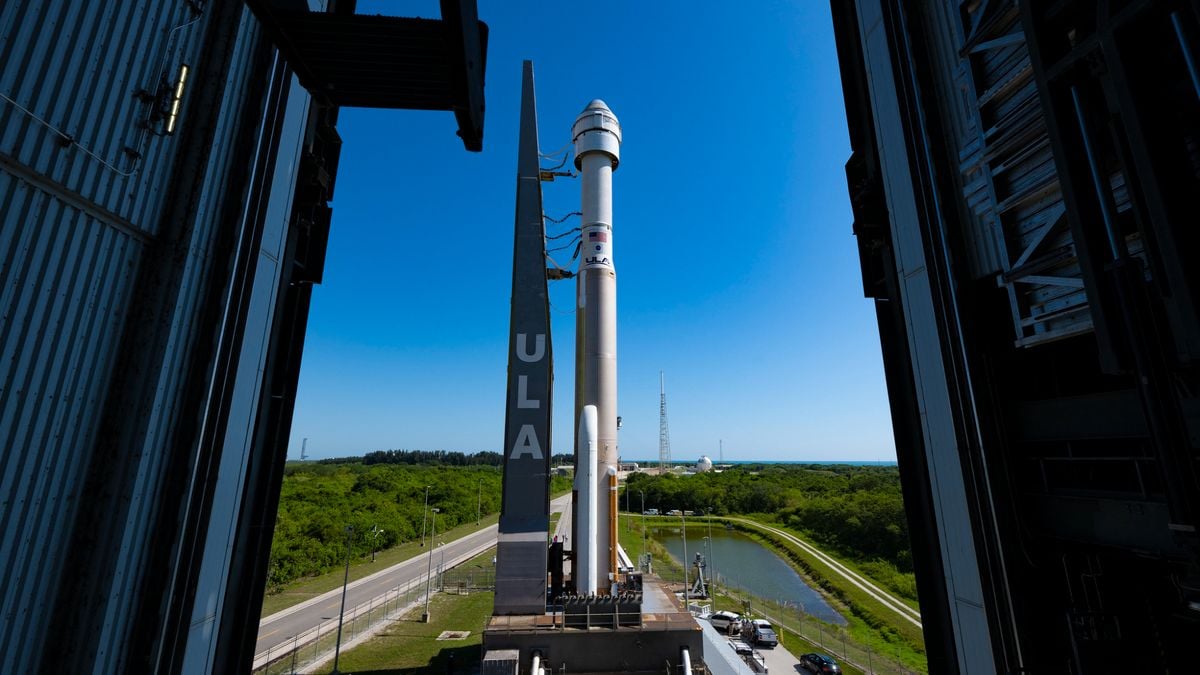
Boeing's Starliner capsule, mounted on a United Launch Alliance Atlas V rocket, has been rolled out to the launch pad at Cape Canaveral Space Force Station for a planned June 1 liftoff. This mission, known as Crew Flight Test (CFT), will be Starliner's first astronaut mission, sending NASA astronauts Butch Wilmore and Suni Williams to the International Space Station for about seven days. If successful, Starliner will be certified for regular crewed missions to the ISS.
NASA's Commercial Crew Program is set to achieve a significant milestone with the Crew Flight Test of Boeing's Starliner spacecraft, launching aboard a United Launch Alliance Atlas V rocket on June 5, 2024. This mission will send astronauts Butch Wilmore and Suni Williams to the International Space Station, marking the first crewed flight for the Starliner. A successful test will pave the way for the spacecraft's certification for regular crew rotation flights to the ISS.
United Launch Alliance (ULA) will launch the Protoflight mission for Amazon's Project Kuiper, which aims to increase global broadband access through a constellation of 3,236 satellites in low Earth orbit. The launch window opens at 2:00 PM ET and concludes at 6:00 PM ET.
SpaceX successfully launched a Falcon 9 rocket carrying Starlink internet satellites from Cape Canaveral Space Force Station on Friday night. The next launch, scheduled for Sunday morning, was delayed by 24 hours due to an issue found during a prelaunch check. The United Launch Alliance (ULA) will be launching an Atlas V rocket for a national security mission for the U.S. Space Force and National Reconnaissance Office. The mission aims to provide space situational awareness, orbital surveillance, and tracking.
A United Launch Alliance (ULA) Atlas V rocket is set to launch the SILENTBARKER/NROL-107 mission, a joint effort by the National Reconnaissance Office (NRO) and U.S. Space Force (USSF) to enhance space domain awareness. The launch window opens at 8:51 AM ET and concludes at 9:49 AM ET. Viewers can watch the launch from various locations at the Kennedy Space Center Visitor Complex, including the LC-39 Observation Gantry and Atlantis North Lawn.
United Launch Alliance (ULA) has delayed the launch of the NROL-107 mission due to the approaching Tropical Storm Idalia. The Atlas V rocket carrying a classified national security payload will be rolled back to ULA's vertical integration facility at Cape Canaveral Space Force Station for protection. The new launch date has not been announced yet.