Tag

Apophis

All articles tagged with #apophis

ESA and JAXA Seal Ramses Collaboration to Study Apophis Before the 2029 Flyby
space15 days ago

ESA and JAXA Seal Ramses Collaboration to Study Apophis Before the 2029 Flyby

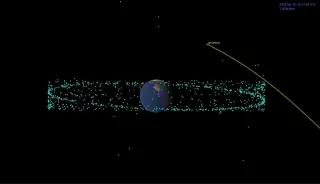
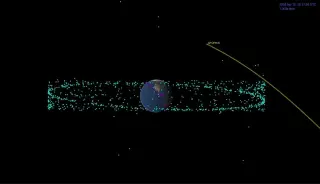
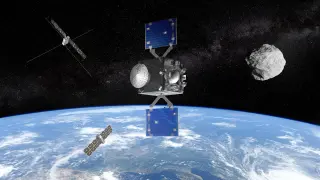
The European Space Agency and the Japan Aerospace Exploration Agency have formalized a Ramses collaboration to study asteroid Apophis during its 2029 Earth flyby: Ramses is set to launch in 2028 on an H3 rocket, with JAXA supplying solar arrays and a thermal infrared imager and OHB Italia as prime contractor. The mission would reach Apophis in February 2029, about two months before its close approach to Earth at roughly 32,000 kilometers, enabling detailed observations of the asteroid’s surface and the flyby’s gravitational effects for science and planetary defense insights.

ESA and JAXA Unite on Ramses: A Historic Mission to Study Apophis and Boost Planetary Defense
space16 days ago

ESA and JAXA Unite on Ramses: A Historic Mission to Study Apophis and Boost Planetary Defense

ESA and JAXA signed an agreement to launch the Ramses mission to the near-Earth asteroid Apophis, with a planned 2028 launch and a 2029 rendezvous during its close Earth flyby at about 32,000 km. The mission aims to study how Apophis behaves under Earth's gravity and to collect data that could improve asteroid deflection and monitoring strategies, informing future planetary-defense efforts. ESA will lead spacecraft design and operations, JAXA will contribute lightweight solar arrays and an infrared imager, and ESA’s NEO Coordination Centre will refine orbital predictions ahead of the flyby. This collaboration showcases international partnership as a cornerstone of global space safety.”,

Global pact for planetary defence as Ramses targets Apophis
sciencespace18 days ago

Global pact for planetary defence as Ramses targets Apophis

ESA and JAXA signed memoranda to deepen planetary-defence collaboration and advance the Ramses mission to rendezvous with asteroid Apophis ahead of its 2029 Earth flyby, with ESA leading spacecraft design and JAXA contributing key hardware to study tidal effects and improve deflection knowledge; the 2029 flyby will bring Apophis within about 32,000 km of Earth, presenting a rare science and public-engagement opportunity.

Apophis to zip by Earth in 2029, a near-light-speed shift in its orbit
science23 days ago

Apophis to zip by Earth in 2029, a near-light-speed shift in its orbit

NASA says the Eiffel Tower–sized asteroid Apophis, categorized as potentially hazardous, will pass Earth in April 2029 at about 20,000 miles away—closer than many geosynchronous satellites—nudging its orbit and rotation but posing no immediate risk. Discovered in 2004, Apophis is a remnant from the solar system’s formation; its name comes from the Egyptian god of chaos. Astronomers plan close-up observations, aided by missions like OSIRIS‑REx and Ramses to study the encounter.

Apophis 2029 Flyby: Naked-Eye Close Encounter Near Earth
science1 month ago

Apophis 2029 Flyby: Naked-Eye Close Encounter Near Earth

NASA says the 1,230-foot asteroid Apophis, nicknamed the God of Chaos, will skim within about 20,000 miles of Earth in 2029—closer than many satellites and bright enough to be seen with the naked eye—providing a historic opportunity for observation and planetary-defense research; there is no threat to Earth, and the asteroid will return in 2036 much farther away.

Apophis: Naked-eye near-Earth visitor set for a historic 2029 pass
science1 month ago

Apophis: Naked-eye near-Earth visitor set for a historic 2029 pass

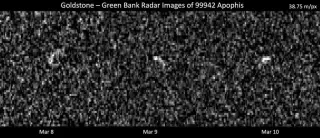
NASA says the 1,230-foot asteroid Apophis, nicknamed the God of chaos, will skim past Earth in 2029 at about 20,000 miles (roughly 32,000 kilometers) away — closer than many satellites and potentially visible to the naked eye in the Eastern Hemisphere if weather cooperates. There is no risk to Earth, and radar observations have ruled out impact for at least a century. ESA plans to deploy the Rapid Apophis Mission to study its gravity-induced effects, and Apophis will return in 2036 at a much safer distance.

Apophis to skim Earth in 2029, unlocking new asteroid science
space1 month ago

Apophis to skim Earth in 2029, unlocking new asteroid science

Earth’s giant near-Earth asteroid Apophis, about a quarter-mile long, will pass within about 20,000 miles of Earth on April 13, 2029—the closest approach of a large known asteroid—offering a rare chance to study its surface and motion as NASA and ESA prepare dedicated observations (OSIRIS-APEX and Ramses) while the initial risk of impact has been ruled out for at least a century.

science1 month ago

Apophis to skim past Earth in 2029, NASA confirms

The near‑Earth asteroid 99942 Apophis, about 375 meters across, will pass roughly 20,000 miles (about 32,000 km) above Earth on April 13, 2029—close enough to be seen with the naked eye from the Eastern Hemisphere—with radar data eliminating any collision risk for at least a century. NASA’s OSIRIS‑APEX mission will study the gravitational and surface effects during the encounter, while ESA’s Ramses will observe the flyby to improve our understanding of asteroid composition and internal structure, a rare event that helps refine planetary defense models.

Apophis 2029: Close-Range Flyby Opens a Scientific Window
science1 month ago

Apophis 2029: Close-Range Flyby Opens a Scientific Window

NASA says Apophis, a roughly 1,100‑foot-wide near‑Earth asteroid nicknamed the 'god of chaos,' will pass about 20,000 miles from Earth on April 13, 2029—an exceptionally close flyby that offers a rare opportunity to study a space rock with modern technology. The agency notes no collision risk for at least 100 years, though Earth's gravity could cause minor surface movement, helping scientists learn about its composition. Observers in the Eastern Hemisphere may glimpse it if weather permits.

Six Celestial Events to Watch for Over a Lifetime
astronomy5 months ago

Six Celestial Events to Watch for Over a Lifetime

This article highlights major astronomical events to look forward to this century, including the close approach of asteroid Apophis in 2029, the return of Halley's Comet in 2061, potential explosive activity of V Sagittae, and several notable Great Conjunctions of Jupiter and Saturn, with the most significant occurring in 2080, offering exciting opportunities for both amateur and professional astronomers.