Tag

Nature Communications

All articles tagged with #nature communications

Ancient North Sea asteroid sparked a colossal 100-meter tsunami
science28 days ago

Ancient North Sea asteroid sparked a colossal 100-meter tsunami

Researchers confirm that the Silverpit Crater beneath the North Sea was formed by a 160-meter-wide asteroid about 43–46 million years ago, triggering a tsunami over 100 meters tall and blasting a 1.5-km-high plume of rock and water. Using advanced seismic imaging and analyses of shocked minerals, the study resolves the crater’s origin as an asteroid impact and highlights the rare preservation of an oceanic impact site.

Nematodes thrive in the Atacama Desert, reshaping ideas about life in extreme dryness
science1 month ago

Nematodes thrive in the Atacama Desert, reshaping ideas about life in extreme dryness

A University of Cologne–led study published in Nature Communications finds a diverse nematode community in soils across six sites in the Atacama Desert, the world's driest non-polar desert, with 21 families and 36 genera; higher precipitation correlates with greater biodiversity, and asexual reproduction appears to aid survival in high-altitude areas, though some regions show simplified food webs, offering insights into life’s resilience in extreme aridity amid climate-change context.

Satellites map global bridge vulnerabilities
science1 month ago

Satellites map global bridge vulnerabilities

An international study of 744 long-span bridges shows North America and Africa have the riskiest infrastructure, with many spans dating from the 1960s; researchers say space-based radar can detect millimetre-scale deformations, offering a cost-effective, global monitoring method that could flag problems earlier and reduce the number of high-risk bridges—especially as satellites like Nisar enable near-real-time tracking.

Two-Day Oatmeal Diet Cuts LDL by 10%, Study Finds
health1 month ago

Two-Day Oatmeal Diet Cuts LDL by 10%, Study Finds

A German study from the University of Bonn found that consuming 300 grams of oats per day on a calorie‑restricted diet for two days lowered “bad” LDL cholesterol by about 10%, with slight weight loss and blood pressure reductions among adults with metabolic syndrome; the effect may stem from gut microbiome changes. While oats aren’t a replacement for medication, short, regular oat-based diets could help keep cholesterol in the normal range and may reduce diabetes risk, though diabetics should monitor carbs and ensure gluten-free oats if needed.

Earth's Core May Harbor Massive Hydrogen Reserves, Redrawing Water's Origin
science2 months ago

Earth's Core May Harbor Massive Hydrogen Reserves, Redrawing Water's Origin

A Nature Communications study estimates Earth’s molten iron core could host a vast hydrogen reservoir—potentially the planet’s largest—amounting to about 0.07% to 0.36% of the core’s weight, equivalent to roughly nine to 45 hydrogen oceans. Using atom probe tomography and high-pressure iron experiments to mimic core formation, researchers examined how hydrogen interacts with silicon and oxygen under extreme conditions. If confirmed, this suggests Earth acquired most of its water during its early growth rather than via late comet deliveries and may relate to heat flow that helps power the magnetic field; however, the estimate relies on indirect methods with uncertainties, and further work is needed to refine the numbers.

Venus may conceal a giant underground lava tube
space2 months ago

Venus may conceal a giant underground lava tube

Analysis of NASA's Magellan radar data suggests Venus may host a large underground lava tube on Nyx Mons, potentially stretching tens of kilometers. If confirmed, it would be only the second lava tube found on Venus and would support the view that the planet is geologically active; confirming its full size will require higher-resolution radar from future missions like ESA's EnVision with the Subsurface Radar Sounder.

Rural Undercounts May Boost Earth's Population Estimates
science2 months ago

Rural Undercounts May Boost Earth's Population Estimates

Aalto University researchers analyzed 300 rural dam-relocation projects across 35 countries from 1975–2010 and found rural populations are undercounted by 53%–84% in several global datasets, suggesting that Earth's population may be higher than the commonly cited ~8.2 billion; the finding could affect how countries allocate resources, though some experts remain skeptical and say decades of population data would need overhaul, and more evidence is required.

Widespread brain shrinkage drives aging-related memory decline, mega-analysis finds
health-and-medicine2 months ago

Widespread brain shrinkage drives aging-related memory decline, mega-analysis finds

An international mega-analysis of over 10,000 MRI scans and 13,000 memory tests from thousands of healthy adults shows that memory decline with age stems from broad structural brain changes across many regions—especially, but not exclusively, the hippocampus—with nonlinear acceleration in later life and not fully explained by Alzheimer's risk genes like APOE ε4. This points to a distributed brain vulnerability that could help identify at-risk individuals and guide personalized cognitive health interventions.

"The Truth About Insects and Light: It's Not Attraction, It's Confusion"
science2 years ago

"The Truth About Insects and Light: It's Not Attraction, It's Confusion"

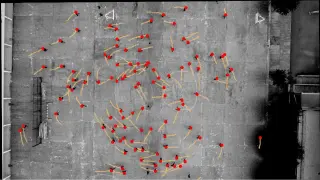
A new study published in Nature Communications reveals that moths and other nocturnal insects are not actually drawn to light, but rather become disoriented and trapped in an orbit around artificial light sources, as observed through motion-capture cameras and infrared illumination. This behavior is attributed to the insects mistaking the artificial light for the sky, impacting their flight patterns. The research sheds light on the impact of light pollution on insect populations and challenges previous theories about insects being attracted to light due to heat or mistaking it for the moon. The findings could aid in conservation efforts by minimizing the effects of light pollution on insects.

"The Truth About Insects and Artificial Lights: Debunking Myths and Revealing Confusion"
science2 years ago

"The Truth About Insects and Artificial Lights: Debunking Myths and Revealing Confusion"

A new study published in Nature Communications reveals that insects are not actually attracted to artificial lights, but rather use them to orient their flight. The insects' natural response to light becomes disoriented by artificial sources, leading to fatal consequences. The study observed various insect species exhibiting "orbiting," "stalling," and "inverting" behaviors around artificial light sources. This research sheds light on the long-standing misconception about insects being drawn to light and highlights the unintended consequences of artificial lighting on insect behavior.

"New Insights and Treatments Emerge for Long COVID's Persistent Challenges"
health2 years ago

"New Insights and Treatments Emerge for Long COVID's Persistent Challenges"

Recent studies published in Nature Communications have identified clinical features during the acute phase of COVID-19 that are associated with the development of long COVID, such as higher viral burden and lower antibody titers. More than half of hospitalized COVID-19 patients experienced long-term symptoms, with chronic pulmonary disease and neurologic disorders being significant risk factors. Additionally, the studies found that fatigue in long COVID patients may be due to mitochondrial dysfunction in muscle cells, and that remdesivir and steroids did not reduce the prevalence of long COVID. The findings suggest the importance of monitoring immune responses early on to identify patients at risk for long COVID and tailoring exercise to individual limits for those suffering from post-exertional malaise.