Tag

Infancy

All articles tagged with #infancy

Genetics link infant temperament to later behavior across diverse populations
science9 days ago

Genetics link infant temperament to later behavior across diverse populations

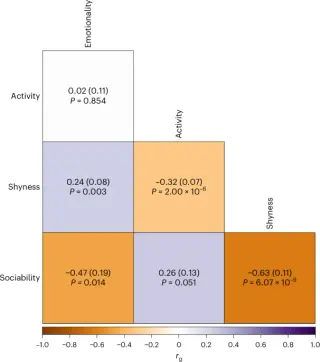
This GWAS meta-analysis across European and multi-ancestry cohorts (up to ~78k infants) identifies ten loci associated with four temperament traits in the first three years: emotionality, activity, shyness, and sociability. SNP heritability ranges from ~3% to ~15%, two loci colocalize with adult cortex eQTLs (RHEBL1 and MR1), and genetic correlations link early temperament to adult neuroticism, ADHD, autism and extraversion. Findings replicate across ancestry groups, and polygenic scores explain modest variance, with within-family analyses supporting genetic influences on temperament.

Early screen time linked to weaker later learning, new research warns
health12 days ago

Early screen time linked to weaker later learning, new research warns

A study from Inserm and the National University of Singapore, backed by the WHO and the American Academy of Pediatrics, reports that high screen time during infancy and school-entry age is associated with poorer later academic performance and weaker working memory, with effects most pronounced around age six; a separate UK study from iADDICT links under-two screen exposure to adverse health outcomes and calls for a baby screen-time risk assessment, underscoring that limiting early screen time and modeling healthy habits is important while acknowledging limited, supervised use in some contexts.

Six Months of Breastfeeding May Lower Kids' ADHD Risk, Study Finds
health13 days ago

Six Months of Breastfeeding May Lower Kids' ADHD Risk, Study Finds

A Norwegian study of about 37,600 families found that longer exclusive breastfeeding up to six months is linked to lower ADHD symptom levels at ages 3, 5 and 8, seen in both boys and girls and remaining after adjusting for genetics and sociodemographic factors; while the association persists, researchers caution that causality can't be proven and the sample isn't fully representative, so more research is needed, though findings echo guidelines that support exclusive breastfeeding for about six months.

Early Infancy and School Entry: Screens Linked to Later Learning Gaps
science18 days ago

Early Infancy and School Entry: Screens Linked to Later Learning Gaps

A 502-child longitudinal study finds that screen exposure matters as much by when it happens as how much is viewed. Elevated screen time at age 1 (infancy) and around age 6 (school entry) predicted poorer academic performance at age 9 and weaker working memory at 10.5, while exposure at ages 2–3 showed no lasting effects. The infancy window shows the strongest risk due to displacement of face-to-face interaction; even small population-level shifts toward more screen time could lower overall learning outcomes. Implications point to early-life limits and further research on content, devices, and parental co-viewing.

Infant nutrition linked to lower adolescent IQ, comprehensive review finds
health1 month ago

Infant nutrition linked to lower adolescent IQ, comprehensive review finds

A comprehensive review of 73 studies finds that poor diets in infancy are linked to lower intelligence scores in adolescence, while adolescence as a second opportunity for nutritional intervention remains unsettled; authors call for a life-course framework and seven guiding principles to improve future nutritional neuroscience research.

Neanderthal Infant Amud 7 Reveals Rapid Early Growth
science2 months ago

Neanderthal Infant Amud 7 Reveals Rapid Early Growth

A remarkably complete Neanderthal infant fossil, Amud 7, dating to 51,000–56,000 years ago, shows a dental age of about 5–6 months but skeletal and brain development like a 12–14‑month‑old, revealing a rapid early growth pattern and an age paradox that appears biologically rooted; findings, based on 111 bones and published in Current Biology, suggest Neanderthal infants grew quickly and began early solid foods around five to six months, with similar patterns seen in other Neanderthal children.

Early Peanut Exposure Reduces Allergy Risk in Children, Study Finds
health2 years ago

Early Peanut Exposure Reduces Allergy Risk in Children, Study Finds

A new study published in NEJM Evidence suggests that introducing smooth peanut butter to infants as early as 4 months old and continuing until around age 5 can reduce the risk of developing a peanut allergy by 71% in adolescence. This approach, based on the principle of oral tolerance induction, has shown lasting protection against peanut allergies, even when peanut consumption is not consistent after age 5. The findings support early peanut introduction under pediatric guidance, especially for children at low risk for allergies.

Early Peanut Exposure Reduces Allergy Risk in Children, Study Finds
health2 years ago

Early Peanut Exposure Reduces Allergy Risk in Children, Study Finds

A new study published in NEJM Evidence suggests that introducing smooth peanut butter to infants as early as 4 months old and continuing until around age 5 can significantly reduce the risk of developing a peanut allergy by 71% into adolescence. This approach, based on the principle of oral tolerance induction, aligns with updated guidelines from the American Academy of Pediatrics and could prevent tens of thousands of peanut allergy cases annually. Experts recommend starting with small amounts under pediatric guidance, especially for children with severe eczema or egg allergies.

"Language Community Shapes Babies' Predictive Abilities"
neuroscience2 years ago

"Language Community Shapes Babies' Predictive Abilities"

A study conducted at UPF found that six-month-old infants can predict the actions of individuals who speak their mother tongue, but not of those speaking a foreign language, indicating a bias in predictive and learning behavior. The research suggests that the brain’s predictive capabilities and learning preferences are shaped early in life by social factors such as language, influencing how infants interpret, imitate, and learn from their environment. The study observed distinct brain activity and attention focus in infants when exposed to native versus foreign language speakers, highlighting the impact of linguistic bias on children’s learning processes and social categorization.

"At What Age Do Babies Develop Consciousness?"
neuroscience2 years ago

"At What Age Do Babies Develop Consciousness?"

Researchers propose a new method to determine when consciousness emerges in infants by identifying markers of consciousness in adults and tracking their appearance in babies' development. This approach aims to address the challenge of studying consciousness in non-verbal subjects like infants and could provide insights into the complex process of becoming conscious. The study suggests that consciousness may emerge early, from the last prenatal trimester, and recommends considering a broad range of developmental markers to pinpoint the onset of consciousness.

The Effects of Screen Time on Early Childhood Development
health-and-science2 years ago

The Effects of Screen Time on Early Childhood Development

A study published in Psychological Medicine suggests that screen time during infancy may have long-term effects on brain development and socio-emotional competence in children. The research, which focused on children from the Growing Up in Singapore Towards healthy Outcomes (GUSTO) study, found that early and excessive screen exposure could disrupt the typical developmental trajectory of brain networks crucial for managing emotions and cognitive control. However, engaging in enriching activities like parent-child reading may mitigate the negative impact of screen time on brain network integration. The study highlights the importance of balancing screen time with interactive activities for promoting healthy development and well-being in children.