Tag

Laughter

All articles tagged with #laughter

Ancient Laughs, an Interstellar Visitor, and Weather-Editing Concepts
science1 month ago

Ancient Laughs, an Interstellar Visitor, and Weather-Editing Concepts

A roundup of recent science finds: researchers trace laughter back to ape ancestors about 15 million years ago, showing a conserved, recognizable chuckle across great apes; the interstellar comet 3I/ATLAS is identified as the oldest detected object in the solar system, likely formed over 12 billion years ago; a conceptual study proposes “weather jiu-jitsu”—gentle atmospheric nudges to steer extreme weather events—though it remains a proof-of-concept; and an analysis of five decades of top hits reveals a rise in self-focused language in Western lyrics, with East Asian lyrics showing more stability.


Laughing Your Way to 100: Mel Brooks’s Secret to a Century of Life
lifestyle1 month ago

Laughing Your Way to 100: Mel Brooks’s Secret to a Century of Life

Mel Brooks, who turns 100 on June 28, credits humor and laughter as key to his long, happy life, saying comedy keeps him sane and gives him a reason to live; studies link laughter to lower mortality and cortisol, and Brooks remains active with projects like a Spaceballs sequel and a related HBO documentary, while noting he doesn’t dwell on death and just keeps living.

Laughs Across Evolution: Humans and Apes Share Similar Giggle Rhythm
science1 month ago

Laughs Across Evolution: Humans and Apes Share Similar Giggle Rhythm

Researchers reanalyzed decades-old recordings of ape laughter and compared them to new footage of children's laughs, finding that humans and great apes share similar rhythmic patterns in their giggles, suggesting laughter evolved from a common ancestor about 15 million years ago. While human laughter can be faster and more context-dependent, its core rhythm remains similar to apes, highlighting laughter as a social bonding tool. The study, published in Communications Biology, underscores the need for more cross-species recordings to illuminate what makes human laughter unique.

Laughter's steady rhythm traces the evolution from apes to human speech
biology2 months ago

Laughter's steady rhythm traces the evolution from apes to human speech

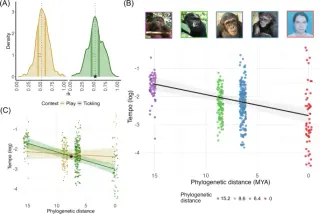
A cross-species study of laughter in orangutans, gorillas, bonobos, chimpanzees, and humans finds laughter isochronous across extant great apes, with tempo accelerating and variability increasing over roughly 15 million years of hominid evolution. Tickling-induced laughter is more regular than play, and humans show the most context-sensitive tempo changes, indicating progressive gains in vocal control that likely paved the way for speech and language.

Giggles as Clues to the Developing Baby Brain
health2 months ago

Giggles as Clues to the Developing Baby Brain

New research suggests infant laughter is a meaningful marker of healthy brain development and social bonding: involuntary laughter appears around 3–4 months and voluntary laughter emerges by about 6 months as motor and speech areas mature. Shared laughter boosts oxytocin and dopamine, supports regulation of stress, and helps clinicians gauge typical development. Parental stress and tech-heavy distractions can dampen these interactions, highlighting the need for supportive, distraction-free environments for families.

Giggles as Brain Builders: Laughter Reshapes Early Learning and Resilience
science3 months ago

Giggles as Brain Builders: Laughter Reshapes Early Learning and Resilience

New research argues laughter is a complex brain mechanism that precedes speech, lowers stress hormones, increases happiness chemicals, and drives neuroplastic changes across a distributed brain network. When shared between parent and child, it boosts oxytocin and neural synchrony, strengthening emotional bonds and reducing burnout, while also making learning easier by lowering cognitive load. The findings suggest humor should be a central tool in early education and parenting to support resilience and lasting memory.

Doctor's Top 5 Unusual Tips to Dodge Colds
health1 year ago

Doctor's Top 5 Unusual Tips to Dodge Colds

Dr. Jessica Kiss, known as Dr. Mom, shares five unconventional yet scientifically backed methods to prevent colds during colder months. Her tips include cleaning your tongue to reduce bacteria, drinking green tea for its immune-boosting properties, washing hands immediately upon returning home, closing the toilet lid before flushing to avoid bacteria spread, and incorporating laughter to decrease stress and enhance immunity. These practices aim to strengthen the body's defenses against illness.

The Surprising Power of Laughter: Health Benefits and Risks Explored
health-and-wellness2 years ago

The Surprising Power of Laughter: Health Benefits and Risks Explored

A systematic review and meta-analysis of studies published in PLOS One has found that spontaneous laughter can significantly reduce levels of the stress hormone cortisol, leading to positive effects for overall health. The analysis revealed an overall significant reduction in cortisol levels (31.9%) induced by laughter compared to the control group, even with a single laughter session. The study supports previous research showing the benefits of laughter, including its cardioprotective effect and potential metabolic effects. However, differences in methods of inducing laughter and variations in the timing of cortisol level measurements among the studies are limitations to consider.

"Kate Middleton's Infectious Giggles and Cheeky Jokes: A Royal Delight"
royal-news2 years ago

"Kate Middleton's Infectious Giggles and Cheeky Jokes: A Royal Delight"

Princess Kate, known for her infectious laughter, has been captured giggling and bursting into fits of laughter during various public appearances and royal visits. From trying on a life-jacket to playing bandy hockey, refurbishing a boat, and participating in sports activities, Kate's sense of humor and joyful demeanor have endeared her to the public. Her laughter has become a theme in her public engagements, showcasing her down-to-earth nature and ability to connect with people.